

Shortly after 6:30 a.m. on Oct. 7, Anastasia Stalmakhov’s mother called to ask whether she was all right. Stalmakhov, a 27-year-old Magen David Adom paramedic from Bat Yam, was nearing the end of a 24-hour shift in the Ariel area. No sirens had yet sounded where she was, but the emergency alert map showed rocket fire spreading and continuing without pause.
“I woke up the ambulance driver who was working with me, Nashat, and told him, ‘Get up, a war has started,’” she recalled. Nashat Nassar, the ambulance driver and emergency medical technician working alongside her that shift, woke up to a morning neither could have imagined.
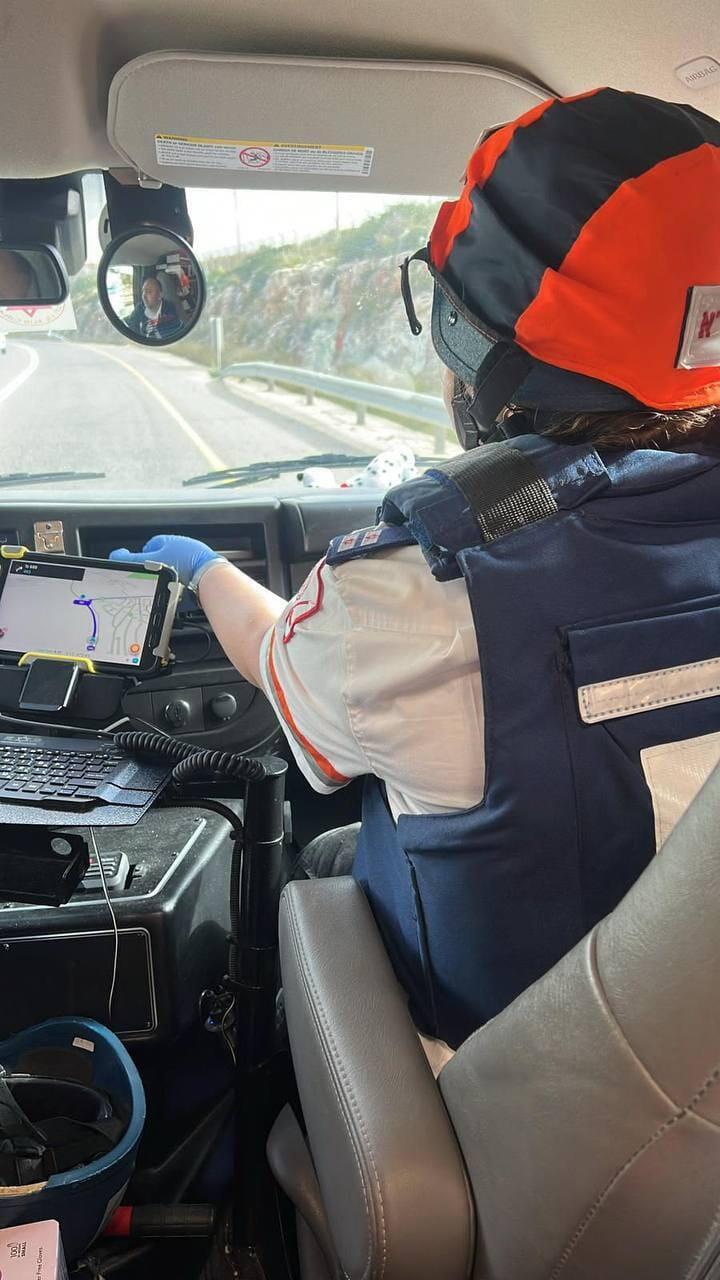
A short time later, overnight crews were told to remain on duty. “We didn’t need anyone to tell us,” Stalmakhov said. “It was obvious to us that we were staying to help.” Minutes later came an order to send armored ambulances south. Stalmakhov and Nassar climbed into one and headed toward the Gaza border area.
‘It looked like a war movie’
At first, whenever a siren sounded, they stopped and searched for shelter. But the farther south they drove, the clearer it became that if they continued stopping, they would never reach the wounded.
“Just before Ashkelon, we saw rockets and interceptions in the sky and dozens of columns of smoke,” Stalmakhov said. “The radio network never went silent. We heard reports of fires and strikes. It looked like a war movie.”
Then came a violent impact. The ambulance tilted sharply to one side and nearly overturned. “At first we thought a car had hit us from behind,” she recalled. “We stopped to check, and then we realized that a rocket had landed a few dozen meters away. The blast and shrapnel had hit the ambulance. That was one of the moments when we understood that we were in a real war.”
They checked that the ambulance was still operational and returned to the road. Minutes later, police vehicles sped past them. One officer stopped beside the ambulance and shouted: “Get out of here, there are terrorists here.”
Stalmakhov and Nassar continued south. In Ashkelon, they were initially dispatched to scenes of rocket impacts, moving between homes and searching for casualties.
After a brief briefing at the MDA station in the city, they were told to enter Sderot, where terrorists were still operating.
The armored ambulance crews were tasked with extracting wounded people and residents from the city and transporting them to an MDA treatment site established at Kochav Michael, about 15 minutes from Sderot. From there, other crews would continue evacuations to hospitals.
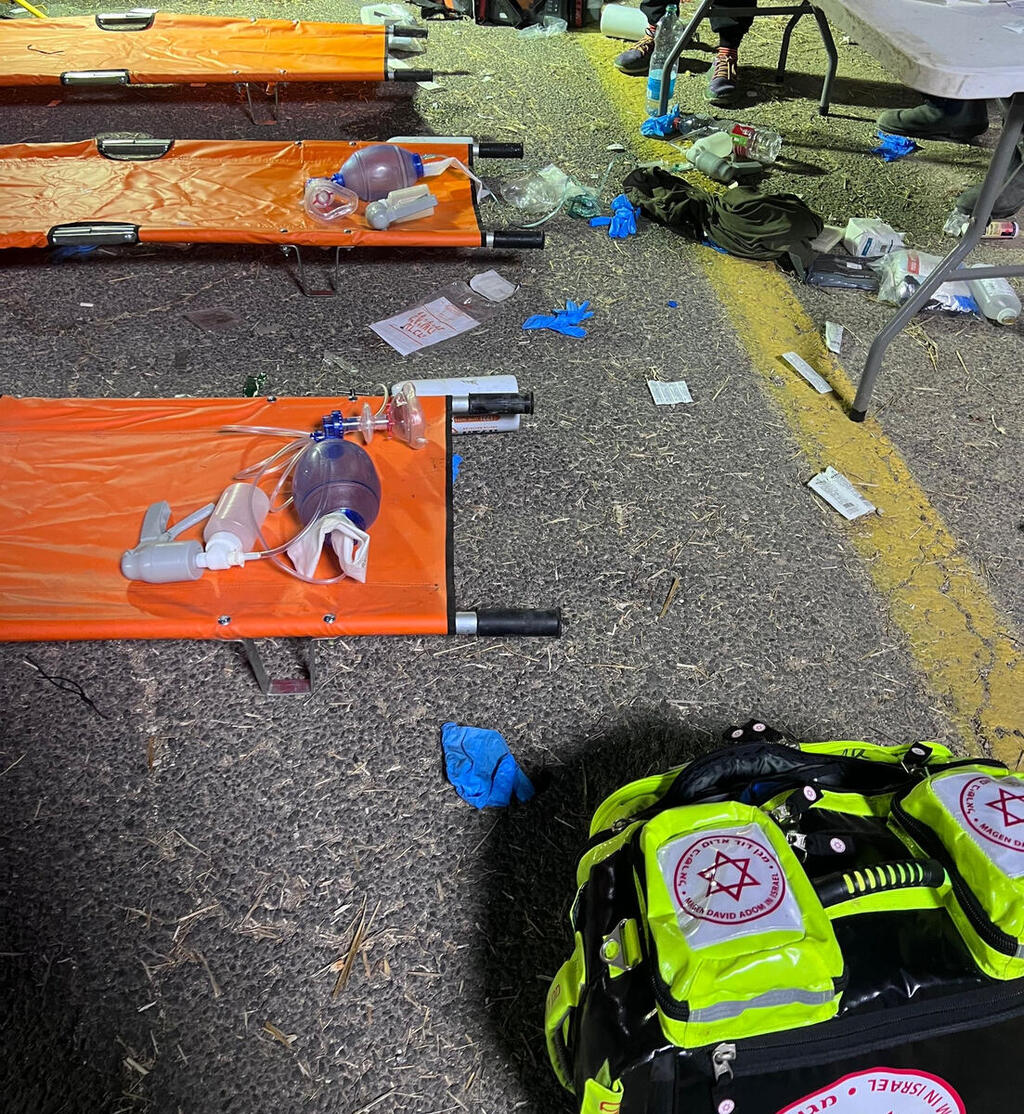
MDA treatment station on Oct. 7
(Photo: Courtesy of MDA)
On the way to Kochav Michael, Stalmakhov and Nassar began hearing reports of MDA personnel who had been killed or wounded, as well as reports of people being abducted.
The danger suddenly felt much more immediate. “We started talking between ourselves about what we would do if they kidnapped us, and in our minds we said goodbye to our families,” Stalmakhov said. “But at no stage did we think about turning around and going back to central Israel. Quite the opposite.”
“We and all the crews who were at Kochav Michael wanted to reach the wounded, and we pushed the fear aside. We both understood that fear could paralyze you, and both of us had come to save lives.”
Holding their breath by the gate
Even at the Kochav Michael treatment site, MDA teams were not safe. Rockets were being fired continuously toward the area when police suddenly reported that a terrorist cell had broken through a checkpoint and was heading in their direction.
The crews were ordered to hide. “At first we ran toward a protective shelter, and then we thought that would be the first place the terrorists would look,” Stalmakhov said. “All of us, all the MDA personnel who were there, ran to hide by the yellow gate. Whoever had a weapon pulled it out, and we stood there holding our breath.”
Then Stalmakhov remembered that an EMT from the MDA station in Sderot had remained inside one of the ambulances and had not heard the warning.
Nassar ran to get him and brought him to the place where the other crews were hiding. “Those were moments of pure terror,” she said. After the threat passed, Stalmakhov and Nassar entered Sderot.
‘We looked for someone we could still save’
They drove through the city with the radio on in the background so they could hear incoming rocket alerts. A broadcaster reported that 22 people had been killed.
Almost simultaneously, the ambulance reached a road near the MDA station in Sderot. “We saw bodies on the road, and there were already more than 20 just there,” Stalmakhov said. “We told each other there was no way that could be the total number of people killed.”
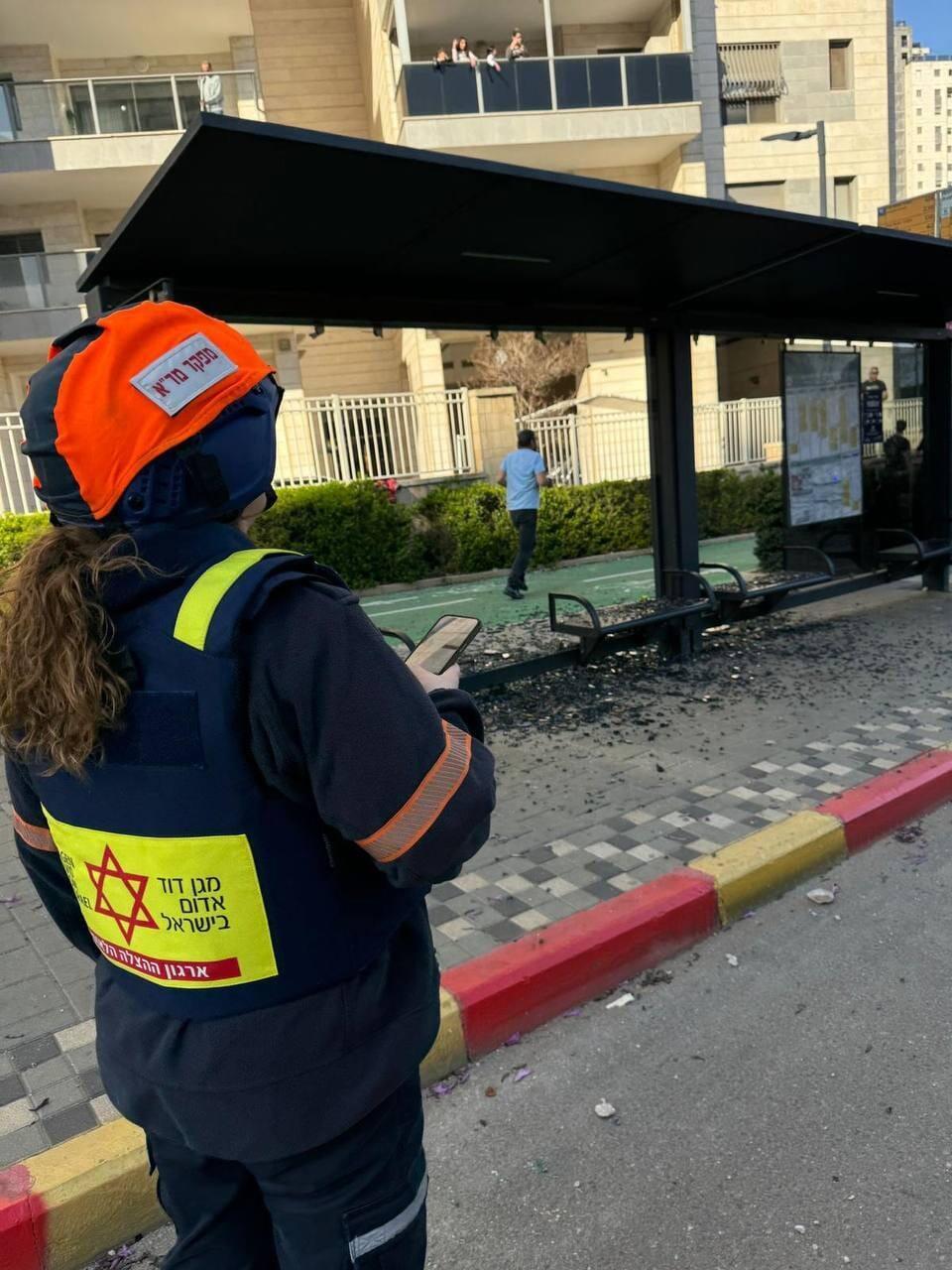
(Photo: Courtesy of Anastasia Stalmakhov)
“We looked for signs of life, wounded people who might be hiding, someone we could still save. We didn’t find anyone alive there.”
Later, an unmarked civilian vehicle stopped beside them. With reports of terrorists moving around the area, Stalmakhov and Nassar initially hesitated. Then the people inside shouted: “Come, we have a wounded man.”
The casualty was a police officer who had been critically wounded in the fighting at the Sderot police station. He was pale and sweating and had suffered gunshot wounds to his chest and abdomen.
Stalmakhov and Nassar treated him and transported him in the armored ambulance to Kochav Michael. There, he was transferred to another ambulance that continued to the hospital.
The two then headed back into Sderot. Near the police station, heavy gunfire could still be heard. There they received a young soldier who had suffered a critical head wound.
“I fought for him the entire way,” Stalmakhov said. “In the background there were Red Alert sirens and explosions. His condition was very serious and I didn’t want to delay his evacuation, so I continued with him directly to the hospital.”
The flow of casualties continued even in the emergency room. “Suddenly I saw a black vehicle arrive and five or six soldiers got out,” she said. “One had a tourniquet on his arm, another had a tourniquet on his leg. They were all bleeding. The entire emergency room had become one enormous trauma room.”
Stalmakhov later learned that the soldier she had evacuated died of his wounds. “For me, his story is the face of the tragedy of that day,” she said. “I thought about how many other people like him had left home that morning and would never return.”
Between one evacuation and the next
For hours, Stalmakhov and Nassar drove back and forth between Sderot and Kochav Michael. During one evacuation, they rescued a couple who had escaped the Nova music festival, hidden in Sderot’s industrial zone and suffered minor injuries.
“Their car was riddled with bullets. There may have been a hundred bullet holes in it,” Stalmakhov said. “They were extremely shaken. We brought them into the ambulance, calmed them down, treated them and took them to Kochav Michael.” At another point they were dispatched to assist a woman in labor.
On the way, a police officer stopped them and asked them to take the body of his friend so it would not remain lying in the street. “He stood there with tears in his eyes,” Stalmakhov recalled. “I understood him, but I was on my way to a woman giving birth and I couldn’t help. He understood what I was telling him, but it was hard.”
Stalmakhov also vividly remembers the driver of a minibus carrying retirees in Sderot. He told her that when terrorists opened fire, he was wounded in the neck and survived by pretending to be dead.
After the terrorists left, two women who had witnessed what happened from the window of their home called him inside, gave him shelter and summoned an ambulance.
When Stalmakhov and Nassar reached him, the driver told them what he had been through. Even after receiving medical treatment, he still needed to tell his story. “At Kochav Michael, about 10 staff members sat around him and listened,” she said. “He needed someone to hear him.”
The people who were there
Stalmakhov remembers the wounded people she treated and the bodies she saw. She also remembers the residents of Kochav Michael, who brought MDA crews food and drinks throughout the long hours of operations, and the two women who opened their home to an injured stranger.
“I will never forget their kindness,” she said. “In the hardest moments, humanity doesn’t disappear.”
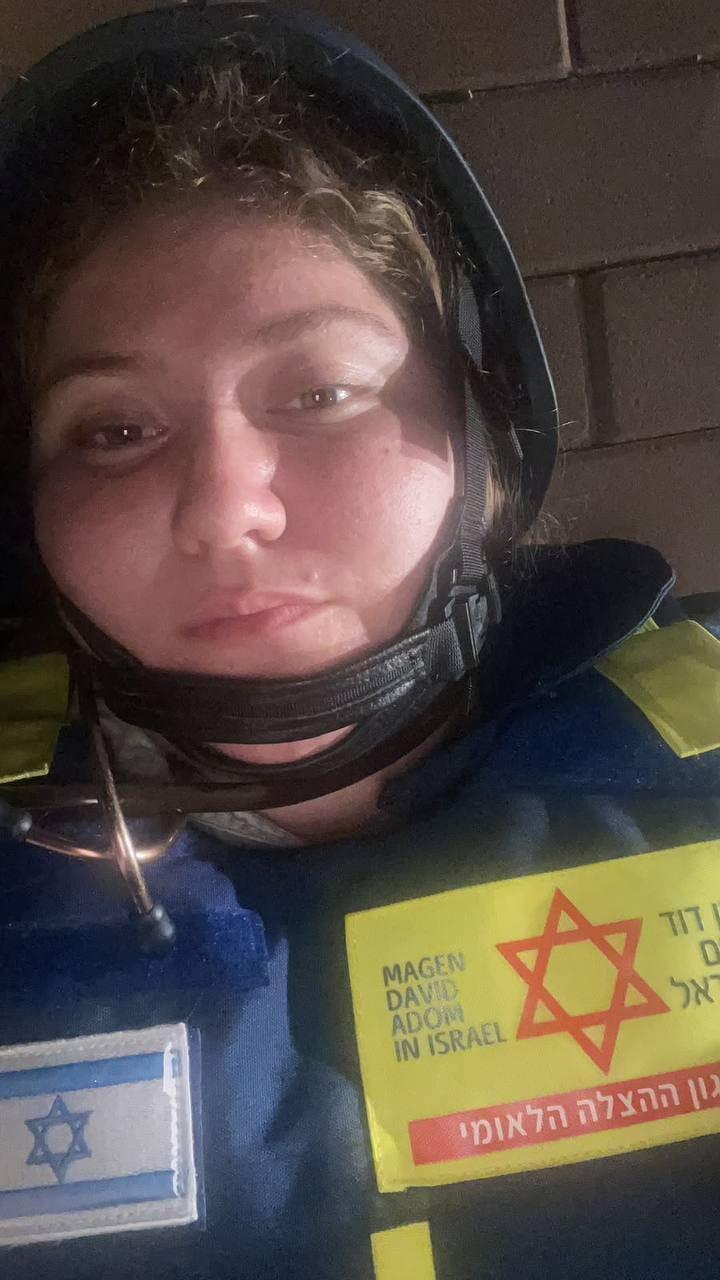
Anastasia Stalmakhov
(Photo: Courtesy)
She spent the entire day alongside Nassar. “If he hadn’t been with me, the day would have looked completely different for me,” she said. “I felt safe with him. We worked as a team, exactly as we should.”
That morning, when they headed south, a bag of ingredients for soup was still sitting in Stalmakhov’s refrigerator at home, waiting for her to finish her shift. “To this day, orange soup reminds me of Oct. 7,” she said.
Stalmakhov and Nassar did not return home until another full day had passed. Until then, they repeatedly entered Sderot, evacuated wounded people in their armored ambulance and transferred them to MDA teams at Kochav Michael, who continued treatment and transported them to hospitals.
Between the sirens, gunfire and explosions, the teams continued working together throughout the day. “There were moments when I thought I wouldn’t make it home,” Stalmakhov said. “But our commitment to saving lives overcame the fear.”