

French physicist Claude Cohen-Tannoudji, whose Nobel Prize-winning research transformed scientists' ability to control atoms with laser light and whose career was marked by close ties to Israel, died Thursday, October 22, in Paris. He was 93. His death was confirmed by the Kastler Brossel Laboratory, where he spent much of his scientific life.
Born April 1, 1933, in Constantine, Algeria, then under French rule, Cohen-Tannoudji grew up in a Jewish family with roots tracing back to Jews expelled from Spain. His family moved to Algiers amid antisemitism, and his education unfolded against the backdrop of restrictions imposed on Jews by France's wartime Vichy regime.
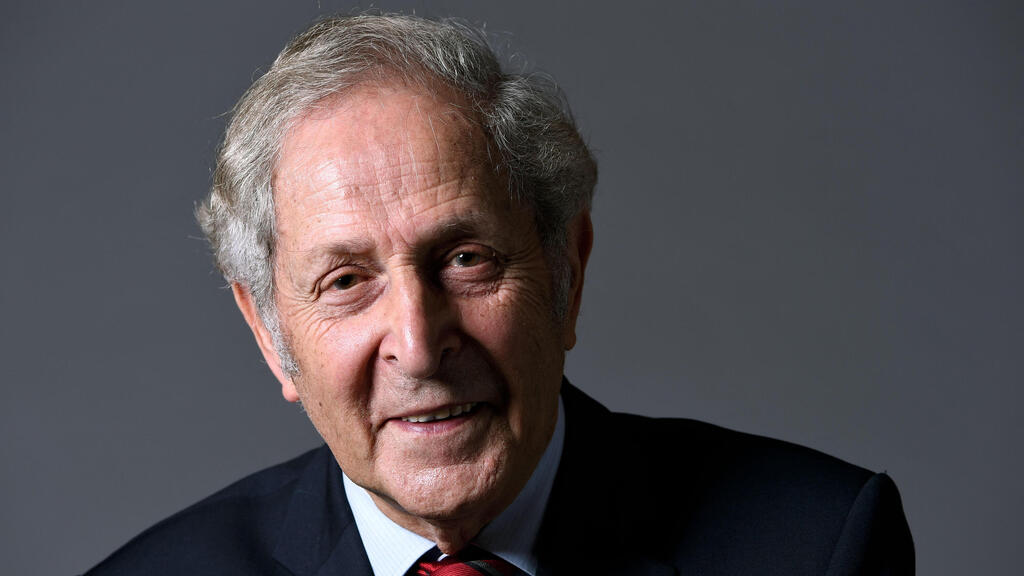
Claude Cohen-Tannoudji
(Photo: Miguel MEDINA / AFP)
In 1953, he entered the prestigious École normale supérieure in Paris, initially intending to study mathematics. Lectures by physicist Alfred Kastler changed his direction. Cohen-Tannoudji joined Kastler's research group and completed his doctorate in 1962, studying how light interacts with atoms.
That question became the focus of a remarkable career. Working with colleagues, Cohen-Tannoudji developed techniques that use laser beams to slow atoms and confine them in tiny regions of space. At ordinary temperatures, atoms move too rapidly for detailed observation. Cooling them to temperatures barely above absolute zero allows researchers to study quantum behavior with extraordinary precision.
His team helped pioneer a method known as Sisyphus cooling, in which interactions with light repeatedly reduce an atom's motion. The advances opened new paths in atomic physics and quantum optics, contributing to increasingly accurate atomic clocks and technologies used in navigation and precision measurement.
In 1997, Cohen-Tannoudji shared the Nobel Prize in Physics with American scientists Steven Chu and William D. Phillips for the development of methods to cool and trap atoms using laser light. The award recognized discoveries that had transformed an experimental challenge into an essential scientific tool.
He was equally influential as an educator. Appointed professor at the Collège de France in 1973, he taught there for more than three decades. His widely used quantum mechanics textbooks, written with Bernard Diu and Franck Laloë, helped generations of physicists master a notoriously demanding subject. His laboratory and lectures also influenced future Nobel laureates, including Serge Haroche and Alain Aspect.
His relationship with Israel extended well beyond academic recognition. The Weizmann Institute of Science described him as a steadfast supporter of Israeli research who visited its campus repeatedly, even during periods when other international scientists canceled visits. He encouraged scientific cooperation between France and Israel and supported joint conferences on quantum and nonlinear optics.
He received the Technion's Harvey Prize in 1996 and honorary doctorates from Israeli institutions, including the Hebrew University of Jerusalem and Bar-Ilan University. The Weizmann Institute also honored his contribution to science and his commitment to academic exchange.
A member of the French Academy of Sciences, Cohen-Tannoudji received France's CNRS Gold Medal in 1996. His legacy rests not only on the ability to cool atoms almost to a standstill, but also on the researchers he trained, the textbooks he wrote and the international scientific relationships he helped sustain.