

A 17-year-old from Petah Tikva who survived a childhood cardiac emergency and severe kidney failure is now volunteering on ambulances with Magen David Adom and hopes to become a doctor.
Michal Shamis was 10 when her heart suddenly stopped beating, leading doctors to implant a pacemaker. She said the experience left her afraid that ordinary childhood activities such as running, laughing or dancing could put her life at risk.
“I remember taking that period very hard. As a child, I was afraid that every little thing, like laughing, running or dancing, something every child does, could kill me,” she said.
Not long after the pacemaker was implanted, Shamis was diagnosed with severe kidney failure and spent an extended period hospitalized, including time in intensive care. She was later transferred to an internal medicine ward and placed on dialysis.
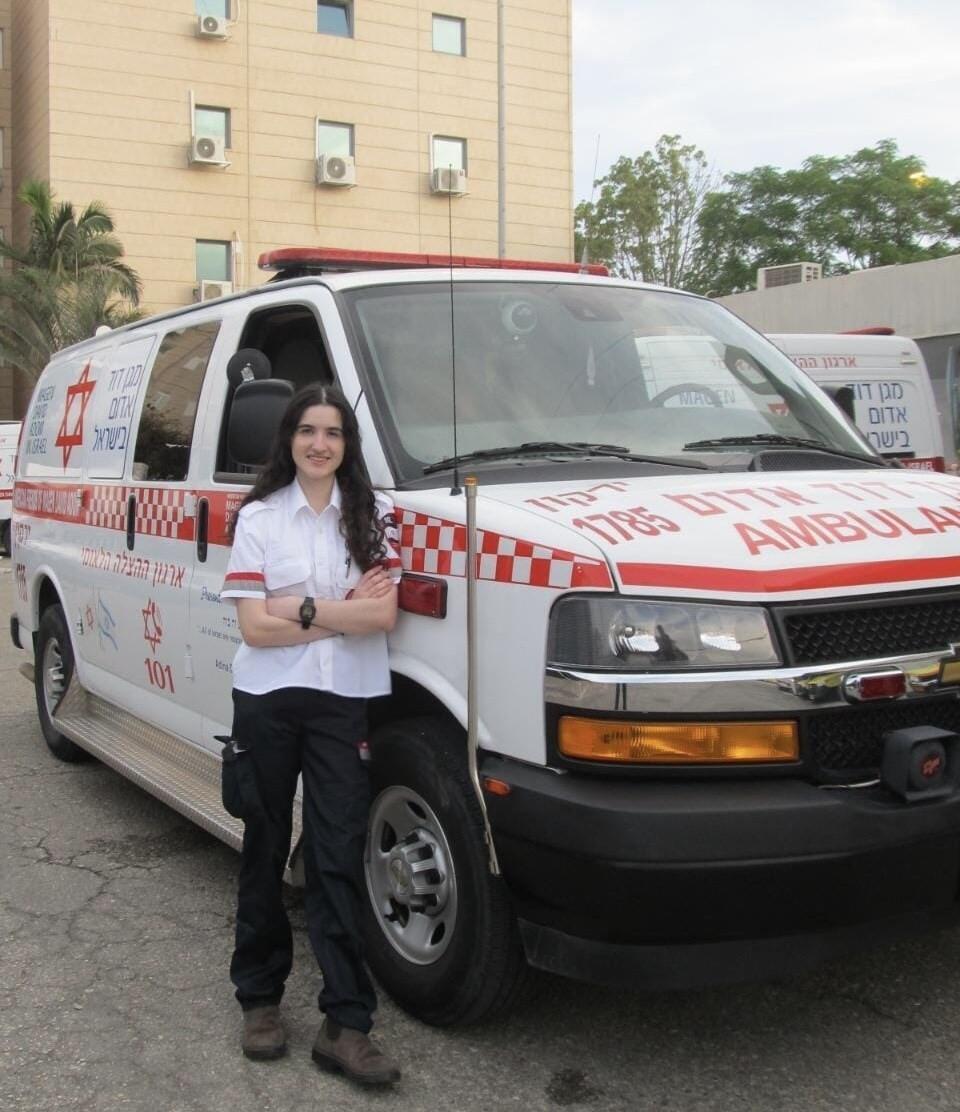
Michal Shamis, 17, works as a MDA first responder
(Photo: Courtesy of MDA)
“Mostly, I remember how sad I was,” she said. “I felt like everyone had lied to me. Everyone promised me that after the pacemaker was implanted, everything would go back to normal, and in the end I found myself sicker than before.”
Doctors initially believed she could require dialysis for years, or even for life without a transplant, she said. But after about two weeks, her test results returned to normal and she was discharged. She has not required dialysis since.
The experience eventually pushed her toward medicine. Although she initially wanted nothing to do with hospitals or treatment after her illness, Shamis said she came to see how much emotional support matters alongside clinical care.
“Over time I understood how important it is and how much I could be the person who helps patients who, on one hand, need medical treatment, but on the other hand, and no less importantly, also need the support I can give them as someone who understands what it means to be where they are,” she said.
At 12, she began looking into volunteering with Magen David Adom, Israel’s national emergency medical service, and joined once she reached the minimum age of 15. She now works as a first responder on MDA ambulances.
One call, she said, was especially meaningful: helping a dialysis patient and returning to a hospital ward for the first time since her own treatment.
“Looking at the patients and the machines made me remember my final day in the ward,” Shamis said.
She spoke with the patient about dialysis and shared her own experience.
“At the end of the ride, she said goodbye to me with a big smile that I still remember to this day,” she said. “Sometimes the safe space you give a patient, such as identifying with their situation, offering a listening ear and support, is no less important than the medical care we provide as staff members.”
Shamis is set to enter 12th grade and complete a high school medical studies track she has been enrolled in for the past two years. She plans to continue volunteering with MDA while pursuing her long-standing goal of becoming a doctor.
“I want to help others the way I wanted people to help me when I was a child, and to remind every child dealing with a chronic illness that they are not their illness, and that they can still do everything, dream, aim high and become whatever they want, no matter what,” she said.