

This year, just as the flu season is beginning to show early signs of activity, Israel’s health maintenance organizations are facing an unusual delay in vaccine supplies. Because of a delay by the World Health Organization in determining the strains to be included in this year’s vaccine, flu vaccine deliveries to Israel will arrive gradually and will not be completed until around mid-November, when the season may already be well underway.
At the same time, the virus is already here. In recent days, 47 people, including elderly residents and staff members, contracted influenza at the Bayit Balev rehabilitation medical center in Kfar Saba, and three of the elderly patients died. According to a report by the Israel Center for Disease Control, 10 new cases of influenza A were diagnosed at monitored general hospitals during the week ending Aug. 22.
Gallery
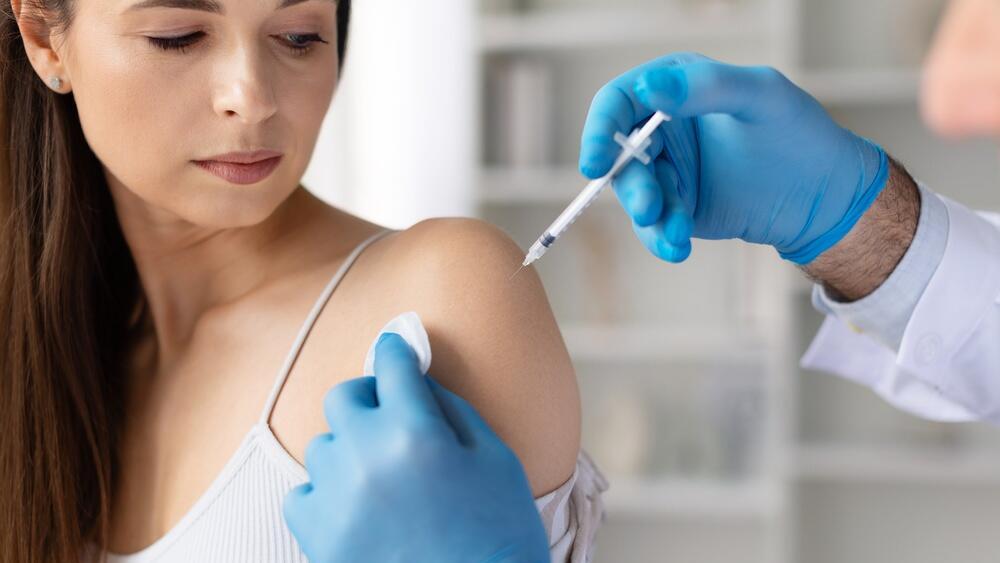
A delay in determining the vaccine strains led to delays in flu vaccine deliveries
(Photo: Shutterstock)
Data from the Southern Hemisphere, including Australia, South Africa and South America, are used each year as a possible indicator of what the flu season may look like in the Northern Hemisphere, including Israel.
“The flu season in the Southern Hemisphere is not over yet, but from what we know at this point, it has been a fairly average season in terms of illness and mortality rates, although there has been more illness among children,” Dr. David Shasha, an infectious disease specialist and head of the field at Meuhedet, told ynet.
“We have to remember that what happens in the Southern Hemisphere does not necessarily predict the season that will follow here. Last year, there was a certain worsening there specifically in August, and a mutation emerged that later caused significant illness here as well. Changes can occur in every season and in every part of the world.”
 Dr. David Shasha Photo: Inbal Marmari
Shasha explained that last year’s mutation appeared at a stage when it was already too late to update the vaccine intended for the Southern Hemisphere flu season, meaning the protection it provided was only partial, though still considered good.
“Despite the mutation, the vaccine still provided more than 50% protection, which is considered adequate, particularly for people at risk of severe illness,” he said.
By contrast, Shasha said there was enough time to update the formulation of the vaccine intended for the Northern Hemisphere, meaning the vaccine administered in Israel this coming season is expected to be a better match for the strains likely to circulate.
The timing of the start of flu season is also difficult to predict, which is why the recommendation is not to wait and to get vaccinated as soon as possible.
“We do not know when the peak of flu season will arrive. Last year, the season began earlier than expected,” Shasha said. “People at risk in particular should get vaccinated as early as possible so they are protected when infection rates begin to rise.”
‘This is the first time we have faced a situation like this’
Despite the recommendation to get vaccinated as early as possible, the health funds warn that vaccine supplies are expected to arrive more gradually this year because of the delay by the WHO in determining the vaccine strains. That means the quantities ordered by the health funds will be supplied in stages over a longer period.
“This is the first time we have encountered a situation like this,” said Hagar Wechsler, Meuhedet’s chief nurse and director of its nursing division.

The flu virus is already here, but it is still unclear how severe this year’s season will be
(Photo: Shutterstock)
“The strains had to be updated, so the companies did not release the vaccines for distribution and instead sent them back for another update. As a result, distribution is starting later. In previous years, by early September all the vaccines we had ordered would already have arrived in Israel. This time, only part of the supply will arrive in the coming days. We expect to receive the full quantity by mid-November.”
At this stage, she said, the implications are mainly logistical. “Meuhedet has about 400 clinics, so we may not initially be able to provide a large quantity of vaccines to every one of them. We decided to concentrate the arriving supply in larger clinics and in areas with more people at risk.”
The main concern, Wechsler added, is that flu season could begin early, before the full supply arrives. “Whenever the season starts, there is always a rush, and the concern is that people will go to clinics where vaccines are not yet available. We expect to begin vaccinating on a much larger scale only in mid-October.”
 Hagar Wechsler Photo: Inbal Marmari
Clalit is also preparing to receive vaccines in stages this year, though officials there estimate that it will not have a significant effect on the vaccination campaign.
“There is no question that the earlier you match the vaccines to the strains, the more it affects when the vaccines arrive,” said Ronen Nudelman, deputy director-general and head of Clalit’s community division.
“As the largest health fund, we vaccinate about 1 million people every year, and we will vaccinate that number this year as well. Our first shipment is already in the country,” Nudelman said. “We will receive the full quantity of vaccines we ordered. The distribution schedule will simply be different.
“From our experience, we are now entering the holiday period, when people tend to be less eager to get vaccinated anyway, so in my assessment this will not have a significant impact.
 Ronen Nudelman Photo: Rami Zrenger
The Health Ministry, however, said no delay in supplying flu vaccines to Israel is expected. “The Health Ministry, together with the health funds and suppliers, worked to bring forward vaccine deliveries, and hundreds of thousands of doses will arrive in Israel in the coming days despite the delay by the World Health Organization in determining the flu strains. Once the required quality-control procedures are completed, the vaccines will be distributed to the health funds, allowing the public to get vaccinated in the near future.”
‘The public tends to underestimate how serious it is’
According to Shasha, influenza is a serious illness that the public often underestimates. “People think of flu as some kind of cold that lasts a day or two and causes a mild illness, and that is it, but that is not true. Flu causes high fever and a very severe feeling of illness, and it can keep a person out of work for several days.”
Among older adults and people with underlying medical conditions, the consequences can be far more serious, potentially resulting in hospitalization and death.
“A 70-year-old who is hospitalized in an internal medicine ward is at real risk of complications from hospitalization, worsening of an existing condition and hospital-acquired infections.”
Shasha noted that children are also considered a risk group, particularly those under age 5.
“Last year, there were deaths of completely healthy children from complications of influenza, and it is important for parents to be aware of that. I would like us not to see cases like that this year, and parents can protect their children by having them vaccinated against flu.”
Flu infections can also have indirect consequences, including an increased risk of other infections. “Many of us carry bacteria such as pneumococcus in our respiratory tract. When a person has the flu, the protective function of the mucous membranes is impaired, and that bacterial carriage can develop into disease — in the case of pneumococcus, into pneumonia. A secondary bacterial infection like that can be life-threatening in older adults.
“That is also why adults over 65 are advised to be vaccinated against pneumococcus, a vaccine that is included in Israel’s national health basket,” Shasha added.
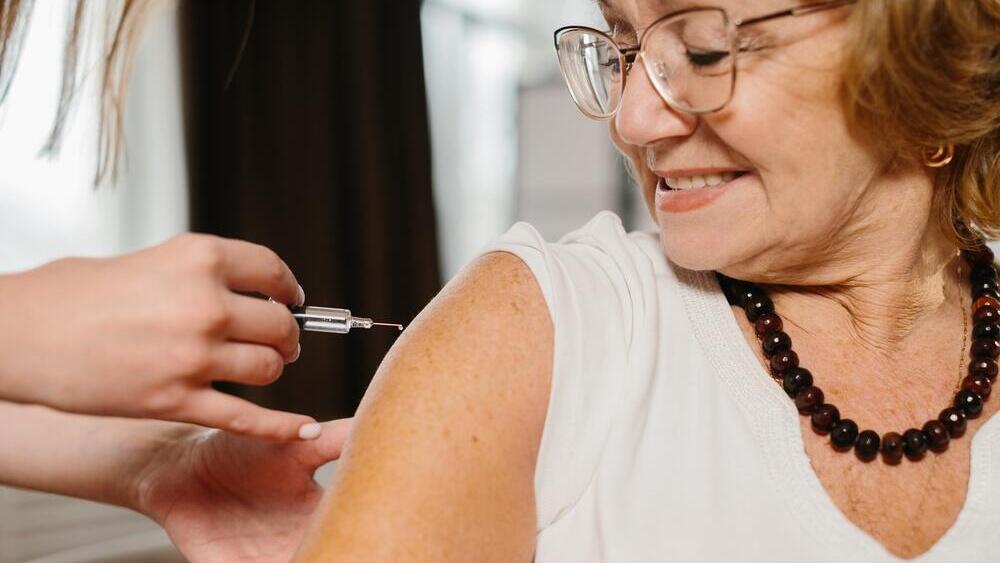
Adults over 65 are also strongly advised to get vaccinated against pneumococcus, a vaccine included in Israel’s national health basket
(Photo: Shutterstock)
Despite the risks posed by influenza, he said some members of the public remain wary of vaccination. “That concern stems from a great deal of misinformation in nonscientific media, behind which there is an entire industry of fearmongering, and that of course harms public health,” he said.
“These vaccines are extremely important, particularly for high-risk populations — older adults, children, pregnant women and people with significant underlying conditions. They are safe vaccines with a very low rate of side effects. Every known side effect of the flu vaccine can occur much more frequently and much more severely as a result of influenza itself, so there is no logic in avoiding vaccination out of fear of a side effect.”
First mRNA flu vaccine
Israel currently uses two main types of flu vaccines: an inactivated vaccine administered by injection from 6 months of age and a live attenuated vaccine delivered as a nasal spray for people ages 2 to 49, depending on medical indications.
About a month ago, the U.S. Food and Drug Administration approved Moderna’s mFLUSIVA, the first seasonal flu vaccine based on mRNA technology, best known from the COVID-19 vaccines. The vaccine is intended for people 50 and older but is not expected to reach Israel this winter.
Prof. Doron Netzer, head of medicine in Clalit’s community division, said that “in a Phase 3 clinical trial involving more than 40,000 participants aged 50 and older, the vaccine showed an approximately 27% advantage in preventing flu-like illness compared with the standard flu vaccine.”
 Prof. Doron Netzer Photo: Rami Zrenger
Netzer said the development could represent a significant change in the field of influenza vaccination. “A key advantage of the mRNA platform for influenza is the ability to shorten production time for the seasonal vaccine from about six months using traditional egg-based and cell-culture methods to just two to three months. That makes it possible to match the vaccine more precisely and at a later stage to the strains actually circulating,” he said.
He added that the vaccine’s safety profile was consistent with mRNA technology, with common local and systemic side effects that were mild to moderate, including injection-site pain, fatigue and muscle aches, with no unusual safety events.
Three children hospitalized with RSV
Influenza and COVID-19 are not the only viruses raising concern ahead of the winter season. RSV, short for respiratory syncytial virus, is a common cause of respiratory illness in infants. It is active primarily in late fall and winter, between November and March, and nearly all children are infected with it by age 2.
Premature infants and babies with congenital heart or lung disease face a higher risk of severe illness, complications and even death. According to the Health Ministry, RSV accounts for about 25% of hospitalizations of infants and toddlers for pneumonia and about 75% of hospitalizations for bronchiolitis.
RSV can pose a serious risk to infants
(Photo: Shutterstock)
During the 2025-2026 season, Beyfortus, or nirsevimab, a passive immunization against RSV, was introduced in Israel as part of the routine immunization program for all infants. By March 2026, about 140,000 infants had received the treatment.
“As in many places around the world that introduced the immunization before us, we also saw a dramatic improvement in RSV illness,” said Prof. Michal Stein, director of the Pediatric Infectious Diseases Unit at Sheba Medical Center, chair of the Israeli Society for Clinical Pediatrics and a member of the Israel Pediatric Association’s board.
“Last winter, there was a very significant decline in the number of infant hospitalizations, and I do not recall an immunized infant being hospitalized in serious condition.”
 Prof. Michal Stein Photo: Avivit Isaacson
A large Health Ministry study examining the effect of the program compared the first RSV season after the immunization was introduced with the previous three seasons. It found a 61% decline in confirmed RSV hospitalizations among all infants under age 1.
The findings, presented several months ago at a conference of the National Institute for Health Policy Research, also showed a significant decline in community doctor visits and pressure on hospitals.
This year, another product, Enflonsia, has been added. It is also a passive immunization and has similar effectiveness to Beyfortus. According to clinical efficacy data, Enflonsia prevented RSV-related hospitalization in infants by 84.2% during their first year of life and prevented severe RSV-related respiratory illness by 90%. It was also 60.4% effective in preventing lower respiratory tract infections requiring medical care.
Both products are intended to prevent RSV illness in infants before and during their first RSV season and are part of Israel’s routine immunization program. Under Health Ministry guidelines, either product may be administered to infants depending on availability at Tipat Halav, Israel’s maternal and child health clinics.
“What is unique about RSV protection for infants is that this is not a classic vaccine that activates the immune system, but a ready-made antibody that gives the baby direct protection during the first months of life, precisely when the child is especially vulnerable to severe disease,” Stein said.
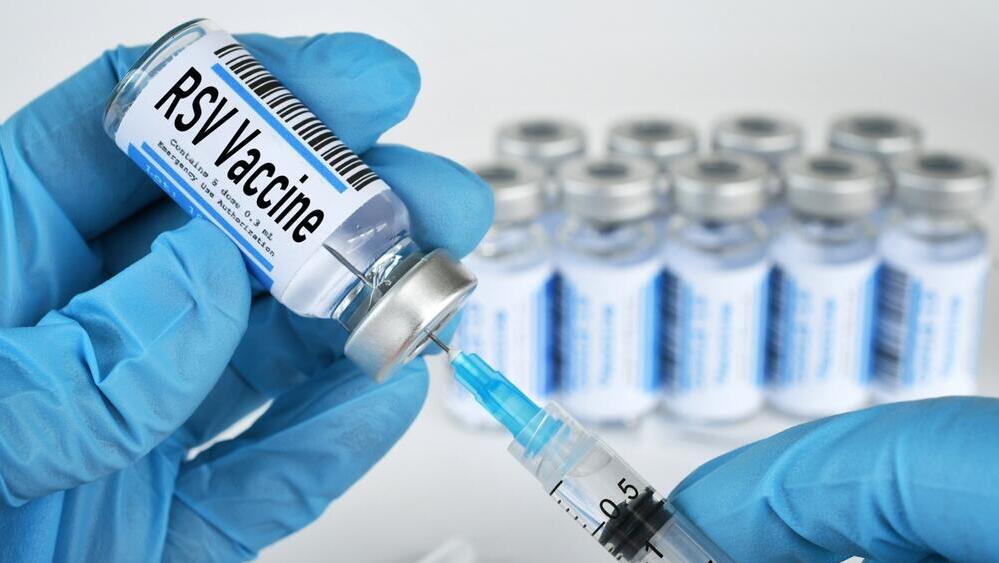
RSV vaccine
(Photo: Shutterstock)
The timing of immunization depends on the infant’s date of birth. Babies born between Sept. 1 and March 31 will receive the immunization in the hospital before being discharged after birth. Babies born between April 1 and Aug. 31 will receive it shortly before the start of RSV season together with their routine immunizations at a Tipat Halav clinic.
Toddlers with certain severe heart and lung conditions are eligible for immunization during their second winter as well. During a second RSV season, however, only Beyfortus may be administered.
Stein stressed that it is important to receive the immunization before RSV season begins so protection is effective when the risk of infection rises.
“Last week, we already saw three cases in our department of children hospitalized because of RSV. It is unusual to see cases like these in the summer, but the season is expected to begin soon,” she said.
“Once children return to daycare and school settings, viruses begin spreading among them. They bring those viruses home to their younger siblings, and we see a significant increase in respiratory viruses. That is why it is important to get immunized as soon as possible.”
For adults, two RSV vaccines are available — Arexvy and Abrysvo. These are active vaccines intended for people 60 and older as well as people ages 18 to 59 who are in high-risk groups. The vaccines are not included in Israel’s national health basket and can be purchased privately or through some of the health funds’ supplemental insurance programs.