


In a laboratory at Rambam Medical Center in Haifa, far from operating rooms and hospital wards, stands a machine that looks, at first glance, like a standard 3D printer. But a closer look reveals something far more remarkable.
Instead of ink or plastic, its printheads are loaded with biological materials and living cells. Layer by layer, it constructs a tiny structure that mimics, incredibly, a human lung.
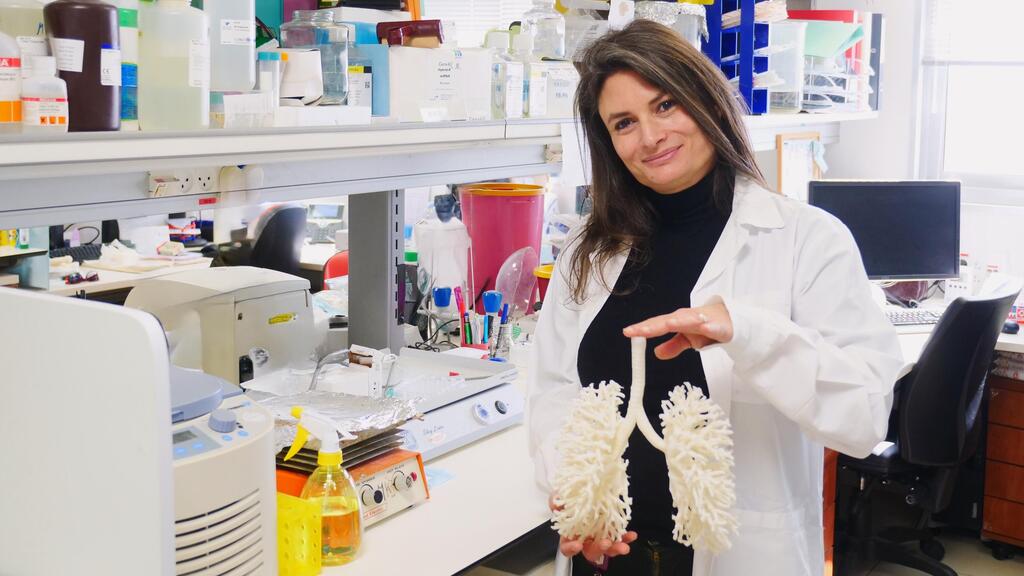
“It’s amazing. Skin is already yesterday’s news. The lung is the new thing,” said Dr. Arbel Artzy-Schnirman, head of the Center for Medical Application Technologies at Rambam, who leads the research.
“I love lungs. You have to see this,” she added. “Right now, in our incubator, we have a small vessel containing lung tissue that is functional. There are cells that secrete mucus and cells with hair-like structures that clear dirt and bacteria from the air, just like in a human lung.”
She noted that researchers have succeeded in printing lung tissue with these cells, and even observing the movement of the tiny hair-like structures under a microscope. Still, she emphasized, this is only a fragment of a lung.
“The surface area of a full human lung is the size of a tennis court. There is currently no technology, to the best of my knowledge, that can produce an entire lung,” she said.
From science fiction to reality
The idea of producing parts of the human body in a lab may sound like science fiction, but it is already happening. While full organs such as hearts or kidneys are not yet within reach, Israeli researchers see their work as a meaningful step toward that goal.
At Rambam, scientists are working to print human tissues using a patient’s own cells, create disease models and test new drugs before they reach human trials.
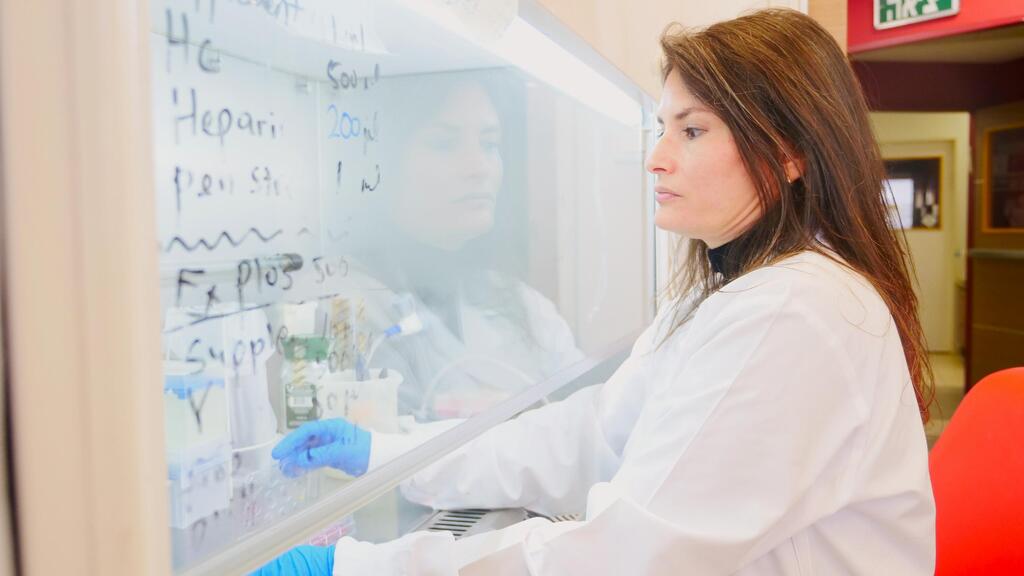
(Photo: Rambam Health Care)
“To print tissues means understanding what a tissue looks like, how it is built, which cells it contains and what its properties are,” Artzy-Schnirman explained. “From there, we create a geometric structure in the lab that faithfully replicates the original tissue, both in shape and cellular composition.”
The goal is functionality. “We want the tissue to behave like the real thing, so it can be used and truly reflect reality,” she said.
Printing with living materials
The process combines biological insight with engineering.
“It’s not like a home printer, but the concept is similar,” she said. “Instead of printing in two dimensions, we print layer by layer to create a three-dimensional structure.”
Rather than ink, the printer uses biological substances that form human tissues, such as collagen, fibronectin and laminin. By combining multiple materials and cell types, researchers can recreate the complexity of human tissue.
“In the human body, tissue isn’t made of just one type of cell,” she said. “The ability to print several materials and cells simultaneously allows us to build that complexity.”
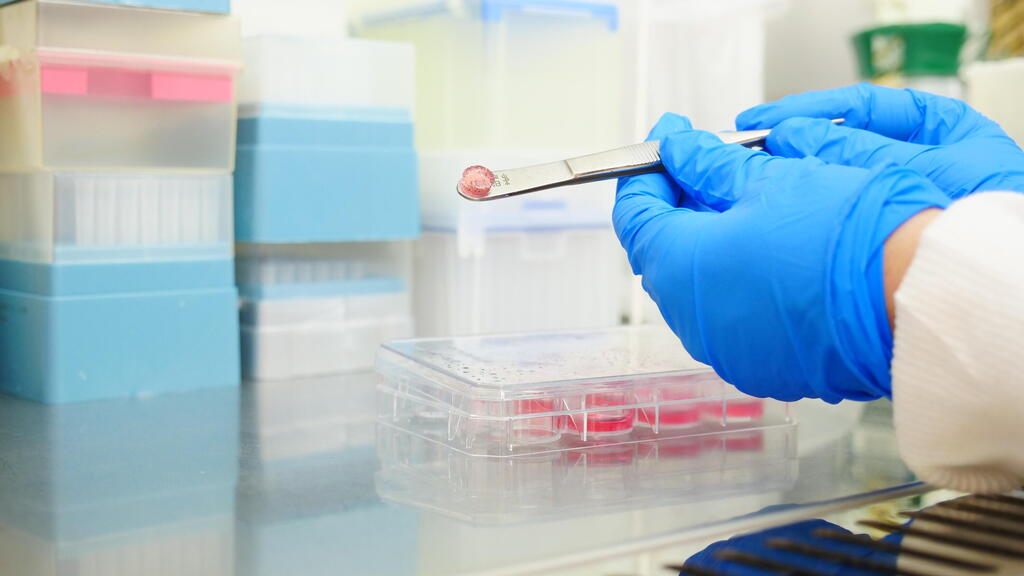
Printed tissue with living cells growing in an incubator
(Photo: Rambam Health Care )
Toward an unlimited organ supply
If the technology reaches its full potential, the implications are profound.
Today, there is a severe shortage of organs for transplant, and patients often wait years. In the future, researchers hope it will be possible to take cells from a patient and print a personalized organ, eliminating the risk of immune rejection.
“That would be extraordinary,” Artzy-Schnirman said. “We could also replace parts of organs. For example, after a heart attack, damaged tissue could be restored by printing new tissue. The same applies to burns, skin injuries and even long bones.”
Such advances could be especially significant in Israel, where hospitals have treated large numbers of wounded patients in recent years, many with complex tissue and organ injuries.
“There is a real need,” she said. “Medicine often has to compromise. Tissue printing could open the door to much better solutions.”
Revolutionizing drug development
For now, the most immediate applications lie in drug development.
“One of the biggest challenges in developing drugs is toxicity,” Artzy-Schnirman said. “A drug may solve one problem, but harm the liver or heart. There is currently no simple way to test this.”
Bioprinting allows researchers to create human tissue models, such as liver or heart tissue, and test drugs on them.
“This is already beginning to happen. It’s a real revolution, something we are clearly starting to unlock,” she said.
The technology could also reduce reliance on animal testing. While it will not eliminate it entirely, printed human models may significantly lower the need for such experiments.
Challenges remain
Despite the progress, printing entire organs remains a major scientific challenge.
Researchers must fully understand the structure of each organ, including its geometry and cellular composition, and develop technology capable of replicating it.
One of the biggest hurdles is creating blood vessels within printed tissue. In the human body, every cell is supplied with oxygen and nutrients through nearby vessels. Replicating this system is essential for integrating printed tissue into the body.
“This is a challenge that has not yet been fully solved,” Artzy-Schnirman said. “But we are finding solutions that will continue to improve.”
Small steps toward a major breakthrough
For now, the breakthroughs are incremental.
At Rambam, researchers are already printing skin tissue as part of a collaboration with the hospital’s dermatology department. The goal is to study skin lesions and better predict which may become cancerous.
“We can print healthy skin tissue and introduce cells from a patient’s lesion,” she said. “This allows us to observe development in the lab, track changes and test responses to different treatments.”
It remains unclear when fully functional organs will become a reality. It could take a decade, two decades or longer.
But for researchers working with bioprinters today, the direction is clear.
Even if it begins with small pieces of tissue growing in an incubator, like many scientific breakthroughs, this transformation may start with something remarkably small.