


For most people, a common cold is a passing nuisance: a runny nose, maybe a sore throat, and then it fades. For others, the very same virus can turn into a serious illness, with shortness of breath, wheezing, worsening asthma and sometimes even hospitalization.
A new study published in January in the scientific journal Cell Press Blue offers a close look at what happens in the very first hours after infection, explaining why the differences between people can be so dramatic.

Dr. Ellen Foxman, one of the study’s lead authors and an immunobiology researcher at Yale School of Medicine, said in an interview with CNN that the question that interested her was why the same cold virus generated life-threatening symptoms for some people but caused minimal or no symptoms in others. “It’s a very interesting virus, because in many people who get it, it causes no symptoms. Then, for certain groups of people, it triggers life-threatening difficulty breathing", Foxman said.
The experiment: simulating a human nose in the lab
Foxman said her interest in the subject is not only academic. She vividly recalls a severe asthma attack her son suffered as a child after being infected with rhinovirus, the most frequent cause of the common cold. “It’s a frightening moment for any parent,” she told CNN. “But for me as a scientist, it also raised a deeper question.”
The background is well known: Rhinovirus is the most common trigger of asthma attacks, but until now it was unclear why in some people the infection stays “in the nose,” while in others it quickly spreads to the lungs.
In the new study, Foxman and her colleagues grew epithelial cells taken from the noses of healthy donors and created a three-dimensional culture that closely mimics the human nasal lining, including ciliated cells and mucus production. After four weeks of growth, the researchers infected the culture with rhinovirus and tracked the response of thousands of cells at once, at single-cell resolution.
The main finding was clear. When the interferon response (the body's first line of defense against the virus) was activated quickly, the virus was limited to less than 2% of the cells. In that situation, Foxman said, it can result in no symptoms at all or at most a mild runny nose.
By contrast, when the researchers blocked the interferon response, the picture changed entirely. More than 30% of the cells became infected, the viral load surged, and the culture began producing large amounts of mucus and inflammatory substances, which is exactly what we see in a severe, miserable cold, Foxman said.
Scientific backing for what doctors see in the clinic
Dr. Reuven Yishai, an ear, nose and throat specialist at Assuta Medical Centers, said the study is innovative and confirms what physicians see every day in clinical practice.
“Most patients who come in with a cold have relatively mild, local symptoms, mainly nasal congestion, without significant complications, high fever or chest pain,” he said. “In most cases, it really is a mild cold that resolves on its own.”
Still, he noted that some groups face a different reality. “Smokers, patients with chronic lung diseases, people with asthma and older adults, usually over age 65, are at higher risk for a more severe illness,” he said.
According to Yishai, the study’s findings closely match what is seen on the ground. “When the immune response in the nasal lining is fast and effective, thanks to early interferon activity, symptoms stay mild. When interferon is weak or delayed, more cells are infected by the virus, and the body activates other inflammatory pathways, including NLRP1-IL-1, leading to more significant inflammation and worsening symptoms such as fever, weakness and mucus.”
 Dr. Reuven IshaiPhoto: Yossi Weiner
He stressed that the research provides “biological and molecular confirmation of what we see in the clinic,” while also noting its limitations. “The immune system works as a complex and extended sequence, and not all components were examined here. There is room for follow-up studies that look at additional mechanisms in tissues and blood vessels.”
It’s not the virus, it’s the body’s response
The study’s central conclusion is that differences between people do not necessarily stem from the virus itself, but from how the body responds to it.
Typically, rhinovirus triggers the production of type III interferon, which sends a warning signal to infected cells and to nearby cells that have not yet been infected. That signal prompts cells to activate antiviral defenses, putting even uninfected cells on alert. Thanks to this early response, the virus is stopped at an early stage and the illness remains mild.
When this defense mechanism is weak or does not activate in time, the virus can replicate and spread. At that point, other inflammatory systems are switched on, especially the NF-κB pathway and another inflammatory mechanism known as NLRP1. Their activation leads to the release of powerful inflammatory substances, increased mucus production and a self-feeding cycle in which more inflammation produces more mucus, which in turn worsens symptoms.
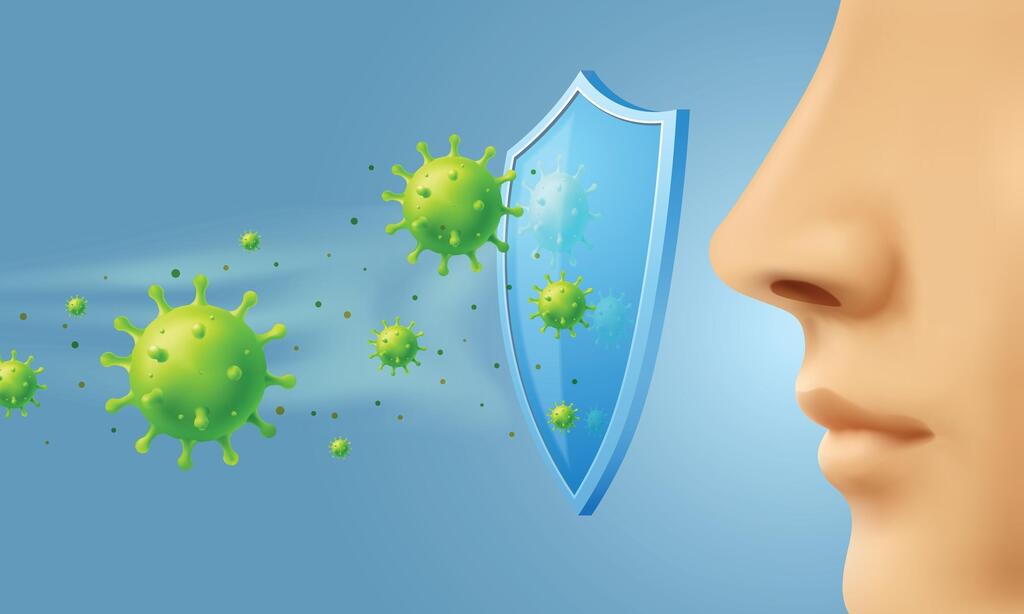
The body’s first encounter with viruses and bacteria begins in the nose
(Photo: Shutterstock)
Why does this happen to some people and not others?
The study does not yet explain why some people have a weaker interferon response to begin with, and additional research in humans is needed. Experts say that when the interferon response is strong, the body can block the virus early and the illness stays mild. When the response is weak, the virus spreads more easily and the disease can become more severe. It is still unclear whether this response can be deliberately strengthened.
Experts also emphasize that interferon is only part of the picture. Disease severity is influenced by other factors, including genetics, underlying conditions such as asthma or COPD, bacteria in the airways and immunity from previous infections. The same principle applies to influenza, RSV and COVID-19.
At the same time, the study points to possible future treatment directions. Blocking a specific inflammatory pathway, NLRP1-IL-1, significantly reduced inflammation under laboratory conditions. Still, this is not a treatment for the common cold itself, but a potential future approach to reducing severe complications. The researchers stress that the findings must first be confirmed in clinical studies in humans.