


When mass casualties strike, forensic pathologists are often urgently needed, and on October 7, Dr. Shelley Tepper knew immediately she had to help.
“There’s a shortage of forensic pathologists in both the U.S. and Israel,” said Tepper, 67, who lives on Long Island with her husband and runs a pathology lab focused on skin biopsies. “Since I have that unique skill set, I decided to find a way to volunteer.”
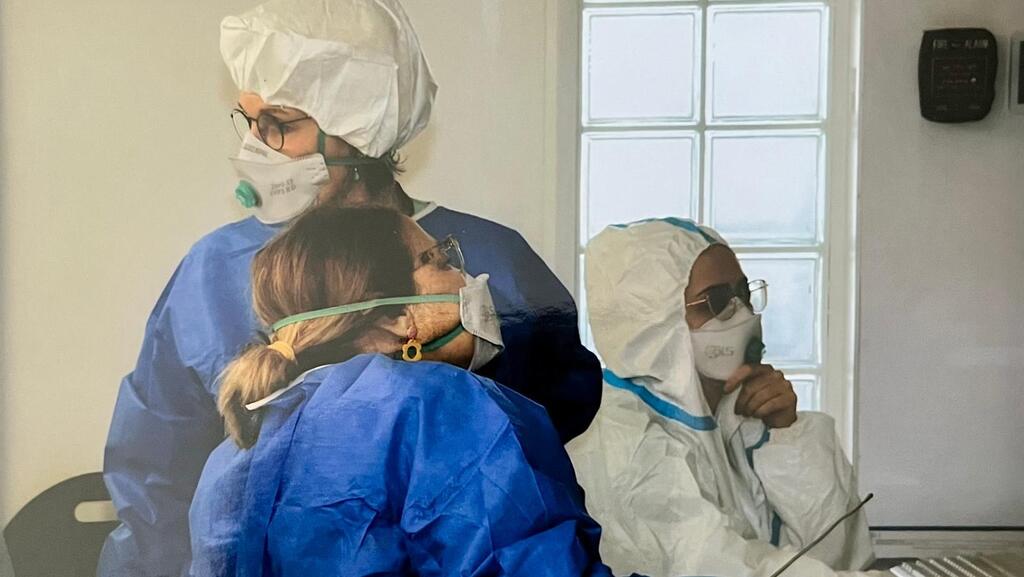
With the help of her sister’s contacts in Israel, Tepper applied through the Ministry of Health, arriving in March for what would become a three-month stay at Israel’s National Center of Forensic Medicine. Her work included examining victims of sudden and unexpected deaths, among them, victims of the October 7 massacre and its aftermath.
Tepper, who previously served as chief medical examiner in various U.S. cities including New York and Los Angeles, described the experience as “very intense.”
“I’ve seen mass shootings, car accidents, even plane crashes — but nothing like this,” she said. “The injuries from war—from grenades, bombings, assault rifles—are completely different.”
She noted a rise in suicides during her time in Israel, including people who threw themselves in front of trains — a method less common in the U.S. due to the accessibility of firearms. “Handguns aren’t readily available here like in the States,” she said. “That was a noticeable difference.”
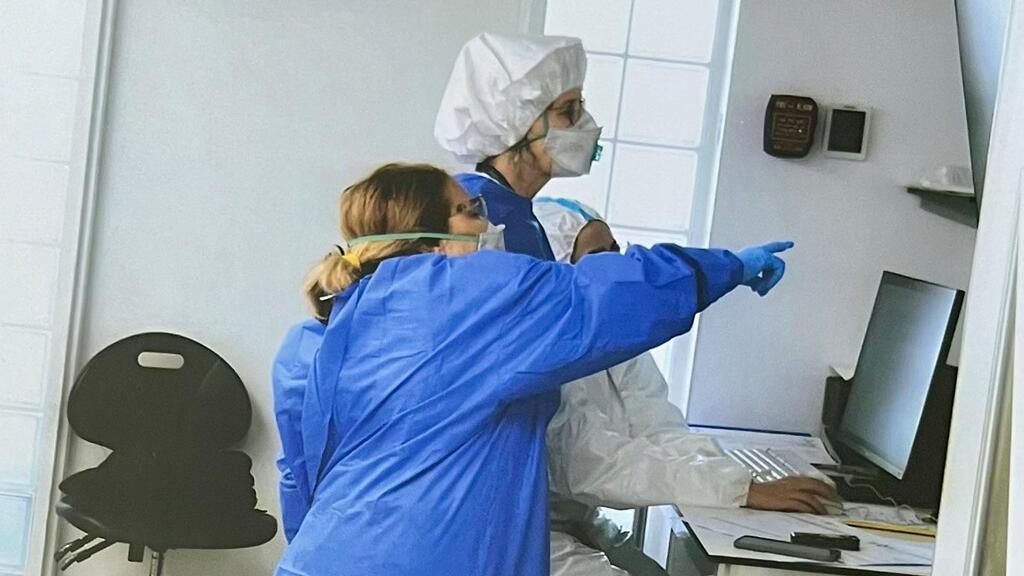
(Photo: Roi Shaban)
One of the moments that left the deepest impression on her came during her first day back in Israel for the extended volunteer period. Six hostages, including dual Israeli-American citizen Hersh Goldberg-Polin, whose story was widely followed in the U.S., were brought to the morgue.
“He had survived having his arm amputated, it had healed, and he was nearly free,” Tepper recalled. “But at the end, they heard the IDF approaching and shot them all in the back of the head. That hit me. He went through all that, and then was murdered just before he could be rescued.”
Her voice wavered as she remembered: “Even now, I feel like I’m on the verge of tears. It was horrible.”
Professionally, Tepper said she was well-prepared for the work, having personally completed or supervised more than 3,000 autopsies. But the emotional toll was undeniable.
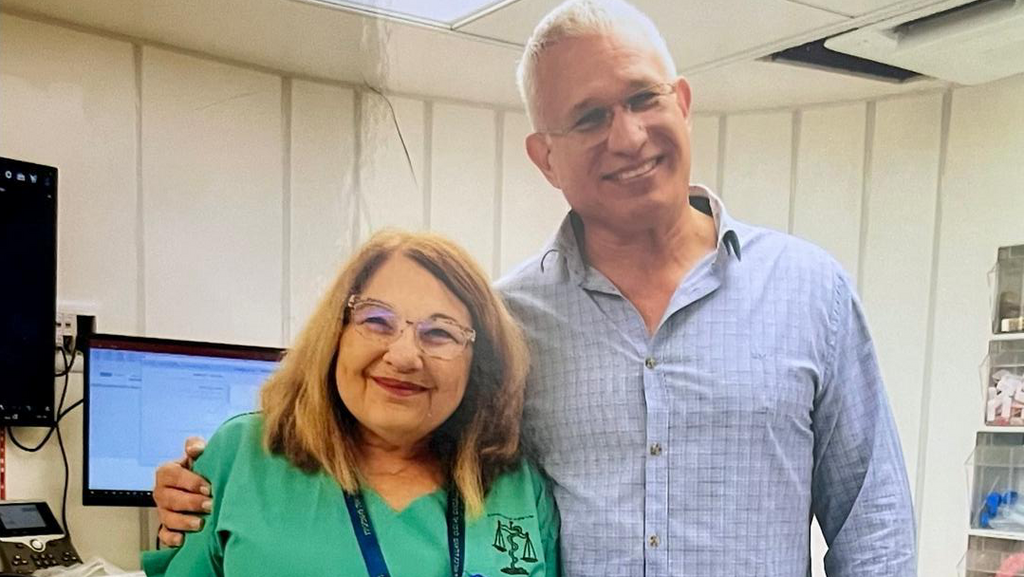
Dr. Shelley Tepper with the head of the Institute of Forensic Medicine, Dr. Chen Kugel
(Photo: Roi Shaban)
“You learn to compartmentalize because what you do is so important,” she said. “But some cases stay with you more than others.”
She found solace in the camaraderie of her Israeli colleagues. “They treated me like family. I was never alone on Shabbat or holidays like Sukkot. I made real friendships,” she said.
The Israeli forensic system also presented differences in practice. Due to religious sensitivities, more examinations are conducted externally, and autopsies are rarer than in the U.S.
“I was able to share some American techniques,” Tepper said. “But here they rely more on external exams and imaging, like full-body X-rays, to detect injuries or metal fragments.”
Another stark difference was the number of foreign nationals among the deceased. “I saw many Thai agricultural workers,” she said. “That’s not something we see often in the U.S., even though I’ve worked all over.”
In May, Tepper was honored with the Israeli Ministry of Health’s Iron Sword Award, which recognizes international doctors who volunteered in the aftermath of the war.
“I was shocked when they told me,” she said. “They kept calling me brave and heroic — but I don’t feel that way. It was something I had to do, something I wanted to do. When you volunteer, you often get as much as you give.”
The certificate, she added, was accompanied by a glowing recommendation from Dr. Chen Kugel, director of the Forensic Institute. “I couldn’t believe the things he said about me,” she said. “I was so honored.”
But returning to the U.S. has been complicated. Tepper says she has felt the impact of rising antisemitism and shifting public opinion about Israel.
Get the Ynetnews app on your smartphone: Google Play: https://bit.ly/4eJ37pE | Apple App Store: https://bit.ly/3ZL7iNv
“It’s a scary time,” she said. “My mother compares it to before World War II. There’s antisemitism, anti-immigrant sentiment, anti-LGBTQ — it’s coming from all sides. And I think Trump stokes it.”
Even within her own family, there’s tension. “One of my four children is very anti-Zionist,” she said. “We just don’t talk about it. I didn’t bring him back any souvenirs. He doesn’t want to hear about it.”
Despite the difficulties, Tepper says her bond with Israel has only deepened. “Every time I come, I love this place more,” she said. “This is where my heart is, and I’ll do whatever I can to help.”
She plans to continue supporting Israel, however possible, even as her current work in the U.S. is limited to non-forensic pathology due to health reasons. “It’s just microscope work now,” she said with a smile. “It’s kind of boring compared to what I did in Israel.”
Tepper doesn’t know when she’ll return. But one thing is certain: “The people here, the work, the purpose — it stayed with me. And it always will.”