


A young woman from France, born with what scientists call superior autobiographical memory, has become the focus of research by three neuroscientists at the University of Paris. Her ability is so extraordinary that it not only allows her to recall past events with astonishing precision, but also to project herself into possible futures that have yet to occur. Is mental time travel really possible? We spoke with a neuroscientist who explains the phenomenon.
Imagine being able to close your eyes and return to a day in first grade: to recall what you wore, how the air smelled, even to see your mother’s expression through the schoolyard fence. For most of us this sounds like a dream, or a scene from a movie, but for one young woman in France it is daily reality.
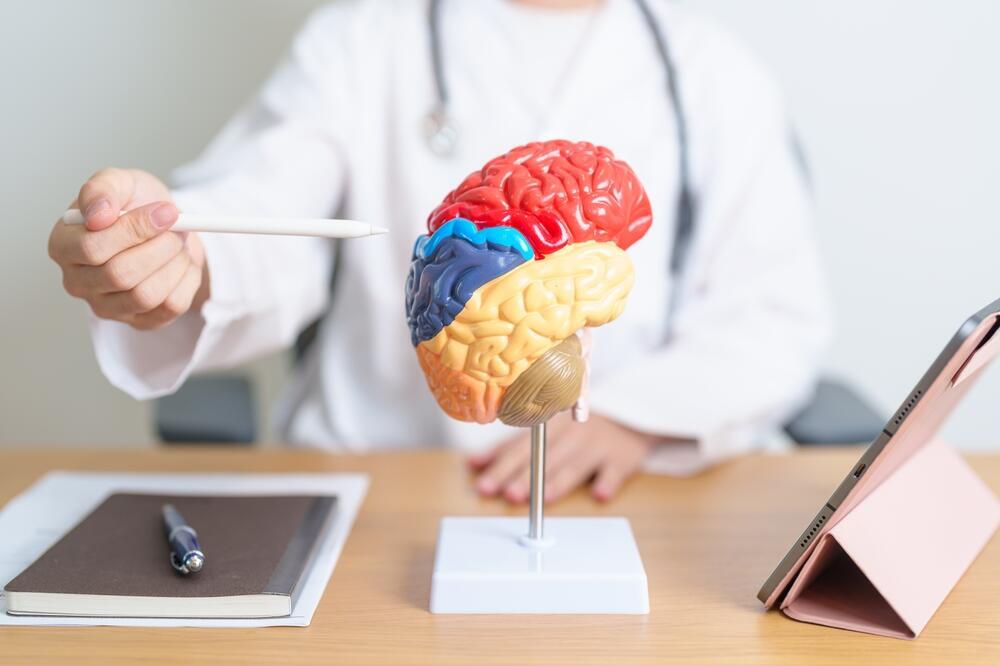
(Photo: Shutterstock)
A new case study published in Neurocase describes her rare ability to remember personal experiences in remarkable detail and relive them at will. The phenomenon, known as hyperthymesia, or superior autobiographical memory, enables her not only to revisit the past but also to imagine possible futures with unusual clarity and vividness. For researchers, it offers a rare opportunity to glimpse how memory may be organized in the human brain.
Autobiographical memory goes beyond simply “remembering what happened.” It is the ability to re-experience events situated in time and place—a blend of general knowledge about one’s life and the small details that make up our sense of identity. In exceptionally rare individuals like this young woman, the ability becomes almost superhuman: memories return with such clarity, accuracy and depth that there is no room for doubt.
Those with this ability describe their memories as particularly vivid, emotionally charged and accompanied by a powerful sense of reliving the experience—as if stepping back into the moment. This subjective state, which researchers call autonoetic awareness, feels like an inner journey: the capacity to jump backward into the past or forward into a future that has not yet occurred, yet seems as real as memory itself.
Only a handful of such cases have been documented worldwide, and scientific understanding remains limited. In their new report, neuroscientists Valentina La Corte, Pascal Pivolino and Laurent Cohen of the Paris Brain Institute and the University of Paris detail how this young woman’s memory system works and what new research directions it may open in the study of personal memory and cognition.
What were you wearing exactly 10 years ago?
The subject of the study, referred to as TL, was a French high school student when researchers discovered her extraordinary ability. From a young age she knew her memory was different. As a child, she would casually mention being able to “go back” to earlier events to check details, leading classmates to call her a liar. Only at 16 did she dare to reveal her ability to her family.
Her memories were not only precise but also remarkably organized. She described an inner mental space—a large rectangular “white room” with a low ceiling—where each memory was stored. Within this imagined room, memories were categorized by themes such as family, vacations, friends, and even her stuffed animal collection. Each toy carried its own “memory tag” with details of when she received it and from whom.
Her memories were not purely factual. They carried strong emotions and vivid sensory details. She could re-experience an event both through her own eyes and as an outside observer. She recalled her first day of school, for example, in dazzling detail: what she wore, the weather that day, and the exact image of her mother watching through the fence—all accompanied by a powerful feeling of reliving the moment.
Alongside the “white room,” TL described a separate “black memory” system: a store of semantic and academic knowledge that was emotionless, unorganized, and dependent on deliberate learning rather than spontaneous recall.
Her inner world also included three other “rooms” with emotional functions. A frozen “ice room” helped her calm down when angry. A “problem room,” empty but useful for pacing and thinking, served as a mental workspace. A “military room,” linked to the absence of her army-serving father and feelings of guilt, felt uncomfortable. This architecture of inner rooms provided not only a storage system for memory but also an emotional framework shaped by personal experience.
To test her memory objectively, researchers administered two standard assessments. The first examined how well people recall personal events from different life stages. On childhood and adolescent events, TL’s performance far exceeded average scores, with memories that were both highly specific and richly detailed. She could also switch freely between her own perspective and that of an external observer when describing an event.
The second test assessed her ability to recall or imagine detailed short episodes from both past and future. Again she excelled. Her imagined future events were not only realistic and context-rich but also carried a strong subjective sense of familiarity, akin to memory, though directed toward experiences that had not yet occurred.
Researchers did note a slight decline in detail when she imagined events far into the future—a trend seen in the general population, where the further into the future an event lies, the less vivid and specific it tends to be. Still, her capacity for mental time travel—returning to the past and projecting herself into the future—was exceptional.
The limits of a single case
The study has limitations. Because it is based on one individual, it cannot establish general conclusions. There were no control groups for comparison, and the findings cannot indicate how common the phenomenon is or how memory typically develops.
The researchers also did not use some of the classic diagnostic tools for hyperthymesia, such as tests of memory for public events or calendar accuracy over long periods. Much of the evidence rested on TL’s self-reports, which were supported by her strong test performance but not measured against broader criteria.
There is also the challenge of verifying the accuracy of childhood memories. It is often impossible to distinguish between authentic recall and reconstructions influenced by photos, family stories or even dreams—a possibility TL herself acknowledged. Still, detailed case studies like this one are valuable in neuroscience, sparking new ideas, sharpening theories and pointing toward future research.
'Remembering everything, even what you’d rather forget'
“It’s a phenomenon defined by extraordinary autobiographical memory, where people recall past events across time with unusual accuracy—even details most would consider trivial,” said Itay Aniel, a brain and memory researcher and doctoral candidate at Bar-Ilan University in Israel. “So far only about 100 cases have been documented worldwide.”
While the ability may sound enviable, Aniel stresses its downsides. “Alongside the impressive memory lies a heavy burden: those with superior autobiographical memory recall negative experiences just as vividly—insults, sadness, anxiety. For many, this becomes an emotional weight that can make daily functioning difficult.”
To explain, Aniel outlines the two main types of memory: declarative and non-declarative. Non-declarative memory covers skills and sensations we do not consciously articulate—like riding a bicycle, playing piano or cooking. Declarative memory, by contrast, includes semantic knowledge (general facts) and episodic memory (personal experiences across time). People with hyperthymesia excel in episodic recall but not necessarily in semantic knowledge, meaning they are not inherently more intelligent than others.
The most significant element of hyperthymesia, he adds, is emotional rather than cognitive. “What stands out is the emotional overload many of these individuals experience. Research aims not only to better understand the mechanisms of memory and forgetting in the human brain but also to develop therapies that might help them cope.”
Why do some remember so much? Aniel points to the hippocampus, the brain structure that forms new memories and selectively transfers some into long-term storage. Normally, unused connections fade—a process we call forgetting. But in people with hyperthymesia, these mechanisms seem to work differently. “Forgetting,” Aniel emphasizes, “is one of the greatest gifts the human brain has.”
Reflecting on the research, he adds: “Memory is selective. Our brains filter out much of what we don’t need to remember, and that’s what allows us to give greater weight to what matters most. In other words, one of the ways we remember what is important is by forgetting what is not.”
The study, titled Autobiographical hypermnesia as a particular form of mental time travel, was published Aug. 1, 2025.