

Francis Halzen won the Nobel Prize in Physics on Tuesday for his contributions to the IceCube Neutrino Observatory and the discovery of high-energy neutrinos originating beyond Earth.
“Francis Halzen has led an international team of researchers and engineers who have provided us with a fantastic instrument. His tenacity and scientific vision has paved the way for a new kind of astronomy,” Mark Pearce, chair of the Nobel Committee for Physics, said in announcing the award.
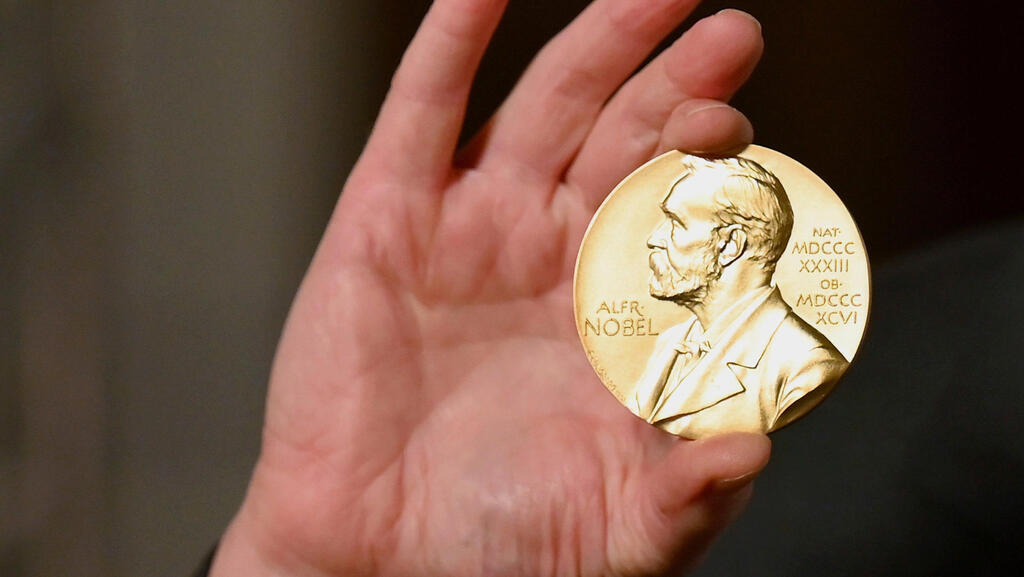
Francis Halzen wins Nobel Prize in Physics for discovery of cosmic neutrinos
(Photo: Angela Weiss / Pool Photo via AP)
Halzen, 82, was born in Belgium and is affiliated with the University of Wisconsin-Madison in the U.S. His work on detecting neutrinos at the South Pole stretches back to the 1980s and ultimately helped establish IceCube as a tool for studying some of the universe’s most energetic phenomena.
The Royal Swedish Academy of Sciences announced the prize in Stockholm. This year’s award carries 12 million Swedish kronor, about $1.2 million.
The physics prize follows Monday’s Nobel Prize in Medicine, awarded to three scientists whose work helped develop a technique using light to investigate how the brain functions.
Last year’s physics Nobel went to three scientists for research into quantum tunneling, work that helped enable extremely sensitive measurements used in technologies including MRI machines and contributed to advances in electronics.
This year’s Nobel announcements continue Wednesday with chemistry, followed by literature on Thursday and the peace prize on Friday. The Nobel Memorial Prize in Economic Sciences will be announced Monday.