

Forget beach vacations in Thailand or shopping trips in Europe. Your next holiday could include barbed wire fences, rigid morning roll calls and guards making sure you do not sneak snacks into your room.
For a growing number of people in China, the fight against excess weight has taken an extreme turn, fueling the rise of facilities cynically dubbed “fat prisons.” These are closed, isolated camps that promise rapid weight loss in exchange for the complete surrender of personal freedom for a full month.
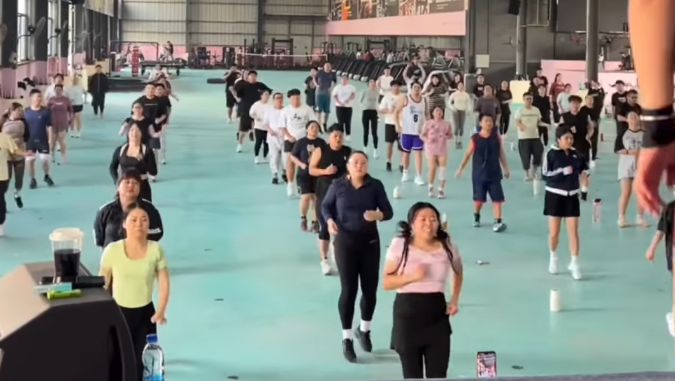
A 28-year-old Australian woman decided to experience the controversial phenomenon firsthand, offering a rare glimpse inside the closed doors of China’s diet camp industry. Posting under the online alias Eggeats, she documented her stay in a facility that markets itself as an alternative for those who have given up on personal trainers, trendy diets and miracle pills.
The camps operate like military boot camps. Every gram of food is monitored, participants are under constant supervision and iron discipline is enforced to shed kilograms, whether participants want to or not.
Eggeats enrolled in early December in a program costing about $1,000. While a shorter two-week option exists, the camp strongly encourages a full 28-day stay for optimal results, which she agreed to. In a series of candid videos, she revealed a daily routine that would not be out of place in a combat unit.

(Photo: eggeats / instagram@)
Participants train four hours a day and attend 19 workouts a week. The day begins with group aerobics, followed by high-intensity interval training and another aerobic session in the afternoon. Each day ends with a mass spinning class resembling a rave, complete with loud music and flashing lights, as rows of riders pedal in unison toward weight loss.
Meals are served on stainless steel trays and measured sparingly. Breakfast consisted of a single slice of bread, a small amount of tomato and cucumber and four hard-boiled eggs. Lunch was considered the main and most filling meal of the day, featuring dishes such as roasted duck, lotus root, stir-fried vegetables and a banana for dessert.
But the challenge is not only physical. Living conditions resemble a military boarding school. Participants sleep in shared rooms with up to five people and are strictly forbidden from leaving the compound without a “justified reason.”

(Photo: eggeats / instagram@)
Eggeats filmed the high concrete walls, iron gates and electric fences surrounding the camp, with security guards stationed at entrances to prevent escapes or food smuggling. Upon arrival, participants must surrender any prohibited food they brought with them, such as instant noodles or fried snacks. The message is clear. Once you enter, you stay until the end.
The experience is not entirely bleak. From 7:40 p.m., participants are given free time, and Sundays are designated rest days, aside from a mandatory evening spinning class. The price includes accommodation in rooms with desks and personal lockers, strong showers and restroom facilities that mainly consist of traditional squat toilets, a detail that poses an added challenge for Western visitors.

(Photo: eggeats / instagram@)
Staff members are described as friendly and eager to practice English with foreign participants who arrive from around the world.
The results were measurable. Eggeats reported losing 2.25 kilograms in the first week and a total of 4 kilograms after two weeks. Despite the pain, fences and physical strain, she recommended the experience to those seeking an extreme challenge.
“I met so many friends. Everyone is kind and nonjudgmental because we all share the same goal, to get rid of fat,” she said.
Online commenters were less impressed by the results relative to the effort. “Losing 3.6 kilograms in two weeks is not that impressive for a closed training camp,” one user wrote. “You could achieve the same result at home, without electric fences.”