


The Operation Roaring Lion war is beginning to affect global pharmaceutical supply chains as well, Reuters reported Monday. The disruptions are being felt particularly in shipments of temperature-sensitive medicines — including cancer treatments — which rely heavily on fast air transport and a continuous cold chain.
According to industry sources, the closure of key air routes and disruptions to maritime traffic in the region are forcing pharmaceutical and logistics companies to reroute shipments, find alternative transit routes and in some cases move medicines along longer land routes.
Gallery
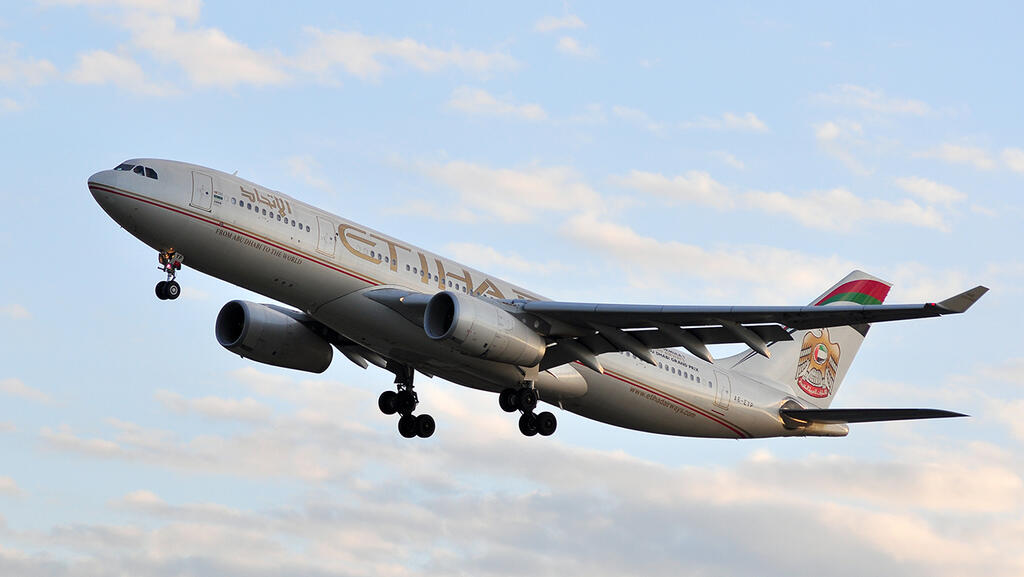
Etihad Airways plane; airports in the UAE were damaged and suffered heavy disruptions
(Photo: Shutterstock)
Regional tensions escalated after Iran carried out strikes across the Middle East in response to U.S. and Israeli attacks, damaging major aviation hubs and restricting shipping routes. As a result, the movement of goods in the region — from medicines to food and oil — has been affected.
For now, industry sources say there are no signs of significant drug shortages. However, executives warn that if disruptions persist, hospitals and health systems could face supply difficulties within weeks.
One of the main causes of the disruption is damage to key air cargo hubs in the region. Major airports including Dubai, Abu Dhabi and Doha have suffered significant disruptions following Iranian strikes carried out in response to U.S. and Israeli attacks. Airports in Dubai and Doha serve as key transit hubs between Europe, Asia and Africa. Airlines such as Emirates and Etihad, along with logistics companies like DHL, handle shipments there that include temperature-sensitive medicines that must be kept within a precise cooling range to remain safe and effective.
“Drug shortages have been a familiar phenomenon worldwide for several years,” said Dr. Inbal Yifrach-Damari, head of the pharmacy and pharmacology division at Maccabi Healthcare Services, one of Israel’s major health maintenance organizations.
“The Israeli health system has also faced a significant rise in shortage notifications in recent years, making it harder to maintain treatment continuity and regular drug supplies. Even before the fighting began, there were several medications — some of them very important — whose supply we were waiting to be renewed. Some of those shipments were supposed to reach Israel in the first week of March, but their arrival was delayed because of the war.”
 Dr. Inbal Yifrach-Damari Photo: Ofer Hagiov
According to Yifrach-Damari, “Immediately after the fighting began we mapped existing shortages and worked to bring forward shipments to Israel as much as possible. We also relied on the Health Ministry’s supply chain desk, which was established specifically for emergencies, to ensure continuous medicine supply during this period. In cooperation with the Health Ministry, pharmaceutical companies and suppliers, we are managing to advance shipments and bring supplies to Israel.”
She said the process can sometimes be complex and challenging, requiring shipments to be split between different transportation routes — air and sea — to manage risks and maintain an available supply channel.
“There is no doubt this is a significant challenge faced by all health organizations even in routine times, and even more so during periods of war or emergency,” she said. “Despite this, we are working continuously to ensure as stable a supply as possible for patients, find solutions and reduce gaps on the ground.”
Kobi Tzoref, CEO of Pharma Israel, sought to reassure the public.
“We have experience from previous conflicts, and immediately after the war began we acted to ensure the continued supply chain of original medicines in Israel,” he said. “Pharma Israel, together with representatives of all international pharmaceutical companies operating in Israel, is working closely with the Health Ministry’s technology division to understand needs, adjust inventories and solve specific challenges in real time.”
Searching for alternative routes
To cope with the situation, pharmaceutical and logistics companies are searching for alternative transit routes. Executives at Western pharmaceutical companies told Reuters that some shipments are now being redirected to other airports in the region, such as Jeddah and Riyadh in Saudi Arabia, and then transported by truck to their destinations.
Other options being examined include routing shipments through Istanbul or Oman. One pharmaceutical industry executive told Reuters that companies have set up internal teams tasked with prioritizing shipments vital for patients, including cancer treatments. He warned that shipments requiring cold-chain conditions could miss logistics connections if proper storage and handling conditions are not ensured.

Cancer drugs that require a cold chain are considered especially vulnerable to supply chain disruptions
(Photo: Shutterstock)
An executive at a medical equipment company told Reuters that the first step in such situations is to map shipments already in transit or ready for dispatch, and then decide which cargo needs to be diverted and which new shipments must be replanned. According to him, some Europe-Asia cargo that normally passes through Dubai or Doha is now being rerouted through China or Singapore.
At the same time, maritime routes are not an efficient alternative. Industry sources say sea transport takes significantly longer, and the situation has become even more complicated following Iran’s closure of the Strait of Hormuz.
“If there is an urgent surgery and a patient waiting for treatment, you have to choose the fastest transportation option,” a medical equipment company executive told Reuters.
Prashant Yadav, a senior fellow for global health at the Council on Foreign Relations, told Reuters that stocks of expensive, temperature-sensitive medicines — particularly those with short shelf lives — usually last about three months.
According to him, cancer drugs, especially monoclonal antibodies, are among the medicines most vulnerable to supply disruptions. Some companies have already received warnings from clients that drug inventories could run out within four to six weeks if the situation does not improve.
Delays in the supply of oncology drugs could have significant consequences for patients. In some cases, they may be forced to restart treatment or face worsening disease conditions.
 Kobi Tzoref, CEO of Pharma Israel Photo: Rami Zarnegar
Despite the disruptions, logistics industry sources say drug deliveries are still continuing for now. According to Reuters, airlines are redirecting shipments to alternative airports in the Middle East, from which medicines are transported overland.
However, the new routes extend delivery times and increase costs, particularly for medicines that require refrigeration. Industry officials warn that the disruptions could also affect essential components used in drug production. As a result, shortages may sometimes involve not the medicine itself but small components needed for packaging and distribution — such as the small stopper in a vial used to draw a dose.
It is important to note that the vast majority of original medicines reach Israel from Europe and the United States, meaning that aviation restrictions in Gulf states do not significantly affect drug availability in Israel.
“We have also ensured the continued supply of innovative medicines for patients participating in clinical trials,” Tzoref concluded. “We will continue working routinely to ensure patients in Israel have full access to the treatments they need.”