


A single blood test identified more early-stage cancers than all existing screening programs in Britain combined. In a second study, conducted among 36,000 people in real-world conditions, the test increased the number of cancer diagnoses by 6.5 times, most of them at stages still considered potentially curable.
The two studies on Galleri, a blood test designed to detect signs of more than 50 types of cancer, were presented in recent days at ASCO, the American Society of Clinical Oncology’s annual meeting in Chicago.
Gallery
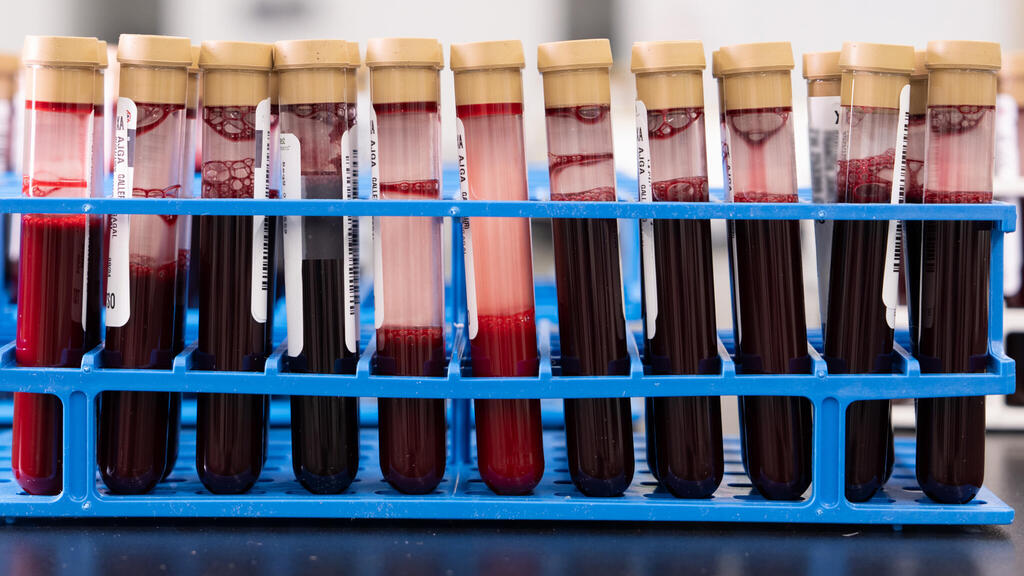
A single blood test identified more early-stage cancers than all existing screening programs in Britain combined
(Photo: Grail)
The technology behind Galleri is based on a relatively simple principle: cancerous tumors release fragments of cell-free DNA into the bloodstream, carrying distinctive molecular patterns. Analyzing those patterns is intended to detect a biological signature that may indicate the presence of a tumor and point to where in the body it originated. A positive result, however, is not a cancer diagnosis, but a signal that further medical evaluation is needed.
The NHS-Galleri trial was conducted in England in cooperation with Britain’s National Health Service and included 142,250 participants aged 50 to 77 who had no symptoms suggesting cancer. Participants were randomly divided into two groups: one underwent standard screening only, while the other received standard screening plus an annual Galleri test over three screening rounds.
The trial was designed to examine whether adding the test would reduce diagnoses of advanced stage 3 and 4 cancers among 12 predefined deadly cancers, including pancreatic, ovarian, liver, lung and colorectal cancers, as well as lymphoma.
The results showed a significant shift in diagnosis patterns. After three screening rounds, stage 4 diagnoses among the 12 predefined cancers dropped by 14%, with the effect strengthening over time: 9% in the first round, 22% in the second and 26% in the third. Adding Galleri also led to a fourfold increase in cancers detected through proactive screening and a 16% rise in diagnoses at stages 1 and 2.
Across all cancer types, there were 21% fewer diagnoses following the appearance of symptoms and 25% fewer diagnoses following urgent referral or emergency room visits.
Of 1,801 participants who received a positive result, 0.91% of those tested across the three rounds, 937 were later diagnosed with cancer. The test’s positive predictive value was 52%, its specificity was 99.55%, and its accuracy in identifying the cancer’s origin in the body was 92.5%. Sensitivity stood at 54.7% for the 12 predefined cancers and 30.7% across all cancers, underscoring that the test is not meant to replace existing screening programs.
The main caveat: the trial’s primary endpoint, a combined reduction in stage 3 and 4 diagnoses, did not reach statistical significance.
Prof. Eric Klein, a senior scientist at Grail who attended the conference, said the findings should be viewed in a broader context. In the control group, which received only standard UK screening, 290 cancers were detected through screening.
 Prof. Eric Klein,Photo: Grail
“When Galleri is added to existing screening programs, another 937 cancers are found that would not have been detected through standard screening alone,” he said. “That is why we see a fourfold increase in the number of cancers detected through screening.”
Klein pointed to another finding he said has not received enough attention: Galleri alone detected 366 stage 1 or 2 cancers. By comparison, all existing screening programs in Britain combined detected 290 cancers, at all stages.
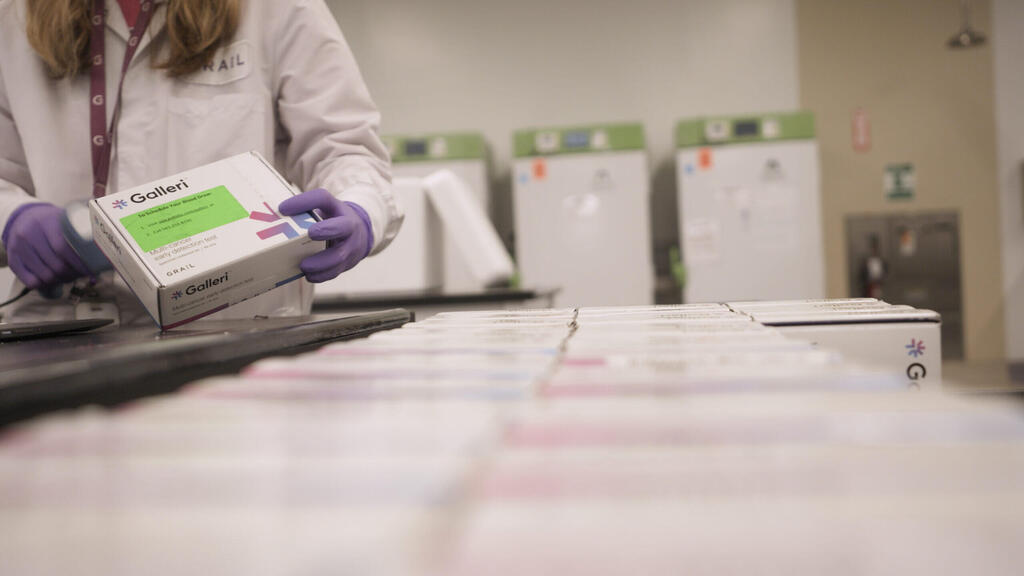
Galleri looks for fragments of tumor DNA released into the bloodstream, which carry distinctive molecular patterns. Analyzing those patterns can signal a possible cancer and help identify where in the body it began
(Photo: Grail)
“So the claim that tests of this kind are not sensitive enough for early-stage cancer does not reflect the full picture,” he said. “At the population level, Galleri found more stage 1 and 2 cancers than all existing screening programs combined.”
“When cancer is found at stages 1 through 3, it is often possible to offer treatment that is less aggressive, less expensive, requires less time away from family and work, and has a higher chance of cure,” Klein added.
Prof. Ido Wolf, head of oncology at Tel Aviv Sourasky Medical Center and dean of the medical school at Tel Aviv University, who also attended the conference, said the findings should be read in light of changes in cancer care over the past decade.
“When the trial was planned many years ago, stage 3 was much closer to stage 4 in terms of prognosis,” he said. “Today, things have changed completely. In lung cancer, stomach cancer, melanoma and other cancers, immunotherapy and biological treatments can be given at these stages, and sometimes they can downstage the disease and even cure it. If the trial were designed today, stage 3 and stage 4 might have been separated differently.”
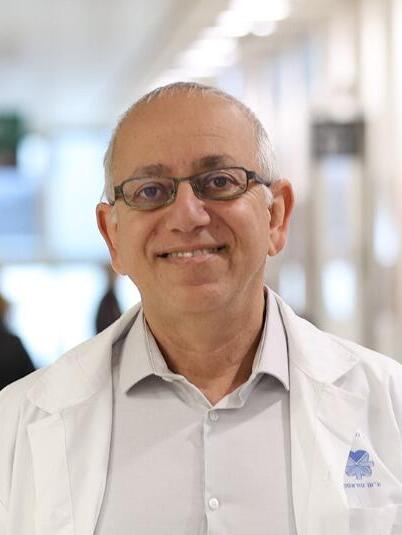 Prof. Ido WolfPhoto: Sourasky Medical Center
Wolf also addressed a phenomenon familiar from all screening programs, which helps explain why the effect strengthened in the second and third rounds.
“When you screen a population for the first time, you find cases that were already there, and naturally some of them are more advanced,” he said. “After you have cleared that population, you are left with a population better suited for follow-up. Then, in the second and third rounds, meaning among new cancers that develop during follow-up, you begin to see the real effect.”
He also pointed to the drop in emergency room diagnoses.
“That is an extreme situation, when a person arrives at the ER because of bleeding, obstruction, pain or another urgent condition,” Wolf said. “When there is a decline in those cases, it means something good happened. It means some cases are being found before they arrive with significant symptoms or in an emergency.”
While NHS-Galleri examined the test in a controlled framework, Pathfinder 2 sought to answer a question closer to routine medical reality: what happens when Galleri is used in real life, where not everyone undergoes every recommended screening test, not always on time and not necessarily every year.
The study included nearly 36,000 people aged 50 and older, with no symptoms and no known suspicion of cancer. They underwent the Galleri test alongside standard screening, according to their doctor’s recommendations and their own decisions.
Combining the test with standard screening increased the number of cancers detected by 6.5 times compared with relying on standard screening alone. Among cancers diagnosed through the test, 70.9% were found at stages 1 to 3. When Galleri identified a suspicious signal, a malignant tumor was later diagnosed in more than 60% of cases. When no signal was detected, the negative result was accurate in 99.6% of cases. The median time from a positive result to final diagnosis was just 48 days.
“About 70% of the cancers we detected currently have no existing screening tests,” Klein said. “We can identify cancers people die from, with a very low risk of a false positive result and a very low risk that people will undergo unnecessary diagnostic workups.”
The Pathfinder 2 findings were submitted to the FDA as part of the test’s approval process. Researchers stress that further follow-up is needed to determine whether the drop in stage 4 diagnoses and the rise in early detection will translate into improved survival and reduced mortality.
“We hope so,” Klein said, “but next year we will know much more.”