

There are actions we perform without thinking about them at all, and breathing is the most basic among them. About 12,000 times a day, we inhale and exhale without noticing.
But during periods of stress, air raid sirens and uncertainty, breathing suddenly becomes noticeable. It becomes faster, shallower, and sometimes accompanied by a feeling of suffocation. Even completely healthy people may experience difficulty breathing.
Gallery
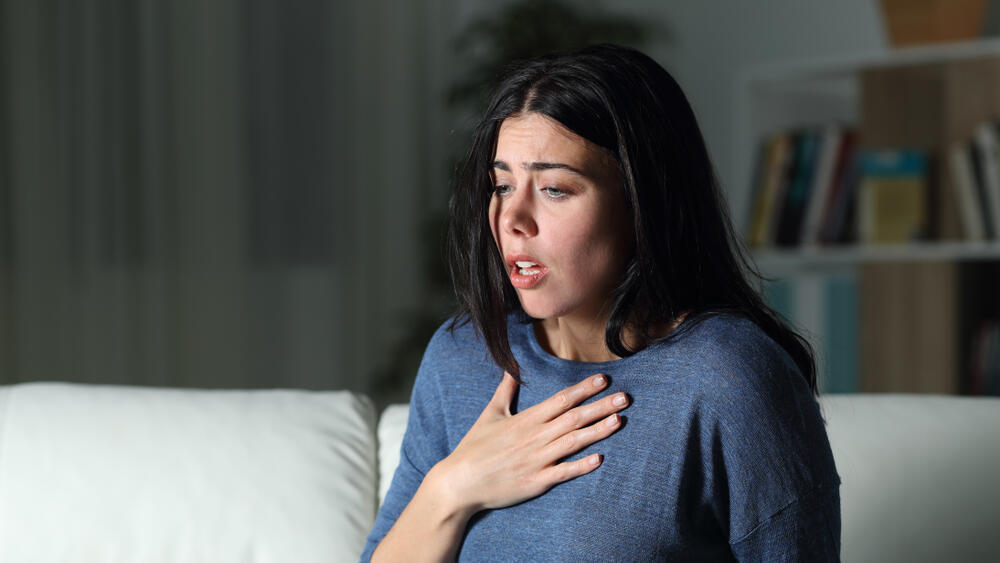
During periods of stress, air raid sirens and uncertainty, breathing becomes faster, shallower, and sometimes accompanied by a feeling of suffocation
(Photo: Shutterstock)
The circular connection between anxiety and breathing is not only psychological. It is physiological and supported by research.
When the body enters a state of stress, the nervous system activates an emergency response. The heart rate rises, muscles tighten and breathing patterns change. These changes can produce physical sensations such as chest pressure, dizziness or the feeling that breathing is not sufficient.
Those sensations can intensify anxiety, creating a self-reinforcing cycle. Anxiety can cause shortness of breath, and shortness of breath can worsen anxiety, regardless of the initial trigger.
Scientific literature describes disruptions in breathing patterns as one of the central characteristics of anxiety, not merely a result of it. A large meta-analysis published in Clinical Psychology Review, which included dozens of randomized studies, found that interventions aimed directly at regulating breathing led to moderate to significant improvements in anxiety symptoms.
The researchers concluded that breathing disturbances are a hallmark of anxiety symptoms and can serve as an important therapeutic target.
 Dr. Inbal ShafranPhoto: Sheba Medical Center
Breathing as a tool to reduce anxiety
The respiratory system is one of the few systems in the body that functions both automatically and under conscious control.
In many cases, the key to breaking the cycle of anxiety is regulating breathing. Controlling breathing allows us to intervene in anxiety simply and naturally. Some experts consider it one of the most powerful tools we have to influence the connection between body and mind.
Even the Hebrew language and Jewish tradition hint at a deep connection between physiology and inner essence through the similarity between the words for breath and soul. In Genesis 2:7 it is written: “He breathed into his nostrils the breath of life.” In other words, breathing is not only a biological act but the foundation of life itself.
In the current reality of war with Iran, anxiety can cause powerful breathing sensations even among people without chronic lung disease or heart disease. These sensations can include the need to take another breath, a feeling of air hunger, or the sense that breathing is not sufficient and the lungs cannot fully fill.
These sensations are completely real, but their origin is usually the nervous system rather than the lungs themselves.
Practicing conscious breathing, which involves focusing attention on breathing and gradually extending the exhalation, can help relieve the sensation and identify situations in which shortness of breath is related to anxiety.
What can help reduce breathing disturbances?
Focus on breathing: Become aware of your breathing, concentrate on breathing through the nose and slow its pace.
Lengthen the exhale: Gradually extend the exhalation as much as possible.
These actions send calming signals to the brain, help lower the heart rate and assist the body in exiting the emergency state triggered by stress.
When shortness of breath is not caused by anxiety
At the same time, it is important to emphasize that not every case of shortness of breath is the result of anxiety.
For people with asthma, COPD or other chronic lung diseases such as pulmonary fibrosis, the current situation poses significant challenges. Beyond the worsening that may occur due to stress and anxiety, staying in protected spaces, sometimes with limited ventilation and increased exposure to dust or mold, may aggravate symptoms and even worsen the disease itself.

It is important to be aware of your breathing, focus on breathing through the nose and slow its pace
(Photo: Shutterstock)
Rapidly leaving the house during sirens and disruptions to routine can also mean inhalers or medications are not available when they are needed.
For this reason, patients should make sure their regular medications and inhalers are accessible at all times, including inside a safe room or shelter. Those who use home oxygen should ensure that the oxygen system is also accessible in the protected space and kept away from sources of fire.
There is a clear medical rule: if there is uncertainty about the cause of shortness of breath, a lung or heart cause should first be ruled out before attributing it to anxiety.
When there is a prior diagnosis of lung disease, patients should first use the medication or inhaler prescribed by their physician. Only afterward can the distressing breathing sensations be considered anxiety-related.
After using inhalers and ruling out another physical cause, anxiety-reducing methods such as breathing exercises may be helpful.
However, whether a person has a known medical condition or not, if severe or unfamiliar shortness of breath occurs, medical assistance should be sought as soon as possible.
Normally, we do not have to remember to breathe; the body does that for us. But when the balance is disrupted, paying attention to breathing, along with proper treatment when needed, can help prevent medical deterioration and ease stress.
Dr. Inbal Shafran is a pulmonology specialist at Sheba Medical Center and a member of the Israeli Pulmonary Association’s executive committee.