

A team of Israeli researchers from Tel Aviv University, Bar-Ilan University, the University of Haifa and Sweden’s Jönköping University has developed a groundbreaking method to improve wildfire forecasting by tailoring models to specific countries.
Published in the scientific journal npj Natural Hazards by Nature, the study shows that adapting weather-based fire risk indices to local conditions significantly boosts prediction accuracy.
Wildfires near Jerusalem
(Video: Fire and Rescue Authority)


Led by Dr. Assaf Shmuel and Prof. Colin Price from Tel Aviv University’s Geophysics Department, alongside Prof. Teddy Lazebnik from the University of Haifa and Jönköping University and Dr. Oren Glickman from Bar-Ilan University’s Computer Science Department, the study addresses the limitations of global fire risk indices.
Commonly used indices from Canada, the United States and Australia perform well in certain regions but falter elsewhere due to variations in climate, vegetation, land use and ignition sources.
The researchers compared the top three global fire risk indices across more than 160 countries, finding the Canadian index led with an average accuracy of about 70%. Using a unique genetic algorithm, they recalibrated this index for individual countries, raising accuracy to approximately 80%.
Further advancing their approach, the team developed country-specific artificial intelligence models, which they simplified into transparent decision trees using a technique called Knowledge Distillation. This method achieved an impressive 86% accuracy while remaining simple enough for practical use.
Efforts to create a universal global model yielded far less accurate results, underscoring the need for regional customization. “There’s no reason to assume a single index can predict wildfire risk across regions with different climates, vegetation and topography,” says Shmuel. “Our findings show that regional adaptations significantly improve the accuracy and reliability of fire risk forecasts.”
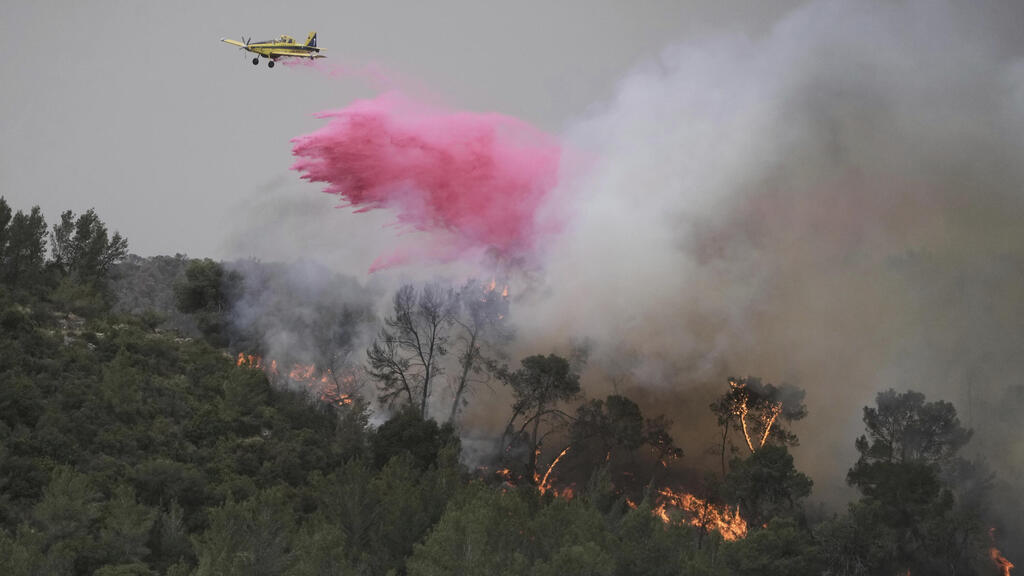
Wildfires have become more frequent and severe worldwide, threatening human lives, infrastructure and biodiversity while releasing vast amounts of greenhouse gases that accelerate climate change.
Price explains, “Climate change is increasing the frequency and intensity of wildfires globally. To prepare effectively, we must tailor forecasting tools to each region’s specific conditions.
“Our study demonstrates that combining existing scientific knowledge with advanced computational tools can significantly enhance our ability to warn and prevent disasters.”

Prof. Colin Price and Dr. Assaf Shmuel
(Photo: Tel Aviv University)
Dr. Oren Glickman added, “Using machine learning and advanced computational tools, we can uncover hidden patterns and translate them into simple, actionable models.” The customized models offer emergency authorities, policymakers, and field operators a powerful tool for early warnings, resource allocation and damage mitigation.
As global warming heightens the risk of devastating wildfires, this approach provides a foundation for future research and the development of precise warning systems worldwide.