

Just two months ago, the opening of the new rehabilitation center at Hadassah Mount Scopus was celebrated, with Prime Minister Benjamin Netanyahu and his wife Sara, President Isaac Herzog and singer Yehoram Gaon in attendance.
These days, however, the grim situation of the hospital has come to light, as it struggles with a massive financial crisis, amid warnings about salaries that may not be paid and threats of a strike by the Histadrut. This morning (Thursday), the Ministries of Health and Finance requested that Hadassah submit its quarterly report, including cash flow statements.
Gallery

Benjamin Netanyahu, Sara Netanyahu, Yehoram Gaon celebrating at Hadassah Mount Scopus
(photo: Maayan Toef, the National Photo Collection )
The request comes in the wake of an announcement last week by Hadassah CEO Prof. Yoram Weiss to employees regarding significant liquidity difficulties, which could lead to delays in January salary payments for thousands of the medical center's staff. Against the backdrop of the escalating crisis, the chairman of the Jerusalem branch of the Histadrut, Daniel Bonfil, announced the union's intention to declare a labor dispute at the hospital - raising the possibility of a strike.
"The letter indicates that the hospital is facing significant financial and cash-flow difficulties, and that there is a real doubt as to the hospital's ability to meet its obligations and end the fiscal year in balance, contrary to the forecasts submitted by the hospital in its model reports", wrote Neriah Stauber, Deputy Director of Budgeting, Planning, and Pricing at the Ministry of Health, and Daniel Fedon, Health Coordinator at the Ministry of Finance, to Hadassah's CEO. "The Ministries of Health and Finance are committed to the employees of Hadassah Hospital, and it is our duty to ensure that management difficulties do not harm them", they added.
The hospital is required to submit its most up-to-date report by December 25. The Ministries of Health and Finance emphasize that if it is found that the hospital exceeds its financial targets during the current fiscal year, restrictions will be imposed on it according to the accounting regulations, including a special committee for procurement exceptions and an accompanying accountant. It should be noted that the ministries are aware of the hospital's cash-flow distress, which stems from gaps between expenditures and revenues or deferred payments. However, they maintain that this is not a budgetary problem that should affect the ability to pay salaries.
At the same time, sources within the health and finance systems told ynet that in the past year alone, the hospital recruited three emergency medicine doctors from central Israel with exceptionally high salaries, significantly above what they earned at their previous hospitals, while the hospital complains about its inability to pay salaries. "In Guidestar (Israel's nonprofit guide), data on the hospital's top five earners is published, showing that the annual income of Hadassah's highest-paid employee reaches 7 million shekels a year and has risen by millions in recent years", one source told ynet. "An organization in deficit does not raise its top salaries by so much money; it does not match the situation they claim they're in".
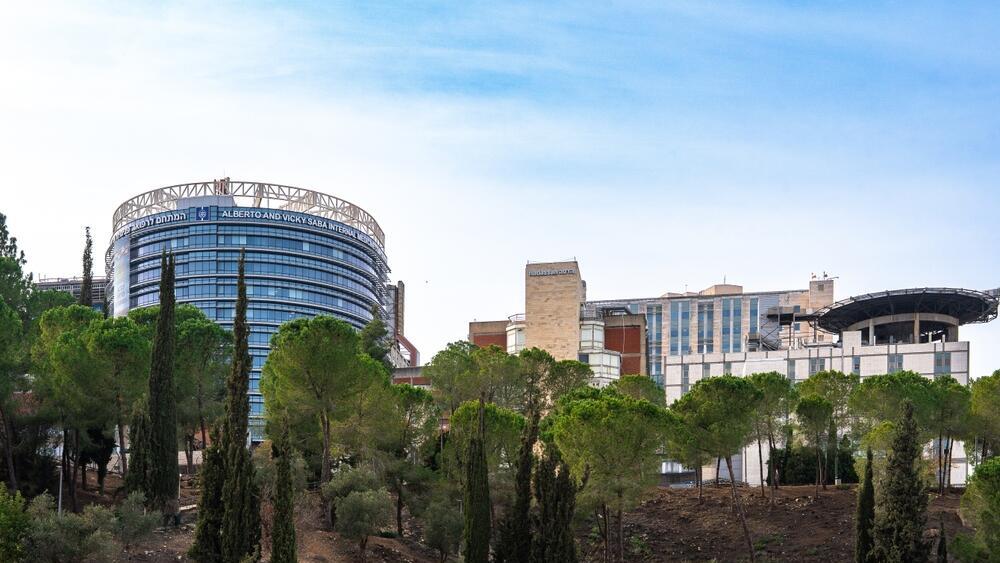
Hadassah Ein-Karem
(photo: shutterstock)
"I don't threaten, I act"
On the other hand, Hadassah rejects the allegations and says that the hospital is supervised by the wage regulator. They explain that doctors often receive salaries from multiple employers, whereas at Hadassah the salary is processed through the hospital, even in cases such as legal opinions or private medical services (ShRaf). "When comparing a payslip that includes all sources a doctor receives across three or four payslips, it appears that the salaries at Hadassah are exceptional", an official at the hospital explained to ynet. "The Tax Authority examined the matter, and the latest report found that Hadassah doctors, including ShRaf physicians, earn less than doctors in the public health system".
As the exchange of accusations continues, the chairman of the Jerusalem branch of the Histadrut, Danny Bonfil, announced a labor dispute at Hadassah Ein Kerem and Hadassah Mount Scopus. "This means that in two weeks I will be able to shut down Hadassah. If on January 1 there is no full salary for all employees, the next day we will operate in emergency mode only. Everyone will walk out, with buses that I will bring - 7,000 employees - and go to the Finance Ministry to camp there until the matter is resolved. We will not give them a moment of rest. They know I am serious. I am not one to threaten; I act.
"Maybe the management is at fault, possibly, but that is not our problem", he adds. "I cannot deal with the management, nor can I deal with the Finance Ministry. I want the money for the employees - that's why I was elected".

Danny Bonfil
(photo: Eli Mendelbaum)
In his letter to employees last week, Prof. Weiss wrote that "Hadassah is currently facing an exceptional cash-flow challenge, stemming from ongoing discrimination by the state against public hospitals in Jerusalem in general, and Hadassah in particular, compared to government hospitals".
According to Hadassah, the current challenge is the result of the state owing the hospital more than 700 million shekels. Sources at Hadassah told ynet that the hospital is expected to end 2025 with a deficit of over 100 million shekels. They explain that the debt includes, among other things, funding for wage agreements - that is, salary updates under collective agreements to which the hospital is committed - alongside delayed payments from the health funds for services provided to their insured patients, creating a temporary cash-flow gap.
"If on January 1 there is no full salary for all employees, the next day we will operate in emergency mode only. Everyone will walk out, with buses that I will bring - 7,000 employees - and go to the Finance Ministry to camp there until the matter is resolved"
"The law says that employees must be paid immediately at the end of the month, which is fair and correct. But on the other hand, another law says that the health funds pay hospitals 90 days after services are provided", a hospital source explained. "No company can operate with such a high ratio of receivables to turnover; a company cannot function this way".
Professor Weiss also noted in his letter that the debt includes compensation for the significant drop in revenue during the period of hostilities, particularly during operation "Haravot barzel" when the hospital's regular operations were reduced to a minimum, yet Hadassah was required to pay full salaries to all employees. According to him, unlike the full funding provided to government hospitals, "this funding has not yet been transferred to the public hospitals in Jerusalem".
How did it reach such a deficit?
Hadassah is an independent public hospital, owned by the Hadassah Women's Organization, and is one of eight independent public hospitals in Israel. Until 2022, public hospitals in Israel were funded in different ways, inconsistently: if government hospitals like Ichilov and Sheba ended the year with a deficit, the state would cover the shortfall. Clalit hospitals received funding from Clalit to cover deficits. In contrast, independent hospitals, the largest of which are Hadassah and Shaare Zedek, did not receive direct funding. However, Hadassah did receive government support under a recovery agreement signed after the hospital requested a stay of proceedings in 2014, following a deficit of over one billion shekels.
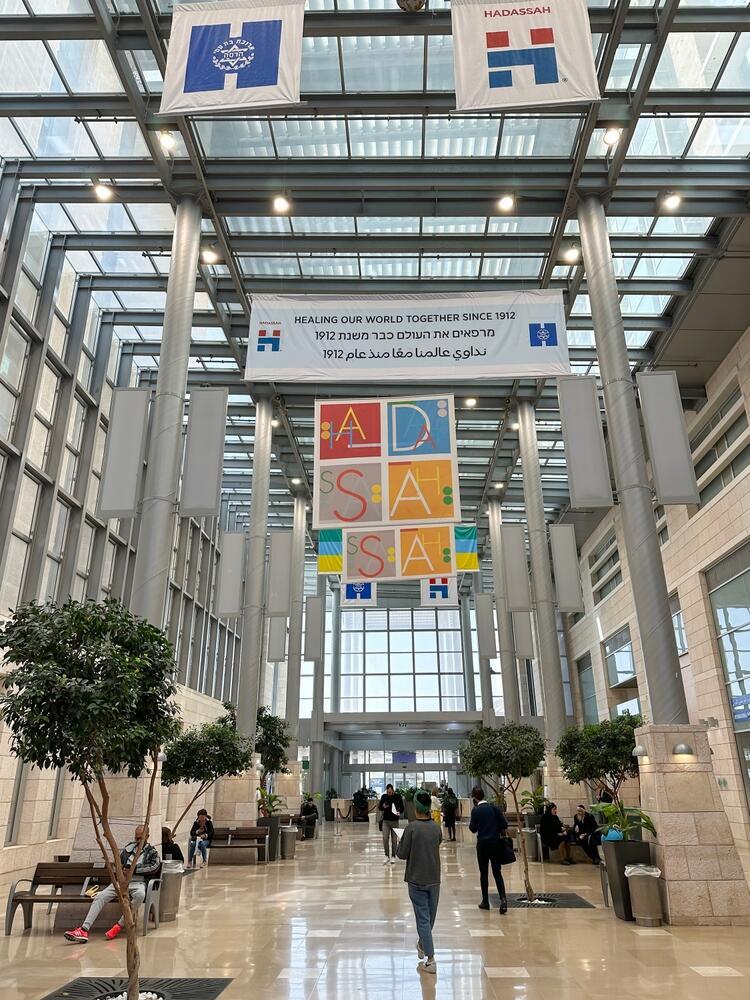
Hadassah Ein-Karem
(photo: shutterstock)
In 2022, the recovery agreement was set to expire, and at the same time, a new law was passed that changed the funding model for all public hospitals, stipulating that every public hospital would receive government support regardless of the institution's ownership. "Hadassah has been funded according to that formula since the agreement, yet they still claim discrimination", says a source at the Ministry of Finance.
According to him, since the new funding model took effect, government support for Hadassah has increased significantly. In 2025, the hospital even received more than other medical centers - 161.5 million Shekels, compared with 50 million for Ichilov and 10 million for Sheba. He notes that Hadassah closed 2024 with a budget surplus of 63.5 million Shekels. "It's unclear what happened, how they went from that situation to such a deficit. This is a question we will examine together with the Ministry of Health", he says.
The source claims that no similar complaints have been received from any other independent hospital. "It's possible that Hadassah has a budgetary problem due to suboptimal management of events; this is something that needs to be investigated". He adds that even if a deficit does exist, there are steps to take before withholding salaries, including deferring payments to suppliers and requesting tax deferrals from the state. "The procedure is simple, and Hadassah has done it repeatedly, three times in just the past two years", he says. "The moment they disagree with the government on anything, whether they are right or wrong, they threaten the employees, and the Histadrut sends a letter saying the hospital should be shut down. It is a shame and a disgrace to abuse employees in this way and hold them hostage. Cutting staff salaries should always be the last resort, after the organization has exhausted all other solutions.".
Even within the Ministry of Health, eyebrows were raised following Hadassah CEO Prof. Weiss's letter. Officials at the ministry explained to ynet that since the funding model took effect in 2022, every hospital submits an annual report. "If a hospital declares that it will not remain financially stable, it is moved to quarterly reporting. That did not happen with Hadassah, which is considered financially stable by the Ministry of Health".
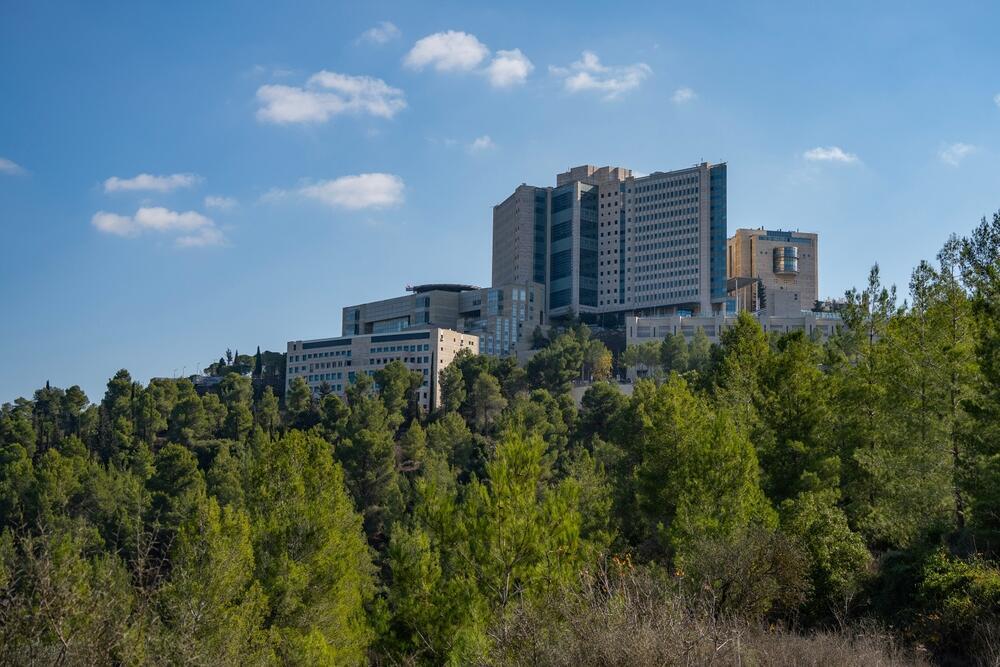
Hadassah ein-Karem
(photo: shutterstock)
"Turning the world upside down"
Another option suggested to Hadassah was taking bank loans to cover the cash-flow gap, but the hospital refused. "A loan costs money; if I take a 700 million Shekel loan, I'll pay 50 million a year in interest", an official at the hospital said. Hadassah claims that even at Shaare Zedek, another independent public hospital, the situation is problematic. An official at Hadassah referred to why a strike did not erupt there as well: "Not every CEO can carry the responsibility of managing the fight on their shoulders, because in a fight, you also take hits".
Last night, Hadassah's staff committee, in cooperation with the Histadrut, held a protest against the threat to delay January salaries. Protesters held harsh signs directed at Yael Lindenberg, Deputy Budget Director at the Ministry of Finance, including slogans such as: "Yael Lindenberg, the blood of the patients is on your hands", "Yael is destroying Hadassah, Yael is dangerous for Jerusalem", and "You will not be allowed to harm the patients".
A senior official at the Ministry of Finance commented on the incident, describing it as "a crossing of the line under the hospital administration's auspices", since the signs displayed the hospital's logo.
"The staff at Hadassah feel the financial strain. It was not with our support that such signs were made; the union acted independently and at its own discretion"
Hadassah’s CEO, Moshe Bar-Siman-Tov, also sent a letter to the hospital management last night: "During my many years in public service and in the healthcare system, I have managed serious disputes and faced protests and strikes, sometimes against my personal positions, but I have never encountered such reckless, violent, and inciting behavior toward a professional and dedicated public servant".
He called on the hospital administration to publicly distance itself from these statements and to ensure that such conduct "ceases immediately".
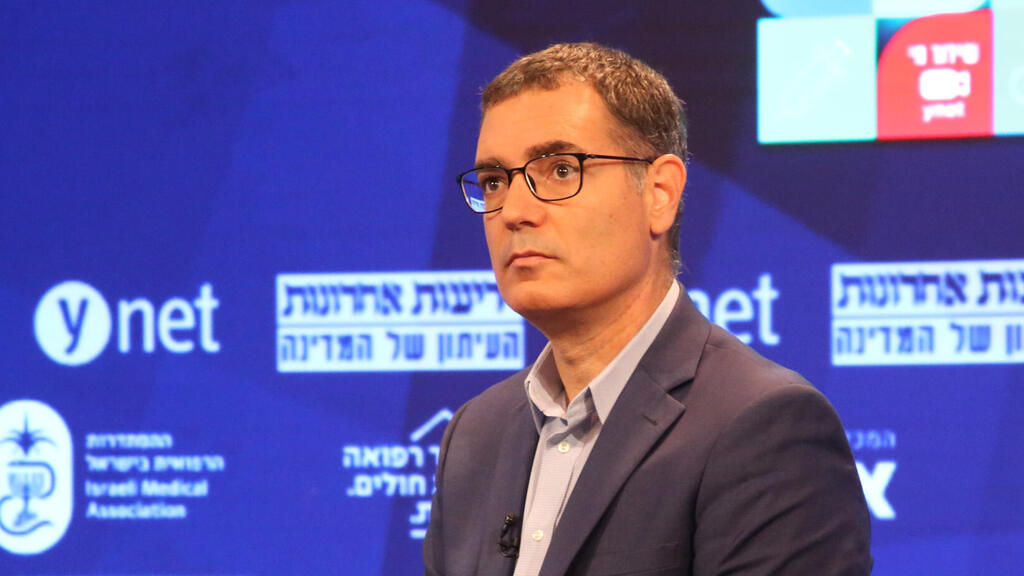
Moshe Bar-Siman-Tov
(photo: Ryan Proys)
Hadassah claims its conduct has been professional and proper. "The staff at Hadassah feel the financial strain. It was not with our support that such signs were made; the union acted independently and at its own discretion. We respect the civil service, but we understand the pain and outcry of the employees", said a hospital official.
"I, as a company, can only pay what I have in the bank", Hadassah added. "If I don't have the money before January 1, I will pay only what I can. We are moving mountains to avoid this predicament".
Hadassah's management responded: "It is puzzling to see the Health Ministry Director's closeness to the Budget Department, when in writing and in official discussions - including those held last week - he has consistently blamed the Budget Department for ineptitude, lack of professionalism, and misunderstanding of the health system in general. The request from the Health Ministry Director and the Budget Department is not surprising. Every time Hadassah opposed financial measures that the Health Ministry Director uniquely and repeatedly imposed on Hadassah, we were met directly and indirectly with threats of audits, investigations, and sanctions.
"We are confident that adding Hadassah to the monitoring list will serve both Hadassah and the Jerusalem health system, and will faithfully reflect the ongoing ineptitude, discrimination, and distortions in the funding of hospitals in Jerusalem. If this review is conducted transparently and fairly, it will not allow the Health and Finance Ministries to hide behind slogans, will explode this stranglehold imposed on the staff of Hadassah and Shaare Zedek, and will bring an immediate resolution to the problem that has persisted for years".
The Finance Ministry responded: "It is very regrettable to see Hadassah choosing to use its employees and hold them hostage without justification or need, in order to obscure the hospital's ongoing mismanagement. We expect the administration to act in the best interests of managing the hospital, as required by its role, rather than attacking dedicated public servants".