

Cluster munitions are weapons designed to increase the destructive impact and the fear caused by conventional arms.
Instead of carrying a single large warhead that creates concentrated destruction at the point of impact, cluster munitions contain dozens or even hundreds of smaller explosives. These submunitions spread over a wide area, expanding the damage zone, increasing the number of potential casualties and complicating rescue and recovery efforts.
Iranian cluster missile


Cluster munitions can take several forms, including artillery shells, missiles or aerial bombs, and they can be launched from land, sea or air.
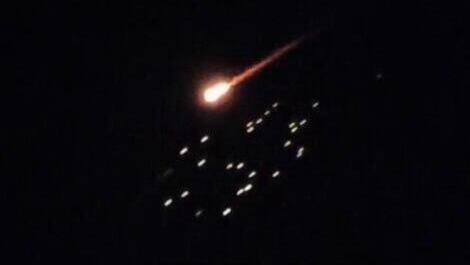
According to media reports, several Iranian ballistic missiles from the Khorramshahr, Emad and Ghadr families have versions equipped with cluster warheads. Iran launched several such missiles toward Israel during Operation Rising Lion in June 2025 and again during Operation Roaring Lion in 2026.
How cluster weapons work
When used in a ballistic missile, the cluster submunitions are typically dispersed several kilometers above the ground.
A spring mechanism releases the smaller bombs and spreads them across a wide area while simultaneously arming them by removing a safety device that prevents premature detonation.

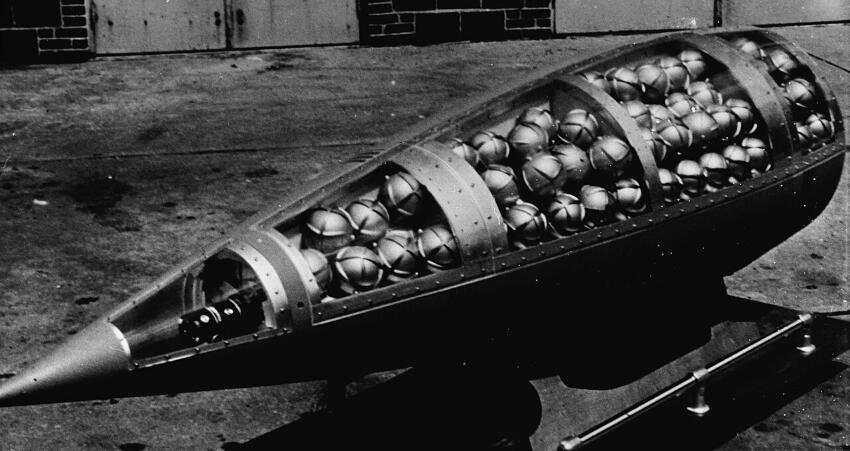
One warhead contains hundreds of bomblets
(Photo: U.S. Army, Public domain)
Dispersal at high altitude poses a challenge for missile defense systems. Interception systems are generally designed to destroy the missile itself, and they are largely ineffective against small submunitions roughly the size of a hand grenade.
In some cases, the bomblets are equipped with parachutes or other mechanisms that slow their descent. This increases the time during which people must remain in shelters and can expand the affected area if wind carries the submunitions farther from the target zone.
Designed for people, vehicles or infrastructure
Cluster munitions come in many varieties designed for different purposes.
Submunitions intended to harm people, whether soldiers or civilians, often contain metal pellets in addition to explosive material. In many cases, the metal casing itself fragments during the blast, creating sharp shrapnel.
Some bombs are designed to detonate just before hitting the ground in order to spread metal fragments over a wider area.
Other cluster weapons are designed to destroy armored vehicles, using shaped charges capable of penetrating metal armor.
Another type is an incendiary cluster munition. These bomblets contain flammable substances such as phosphorus and are designed to ignite large fires across the strike area.

Iranian cluster missile fired at Israel
(Photo: Amir Cohen/ Reuters)
Some cluster munitions are designed to disable airports. These penetrate runway surfaces before exploding in order to cause maximum damage.
There are also cluster weapons intended to disrupt electrical grids by scattering long conductive wires that create short circuits.
Unexploded bomblets pose long-term danger
One of the most serious problems with cluster weapons is that not all of the submunitions explode.
This leaves behind unexploded ordnance that must later be located and neutralized, often requiring significant time and resources from security forces.
Some particularly dangerous versions include delayed detonation mechanisms designed to explode after a set period of time, increasing the risk to rescue and recovery crews.
Others are triggered by contact or pressure, effectively turning the bomblets into landmine-like devices scattered from the air.
Cluster warheads and advanced variants
Some ballistic missiles carry warheads that split into several explosive units.
In these systems, the warhead contains multiple submunitions that spread through the air in a similar way to standard cluster weapons.
In the Iranian missiles, the bomblets are reportedly released at an altitude of about 7 kilometers above the target area and spread across roughly 8 kilometers without discrimination or targeting precision.
Each bomblet weighs only a few kilograms and typically contains between 2.5 and 7 kilograms of explosive material.
The damage caused by a single bomblet is similar to that of a simple Qassam rocket previously fired from Gaza. While such explosives cannot penetrate a reinforced safe room, they can still cause casualties and property damage.
A more advanced version of this technology is the MIRV system, short for Multiple Independently Targetable Reentry Vehicle. In these missiles, each warhead has its own propulsion system and may independently target separate objectives.
Some variants include sensors, such as heat detectors, that allow the warheads to lock onto active vehicles by detecting engine heat.
Despite some reports that Iran has launched missiles with such split warheads, it remains unclear whether these advanced systems have been used against Israel or whether only conventional cluster munitions were deployed.
Why cluster munitions are considered war crimes
Cluster munitions also have significant disadvantages from the attacker’s perspective.
They are relatively expensive to produce, less accurate than other weapons and each individual submunition causes limited damage when the targeted population follows shelter instructions.
However, their wide dispersal and the risk posed by unexploded bomblets make them particularly dangerous to civilians.
Because of these risks, the use of cluster munitions is widely considered a war crime.
To date, 111 countries have signed an international convention banning the use, production and trade of such weapons.
Iran, Israel and the United States are not signatories to the convention.
Israel has been accused several times of using cluster munitions, particularly in Lebanon. Among the countries that have signed the treaty are Lebanon, Iraq and “Palestine,” as defined in the convention’s documents.
If there is anything notable about cluster munitions in Hebrew, it is their name. While the English term “cluster munition” refers to a group of weapons released together, the Hebrew word also echoes meanings related to “enemy,” “trouble” and “distress,” capturing the destructive nature of the weapon itself.