

Two of Israel’s top physicians on Tuesday called for mandatory masking among medical staff in hospitals and health centers, as flu-related illness surges across the country and claims additional lives.
The warning comes amid a severe spike in respiratory infections, including what experts are calling a “super flu.” In recent days, three children have died from flu complications, and an eight-month-old infant is in critical condition at Haifa’s Rambam Health Care Campus, connected to an ECMO machine that replaces heart and lung function.

The renewed call for masks in Israel echoes unusual moves in the United Kingdom, Canada and Spain, where health authorities are once again recommending face coverings in response to sharp rises in respiratory illnesses. Though mask use has not yet been mandated, experts in all four countries say current trends are alarming.
Prof. Galia Rahav, one of Israel’s leading infectious disease experts and a key figure in the country’s COVID-19 response, told Ynet, “It’s not popular, I know. But in a severe flu season like this, masks absolutely make sense. If you’re elderly, concerned about getting infected or flying—wear a mask. Don’t leave home if you’re sick, and if you must, wear a mask to protect others.”
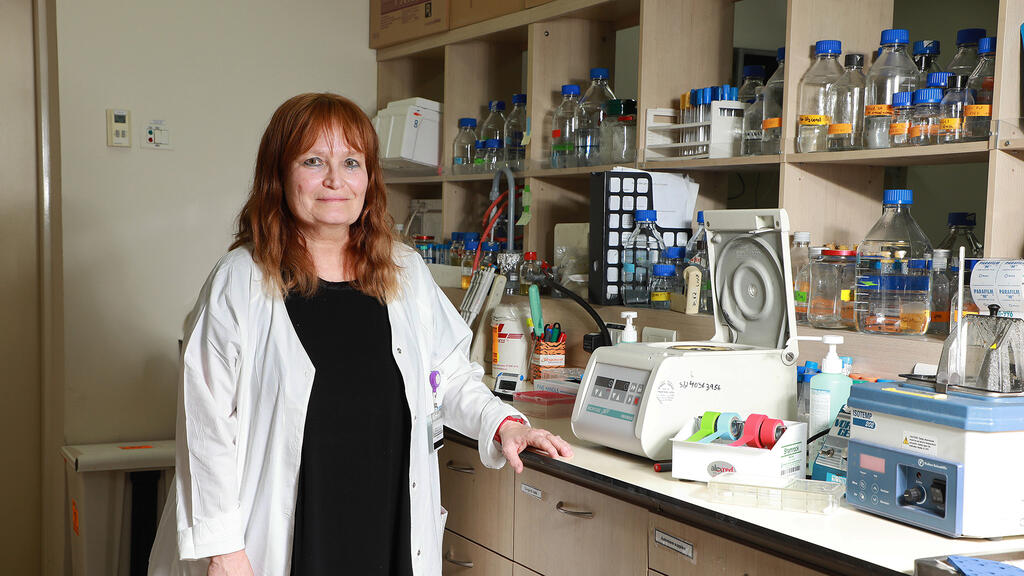
Prof. Galia Rahav
(Photo: Dana Kopel)
Prof. Ilan Dalal, chairman of the Israel Pediatric Association and head of pediatrics at Wolfson Medical Center, said the situation demands urgent action. “The invisible hand of government cannot replace the public responsibility of each and every one of us,” he said. “Given the unusually early and severe flu outbreak this year, we strongly recommend that all medical and nursing staff in hospitals and community clinics wear masks. We also urge the public to get vaccinated and wear masks to prevent infection.”
In the UK, which is experiencing what officials call “the worst flu season ever,” masks are returning to hospitals, schools are closing and senior National Health Service (NHS) officials are urging the public to wear face coverings in public spaces.
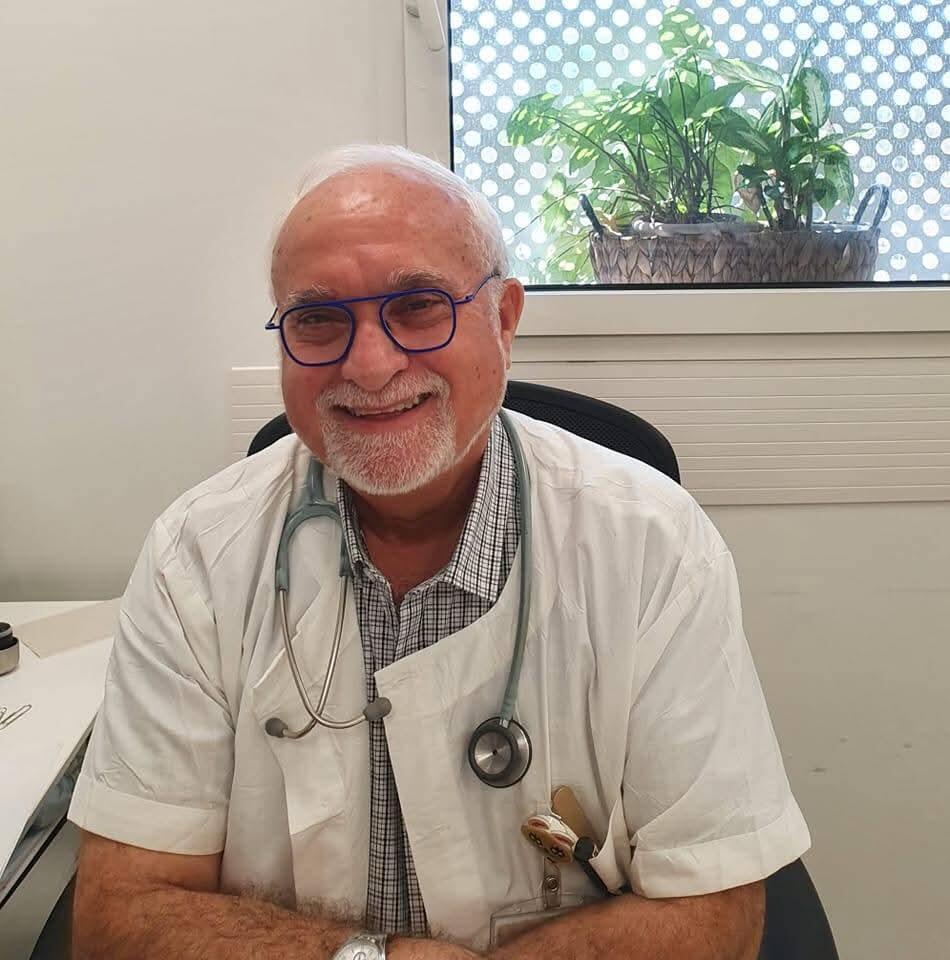
Prof. Ilan Dalal
(Photo: Wolfson Medical Center)
Daniel Elkeles, chief executive of NHS Providers, which represents hospitals and ambulance services across the British public healthcare system, called on anyone experiencing cold or flu symptoms to wear a mask in public. Elkeles told Times Radio the country was beset by a “very nasty strain of flu” that had occurred earlier in the season than normal. “We were all very good about infection control during COVID. And we really, really need to get back to that now,” he added.
Elkeles said anyone coughing or sneezing—but not ill enough to stay home—must wear a mask in public areas, including offices and public transportation, to avoid spreading the virus. A combination of warm, humid indoor conditions and the fact that children are still in school creates “perfect flu-spreading conditions,” he warned.
The UK’s health system is bracing for a “wave” of winter illness. Flu-related hospitalizations in England are currently at record highs for this time of year, more than 50 percent higher than last year.
The newly spreading strain, H3N2—nicknamed the “super flu”—has undergone a significant genetic mutation this year. Dr. Jamie Lopez Bernal, a consultant epidemiologist at the UK Health Security Agency (UKHSA), told Sky News that the new strain has evolved more rapidly than usual, likely reducing overall population immunity compared to typical flu seasons. As a result, virus transmission is increasing, especially among children and young adults.
(Photo: Shutterstock)
Indeed, children appear to be the hardest hit in the current wave. UKHSA data shows that 36.25% of children aged 5 to 14 who took PCR tests for flu tested positive—the highest rate of any age group by far. The next highest group, ages 15 to 44, recorded a 20.88% positivity rate.
Prof. Poonam Mangtani, a London-based epidemiologist, explained: “Children are a key group in flu transmission. They’ve had less exposure to past flu seasons and thus have lower immunity. They also interact frequently with other children, so they’re often the first to be infected.”
The real-world impact has been dramatic. St. Martin’s School in Caerphilly, South Wales, temporarily shut down after 242 students and 12 staff members were absent due to flu. The school reported symptoms including vomiting, diarrhea, high fever, coughing, headaches, fatigue and other flu-like effects. During the brief closure, the school underwent a deep cleaning and shifted to remote learning.
Congleton High School in Cheshire was similarly closed for a deep clean in late November after around 200 students were absent with flu symptoms.
In Northern Ireland, 170 students were absent in a single day from Ebrington Primary School. The school’s headmaster, Brian Guthrie, compared the outbreak to “being back in COVID times.” He told the BBC, “It's not just been flu, it's been stomach bugs, very sore throats and illnesses in other ways as well but over the course of last week, it was very, very challenging with the number of pupils and staff off.”
Official figures from Northern Ireland show a dramatic surge in confirmed flu cases—from 273 to 954 in just two weeks.
The children have stopped singing
Some British schools are reinstating COVID-style precautions as flu cases surge. At Wigton Moor Primary School in Leeds, choir singing has been suspended to limit virus transmission, with open windows and hand sanitizer stations now part of daily routines.
“We've had assemblies, but we've not sung in assemblies because again, we know that that's something that spreads it quite a lot,” principal Elaine Bawn told the BBC. “We are rehearsing for nativities at the moment and Christmas performances and we know from Covid that singing in schools is one of the worst spreaders. But we are also trying hard not to cancel Christmas, we do not want to do that, so we are trying to make it as non-infectious as we can manage.”
In Belfast, Dr. Julie-Ann Maney, a pediatrician at the Royal Belfast Hospital for Sick Children, described the outbreak as “the most severe influenza outbreak” she has seen since becoming a doctor in 2010. “This is a particularly virulent strain of influenza and there are lots of children experiencing very high temperatures and they are experiencing the flu for much longer than we would expect,” she said. Her ward is “extremely busy” due to rising cases.
Calls to bring back masks are not limited to the UK. In Canada, the health authority of western Quebec (CISSSO) has reintroduced mandatory masking in hospitals, nursing homes and care facilities until further notice. The rule also applies to the Pierre-Janet psychiatric hospital and the Ressourse rehabilitation center.
Officials said the early flu season has triggered a spike in respiratory viruses, outbreaks and emergency room visits. In eastern Ontario, mask rules vary by hospital, with some requiring them in specific situations, including for patients with respiratory symptoms.
In Spain, the Ministry of Health has issued a new prevention protocol in coordination with the country’s 17 autonomous regions, following sharp rises in both flu and COVID-19 cases. In Madrid and other major cities, flu cases have more than tripled compared to this time last year, driven in part by the rapid spread of a new flu variant, “Subclade K.”
(Photo: Shutterstock)
Spanish authorities said the measures—masking, remote work, a vaccine campaign and improved ventilation—are aimed at preventing strain on the healthcare system. Masks are to be prioritized in hospitals, nursing homes and areas with vulnerable populations. Remote work is encouraged where virus transmission risk is high, to reduce exposure in offices and on public transit.
A new vaccination campaign targeting high-risk groups is underway, while enclosed public spaces like schools and offices will adopt stricter ventilation standards. For now, the guidance is voluntary, but officials warned it could become mandatory if conditions worsen.
Daniel Elkeles of NHS Providers added that this winter’s flu peak could surpass previous years and urged the public to get vaccinated. “We need to have a big debate probably after this flu season about how we prepare the public better for what happens every year,” he said.
Health experts stressed that while authorities avoid labeling the situation a “pandemic,” current conditions echo elements of 2020–2021: rapidly rising infection rates, nationally coordinated responses and reconsideration of preventive tools like masks, remote work and mass vaccinations. Early action is critical, they said—especially for the elderly and those with chronic illnesses.