

During the war, as the public is worn down by relentless sirens and feels the danger at every moment, inspiration can be drawn from Maj. A. (42), for whom the grinding conflict is truly a multi-front campaign. Not only is A. a pediatrician at Sourasky Medical Center in Tel Aviv, but she is also a physician in a classified Israeli Air Force unit, where she has been serving for weeks in the reserves since the outbreak of the war. And if that were not enough, A. is a single mother to 7-year-old twins on the autism spectrum.
“The challenge is the role itself, the things you do in service that people have no idea about, and then you come home to routine, to dealing with other challenges — including children who are living through the war and are afraid of the sirens,” she said in an interview with Ynet.
Gallery
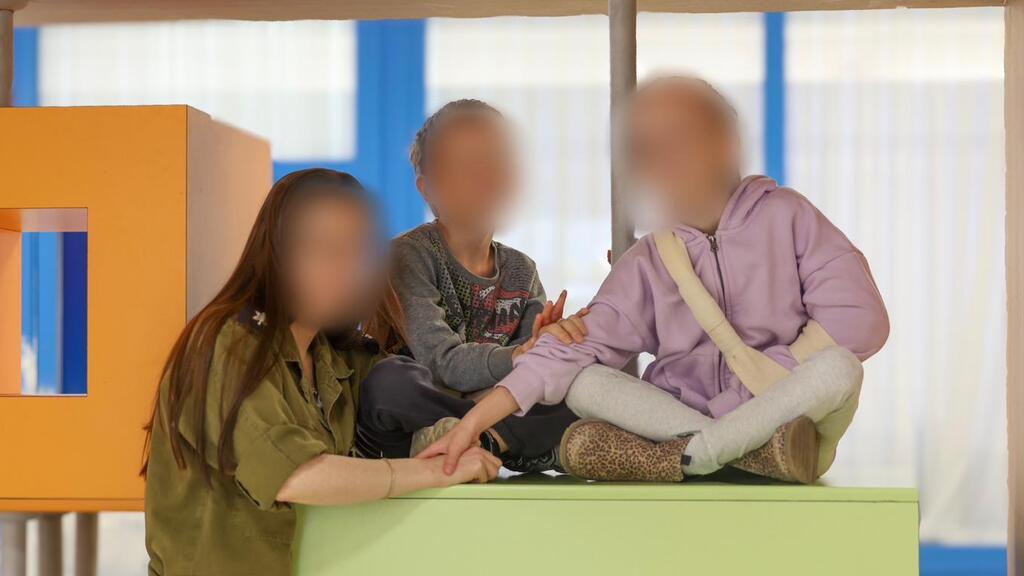
Maj. (res.) Dr. A., a pediatrician at Sourasky Medical Center and a physician in the Israeli Air Force, with her children
(Photo: Sourasky Medical Center)
From neurosurgery to the NICU — and the reserves
A. studied medicine in Hungary and began her career in the neurosurgery department at Sourasky Medical Center. After several years, she switched to a pediatrics residency, aiming to fulfill her dream of pursuing a fellowship in neonatology, the care of premature infants and newborns.
But after completing her residency, she felt she needed to devote more time to her home life. “I knew that starting a fellowship in the NICU would again involve long shifts and difficult hours, and not being home much,” she said.
Dr. A.: "I would come to the NICU in the morning, and in the late afternoon drive to the unit to work. But the reserve duty became increasingly intensive ahead of the operation against Iran, so I found it difficult to combine. It was very frustrating, especially at the start of the fellowship"
Because of that workload, she left the hospital for community medicine, working at a health maintenance organization. It did not take long to realize it was not the right fit. “I tried to convince myself I could work in a clinic, in a lower-intensity job, but very quickly I understood it was not for me, and I went back to Sourasky. I need the action and the adrenaline.”
About two and a half months ago, just before being called up for reserve duty, she finally began her neonatology fellowship at the Dana-Dwek Children’s Hospital at Sourasky. Despite her excitement, when she received an emergency call-up order in early January, she did not hesitate.
“The dilemma was mainly, ‘Let’s see where I’m needed more.’ In the NICU I had just started and wasn’t yet independent, so I felt I was more needed in the reserves,” she explained.
The hospital’s NICU has continued to operate fully during the emergency, after being moved to a fortified area, and staffing was reinforced to make up for those called up.
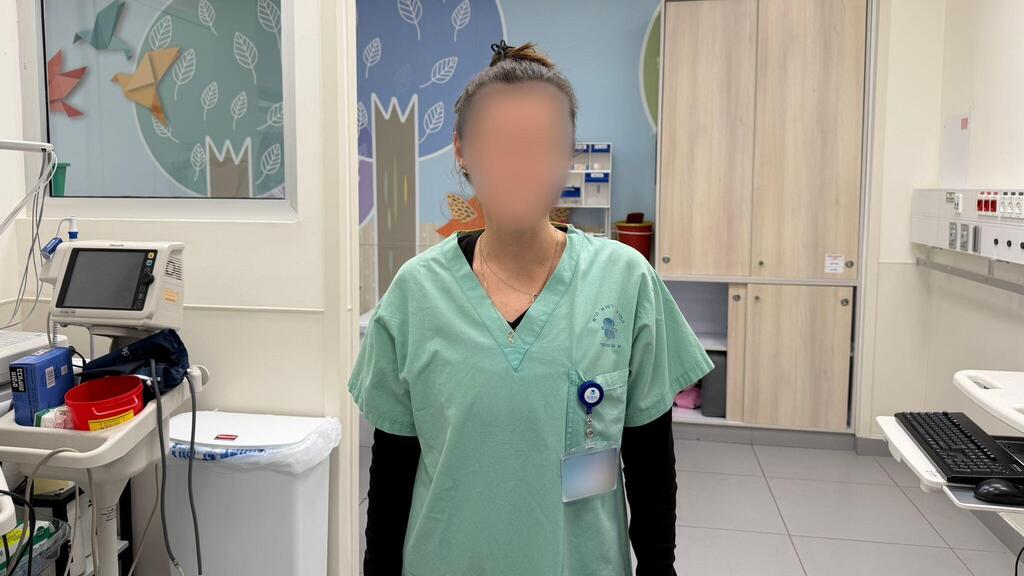
'Both in the hospital and in the military, we work according to structured protocols'
(Photo: Sourasky Medical Center)
At first, A. tried to balance reserve duty, her NICU work and motherhood. But she soon realized her focus had to shift. “I would come to the NICU in the morning and in the late afternoon drive to the unit to work. But the reserves became more and more intense ahead of the operation against Iran, so it was hard to combine. It was very frustrating, especially at the start of the fellowship.”
A dual challenge
Since Oct. 7, A. has served about 300 days in the reserves and took part, among other things, in the first round of fighting with Iran.
She said that after each round it is difficult to return to normal life. “During Operation Rising Lion I was in the reserves for nearly three months. At the time I was still working in a clinic, and it was very hard to go back to routine — from intense, fascinating work to civilian life when people have no idea what happened. Outside, it can feel like, ‘Great, the war is over,’ but that’s not really the case. The war stays with us — and will stay with us.”
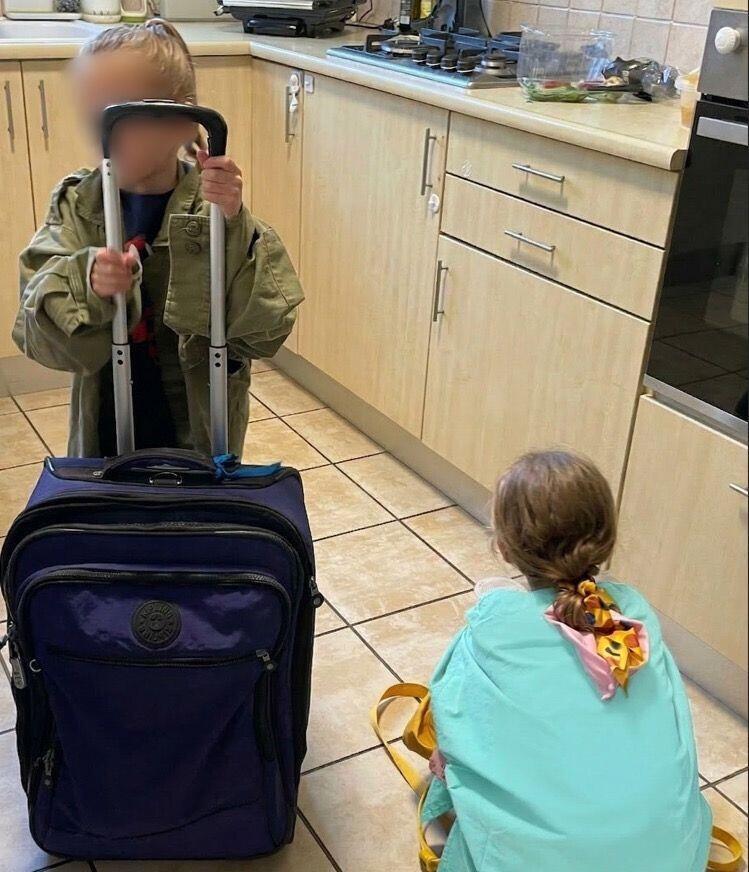
The children wearing Dr. A.’s uniforms
(Photo: Courtesy)
She describes her field service and her hospital work as two different worlds. “It’s night and day,” she said. “In the NICU it’s like intensive care — suddenly you get a call about a 24-week delivery, something unplanned. And in the Air Force it can be like that too.”
Her hospital experience gives her a significant advantage in the field. “It’s mainly the ability to trust your instincts. Sometimes you can’t explain something exactly, but you know what needs to be done. Both in the hospital and the military, we work according to clear protocols, but in the hospital, there is a bit more flexibility and room for judgment. In the military, I’m the physician and I make the decisions, and I don’t recall a case where something wasn’t ultimately carried out, but sometimes you have to explain more and insist more.”
After reserve duty and hospital shifts, A. returns to another front — home. As a single mother of children on the autism spectrum, the daily challenge is especially complex, all the more so now.
“It’s hard. As time passes and they don’t have a routine, it becomes more complicated — they lose it, bother each other, don’t listen to me.”
The effects of prolonged fighting are also evident. “For a long time, my son would ask every evening that I wake him when there’s a siren. It continued even after there were no more sirens. Now that the war has started again, it’s back — and he sleeps every night in the safe room,” she said, referring to a reinforced room in Israeli homes designed to protect against rocket fire.
Not giving up
Alongside the difficulty, she also points to her children’s resilience. “Once a siren caught us outside, they took my army sweatshirt and said, ‘Now we’re protected.’ I even have a photo I took — one of them wearing my army uniform and the other my hospital coat. They said they were going to the army and the hospital.”
Recently, A. found herself in Sourasky’s underground emergency complex, this time as a patient’s mother, after her daughter broke her elbow when she fell while leaving the safe room.
“Shortly after the war began, my daughter broke her elbow and I barely saw a tear. They’re very restrained outside, and at home they let everything out,” she said. “We arrived at the emergency room with me in uniform. I thought it would end with a fracture and a cast, but in the end she was hospitalized and underwent surgery. Instead of spending the weekend in the army, I was at Sourasky — this time as a mother.”
“I remember going to reserve duty a few months ago and meeting a reservist from another unit who was pregnant, and I was happy to see her there. Why think that’s unusual? As long as it’s possible — then of course. A mother, a single mother, at 42 — and still serving in the reserves”
Despite the personal cost and complexity, A. has no intention of stopping.
“I’ve been asked why I do reserve duty, that I’m a mother and I don’t have to. But I really love the action, I feel I’m doing something important and meaningful, and I can’t give it up. I’ve been serving in the reserves since before my children were born, and I don’t see a reason to stop.”
She noted that none of it would be possible without her parents. “The moment I get a call-up order, they get a double call-up.”
Amid the public debate over women’s service in the military, A. emphasized that women have much to contribute.
“I wish there were more women in different roles. Unfortunately, people still look at it through the lens of ‘you’re a mother.’ I remember going to reserve duty a few months ago and meeting a reservist from another unit who was pregnant — and I was happy to see her there. Why think that’s unusual? As long as it’s possible, then of course. A mother, a single mother, at 42 — and you can still serve in the reserves.”