

People with type 2 diabetes who are treated with insulin know the routine well: at least one injection every day, without a break.
On Thursday, the U.S. Food and Drug Administration approved Eli Lilly’s Onswik, a long-acting insulin injected just once a week. The drug is intended for adults, alongside an appropriate diet and exercise, and according to the company it could spare patients more than 300 injections a year.
Gallery

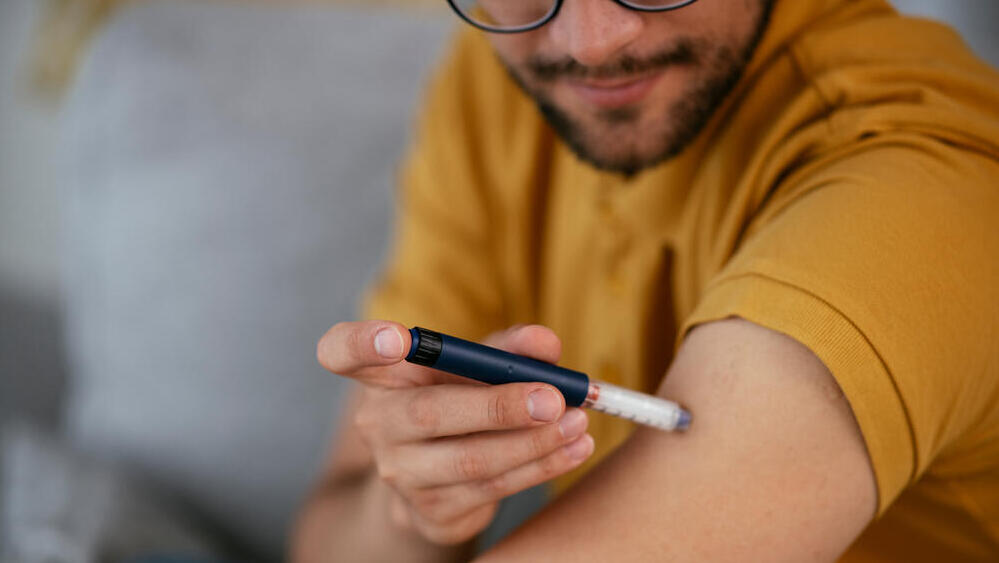
Weekly insulin injections could spare patients more than 300 injections a year
(Photo: Shutterstock)
Onswik is not the first of its kind. It is the second once-weekly insulin approved for type 2 diabetes. The first, Awiqli, made by Danish rival Novo Nordisk, was approved in the United States in March this year and in the European Union in 2024.
Awiqli is expected to reach Israel in November, within a few weeks. It is still unclear when Onswik will become available in Israel.
What exactly does the weekly injection replace?
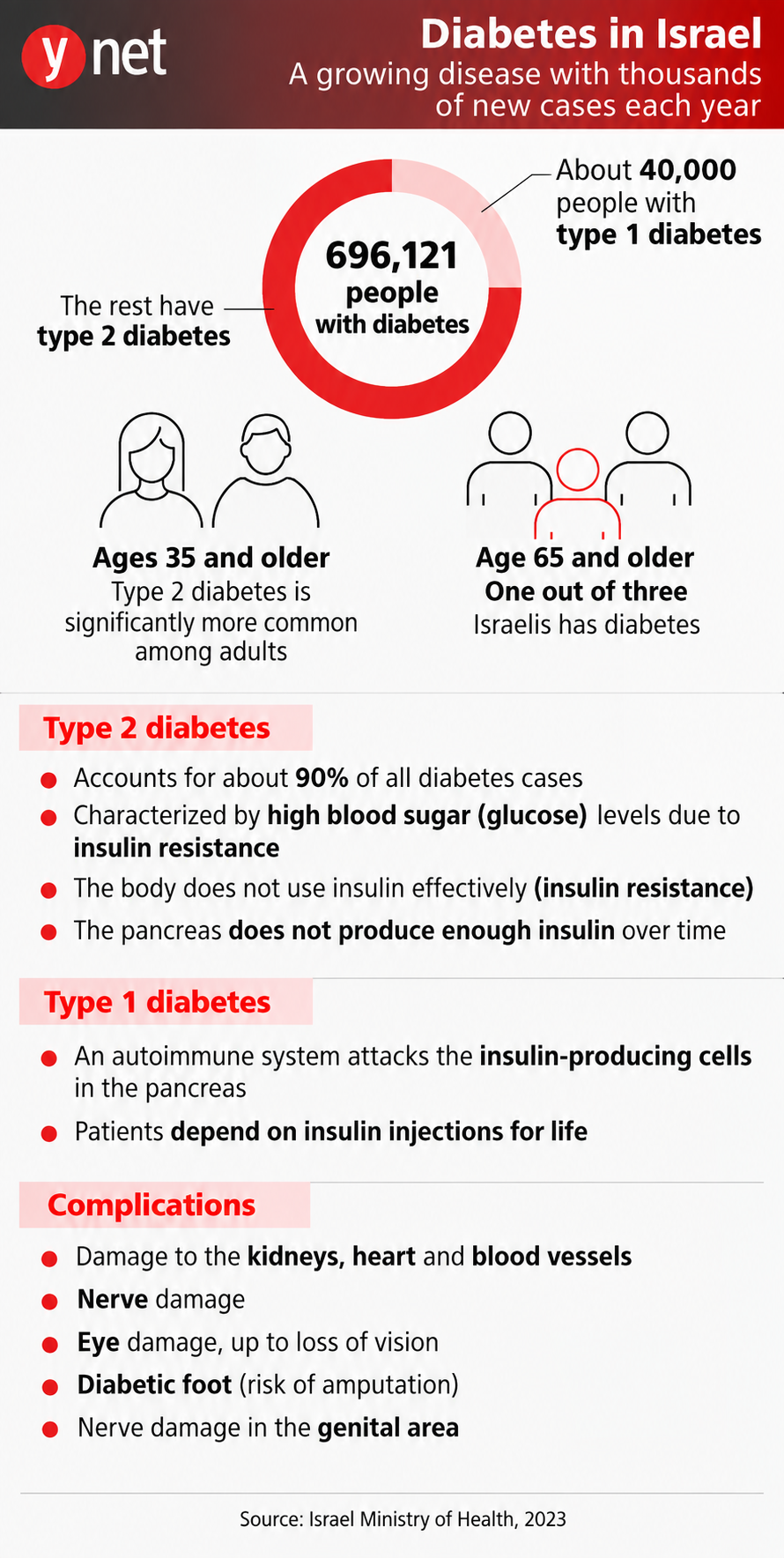
Insulin is a hormone that moves sugar from the blood into the body’s cells, where it is used as a source of energy, and also suppresses sugar production in the liver.
People treated with insulin generally use two types: short-acting insulin, injected around mealtimes to address the rise in blood sugar after eating, and long-acting insulin, also known as basal insulin.
Basal insulin is injected once or twice a day and provides the body with a steady level of insulin around the clock.
The weekly injections replace only basal insulin. They do not replace mealtime insulin, and trial participants who used mealtime insulin continued to inject it as usual.
In type 2 diabetes, the body does not respond properly to insulin and the pancreas does not produce enough of it to compensate. The result is high blood sugar, which over time can damage the kidneys, eyes, blood vessels and heart.
It is the most common form of the disease: about 95% of people with diabetes have type 2.
According to Israel’s national diabetes registry at the Health Ministry, about 696,000 people age 2 and older were registered as having diabetes in 2023, or 7.4% of the population.
The prevalence rises with age, and among people 65 and older, one in three has diabetes.
Treatment for type 2 diabetes usually begins with dietary changes, exercise and pills, often with injectable drugs such as Ozempic and Mounjaro added later.
When those are not enough, some patients begin insulin treatment.
Type 1 diabetes is different: the body produces little or no insulin, and patients depend on injections from the time of diagnosis. Onswik is not recommended for them because it increases the risk of severe hypoglycemia.
What did the trials show?
Approval of Onswik was based on four trials involving more than 3,400 adults with type 2 diabetes.
Some participants had never previously been treated with insulin, others were injecting basal insulin once or twice a day, and others were also using mealtime insulin.
They were randomly divided into two groups: one received the weekly injection, while the other received one of the commonly used daily basal insulins, glargine, sold under brand names including Lantus, or degludec.
About 7.4% of Israel's population has diabetes
(Photo: Shutterstock)
Both participants and researchers knew which treatment each person received.
Blood sugar control was measured using the glycated hemoglobin test, or A1c, which reflects average blood sugar levels over the preceding months.
In all four trials, Onswik lowered A1c by an amount similar to the daily injections, meeting the main goal of each study: showing that it was not inferior in effectiveness.
The amount of time blood sugar remained within the target range was also similar in both groups.
As with any insulin treatment, the most common side effect was blood sugar falling below normal, or hypoglycemia, which can cause dizziness, shaking, anxiety, sweating, hunger or confusion.
Severe episodes were very rare.
Other common side effects included allergic reactions, itching, rash, swelling of the hands and feet, weight gain and skin changes at the injection site, such as thickening, indentations or lumps.
To help prevent those effects, patients are advised to use a different injection site each time.
The drug’s label also includes warnings about dosing errors and accidental overdose, low blood potassium levels, and fluid retention and heart failure when used with certain medications.
It is not known whether the drug could harm a fetus or pass into breast milk, so it is not recommended during pregnancy or breastfeeding.
Same goal, different approach
Awiqli, whose active ingredient is insulin icodec, was approved in the United States based on four trials involving about 2,680 adults with type 2 diabetes.
It is also marketed in the European Union and several other countries, with Israel expected to join them soon.
The two drugs reach the same result in different ways.
Icodec binds to albumin, a protein found in the blood, creating an inactive reservoir from which insulin is gradually released over the course of a week.
Lilly’s insulin is built differently: It is attached to a fragment of a human antibody, a structure that slows its breakdown in the body.
As a result, its half-life, meaning the time it takes the body to eliminate half of the dose, reaches 15 to 16 days.
Both are also far more concentrated than daily insulin.
Awiqli contains 700 units per milliliter, while Onswik will be marketed in concentrations of 500 and 1,000 units per milliliter.