

At Galilee Medical Center in Nahariya, some staff members have stopped counting how many times since the outbreak of the Swords of Iron war they have had to move equipment and patients underground and then back up again. Those who are still counting have reached five times in less than three years. Last Wednesday, like a well-oiled but somewhat weary machine, staff moved all the systems back above ground. But within just four days, they were forced to go back down. And this morning? They are supposed to return once again to the regular wards.
“Every such move down and back up involves paying attention to the smallest details,” one staff member said.
Galilee Medical Center has been moving back and forth between its main building and underground complex for three years
(Video: Gil Nehushtan, Yair Kraus)


Maya Maraei, 18, from Hurfeish, is doing National Service at the hospital as a physician assistant. She holds the hands of patients as they make their way from her ward in the inpatient building to the temporary protected ward, trying to reassure them and give them a measure of confidence. But she admits she is trying to be strong herself.
“I’m only 18. During the last war, I was still in school, and suddenly now I’m here,” she said. Maraei tries to hold back tears and takes a deep breath. “It is physical work, moving the beds and medical files and all the patients’ equipment, and continuing with the blood tests and all the needles. But it is also emotional, because the transfers are difficult for the patients.”
‘We try to find strength’
In a nearby area, Madina Mishayev is overseeing the relocation of Internal Medicine Ward E. Like the rest of the hospital, the internal medicine ward moved down to the underground floors on October 7, 2023, but unlike other departments, it has remained there ever since. Hospital management used the emergency period as an opportunity to carry out extensive renovations in the ward’s permanent space on the third floor.
Gallery
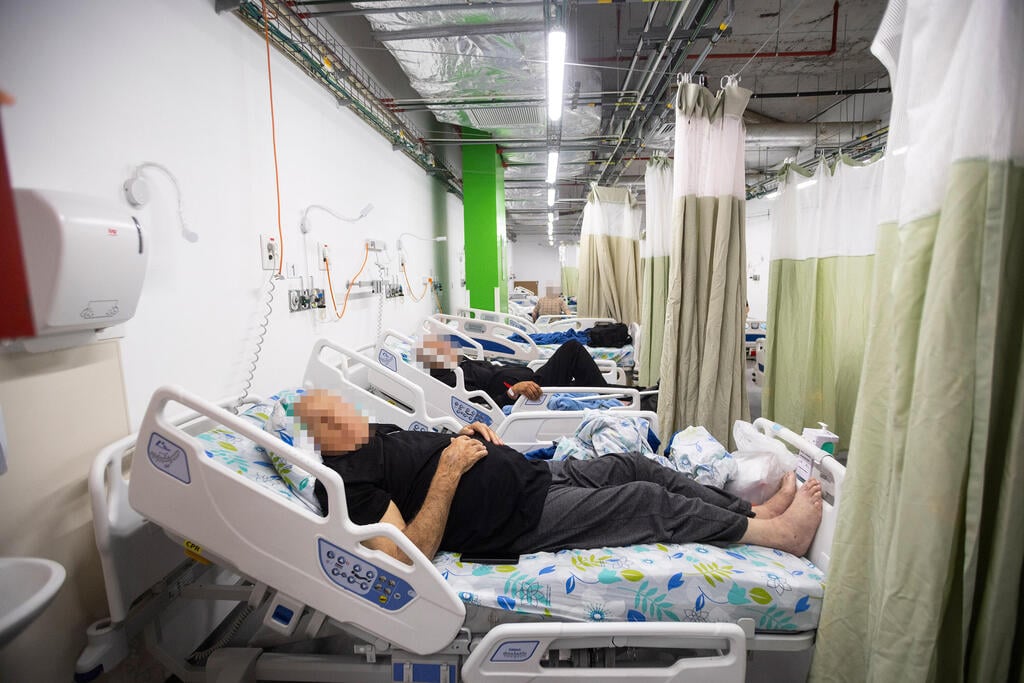
Crowding and lack of privacy in the underground complex at Galilee Medical Center
(Photo: Gil Nehushtan)
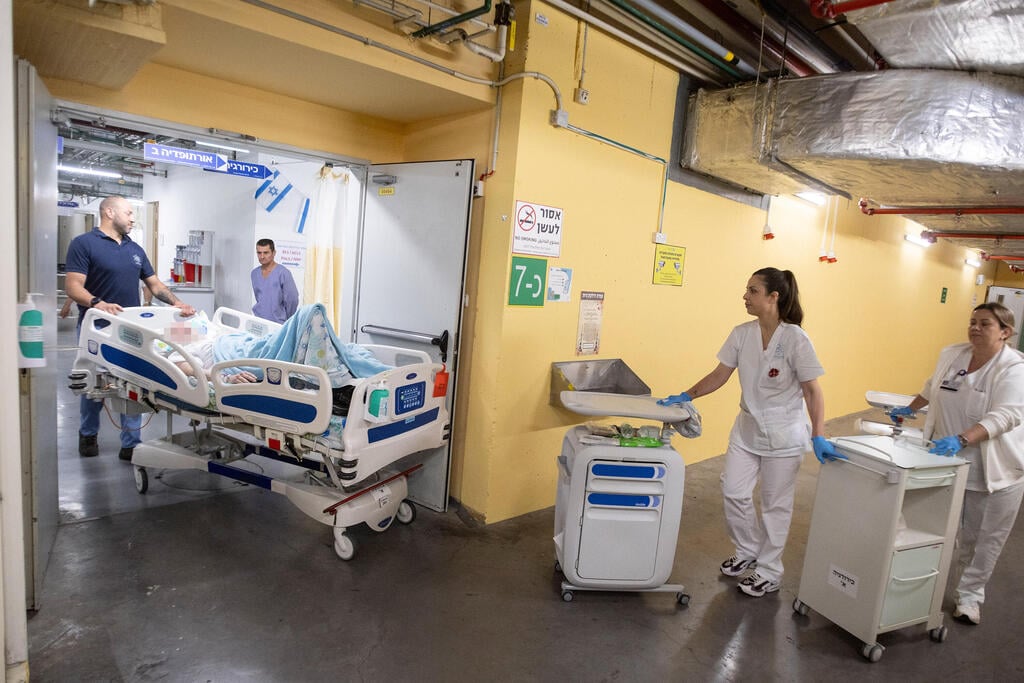
Moving beds underground; 15 months below ground
(Photo: Gil Nehushtan)
On Saturday, after the renovations were completed, the patients and staff moved up to their new, renovated ward, with daylight and a level of comfort they had forgotten was possible.
“We received a stunning ward, bright and full of good energy, and we had started organizing it — and here we already received an order to go back down,” Mishayev said. She keeps smiling and remains optimistic. “We are trying very hard to find strength. We do not have the option of going backward, only forward. Every such move down and back up involves paying attention to the smallest details.”
In the underground hospital beds lie residents of the area, some of them experiencing such a move for the first time. Hava Fishbein, who is hospitalized in the surgical ward, is trying to get used to the new reality.
“I have never experienced anything like this,” she said. She looks with appreciation at the orderly wheeling her bed toward the end of the exposed corridor. “The staff is doing holy work. I am happy we have rooms that protect us underground.”
Fishbein, 78, has lived in Nahariya for more than 60 years. She describes daily life under the shadow of sirens and rounds of fighting.
“We experience the booms every day. I want Hezbollah to leave our area and for us to make peace with the people of Lebanon. For the war to end, that’s all, and for Nahariya to grow and flourish, and for us to live in peace and quiet.”
In the women’s and maternity wing in the belly of the earth, life also does not stop because of the sounds of sirens and interceptions heard from the border.
“We do not stop bringing new life into the world. This is the place and this is the time,” said Shari Nahir Biderman, a midwife and supervisor of the wing. The delivery rooms are protected, but the inpatient ward was required to move down.
“Naturally, it creates unease and a lack of confidence among the mothers, who do not know what they are heading into,” Nahir said. “We ease their fears, and the entire staff smiles and does everything with love and willingness, even though this is not the first time or the second. We are here for our patients. It is very difficult, but this is our hope and our future. There is nothing else.”
‘The most practiced in the world’
Galilee Medical Center is the closest hospital to the northern border, about 10 kilometers from Lebanon, and over the months of fighting it has become a fortified medical outpost. Only the emergency rooms, intensive care units, delivery rooms and operating rooms are in protected areas during routine times. When the inpatient wards are moved underground, doctors must reduce the number of hospitalized patients and discharge many of them, because there is room underground for only half the beds.
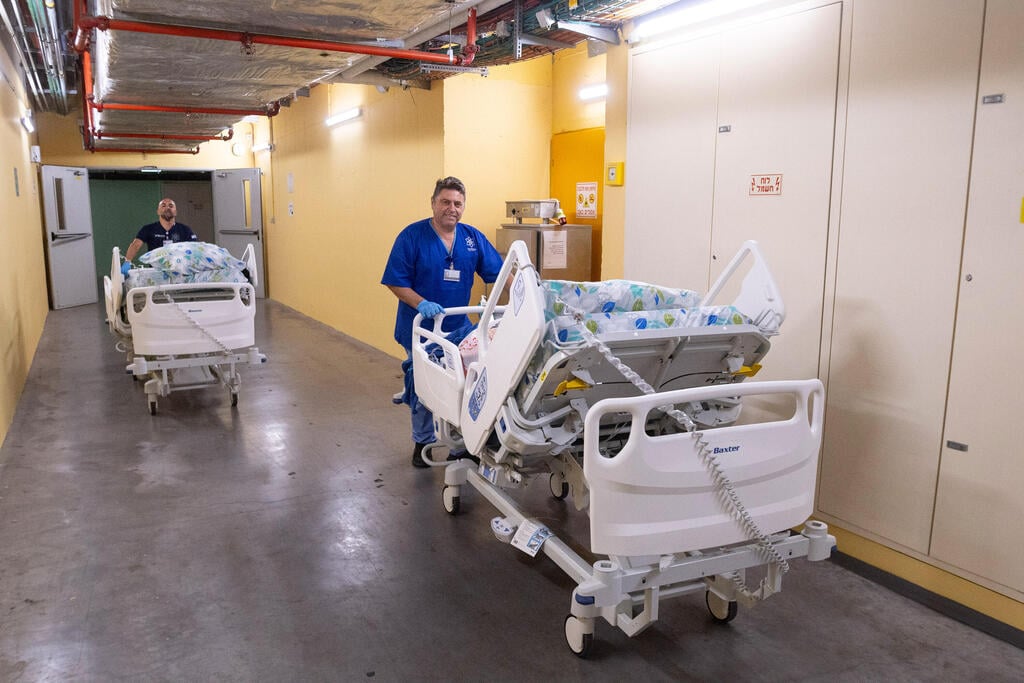
Galilee Medical Center in Nahariya moved into an underground complex and is now heading back up again
(Photo: Gil Nehushtan)
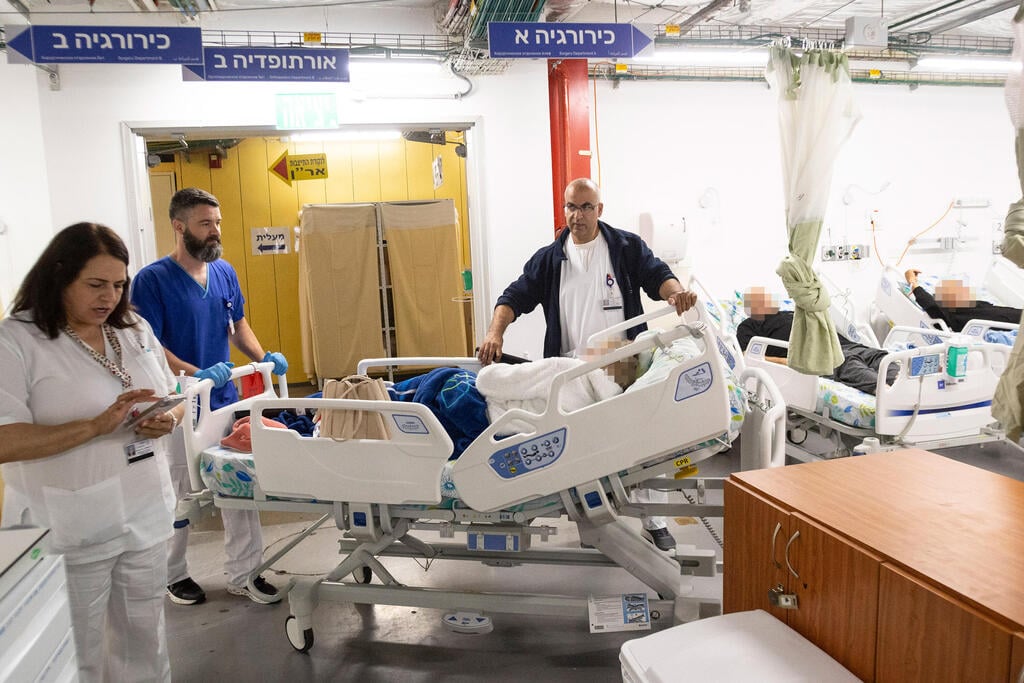
The staff is well practiced, but the toll is heavy
(Photo: Gil Nehushtan)
“Unfortunately, we are already the most practiced, perhaps in the world, in this situation,” said Dr. Tsvi Sheleg, deputy director of the medical center and head of its emergency system. He said that since October 2023, the hospital has operated in its protected complex for more than 15 months in total.
“It is unpleasant to say, but this is our routine. We have always been a hospital on the confrontation line. To say it is simple? No. We have normalized this situation of being resilient and standing up to every challenge we are given. In a sense, we no longer really know anything else.”
Alongside emergency management, the hospital is also looking toward hundreds of millions of shekels in development budgets promised to the region and to the hospital in particular, as part of the government decision to rehabilitate northern Israel that was approved last week.
“We will be able to bring in new technologies that will allow us to continue providing our services and to have the best cutting-edge medical technology, in everything needed medically, such as surgeries,” Sheleg said. “We see this investment as a huge long-term growth engine for the entire region.”
“We are convinced that over the years it will grow and become stronger, and will lead strong populations to continue returning and strengthening the western Galilee,” the deputy director said. “I think everyone understands that this is of national importance.”