

Ears are often thought of as “static” features on the face. They don’t express emotion, they don’t move with facial muscles and they’re barely affected by weather changes. They just seem to sit there, unchanged for a lifetime.
But in fact, this quiet part of the body, the earlobe, the soft, cartilage-free, rounded lower tip, is one of the first to show signs of aging. Skin aging is clearly visible here: volume loss, decreased elasticity and gradual elongation that reshapes the look of the ear.
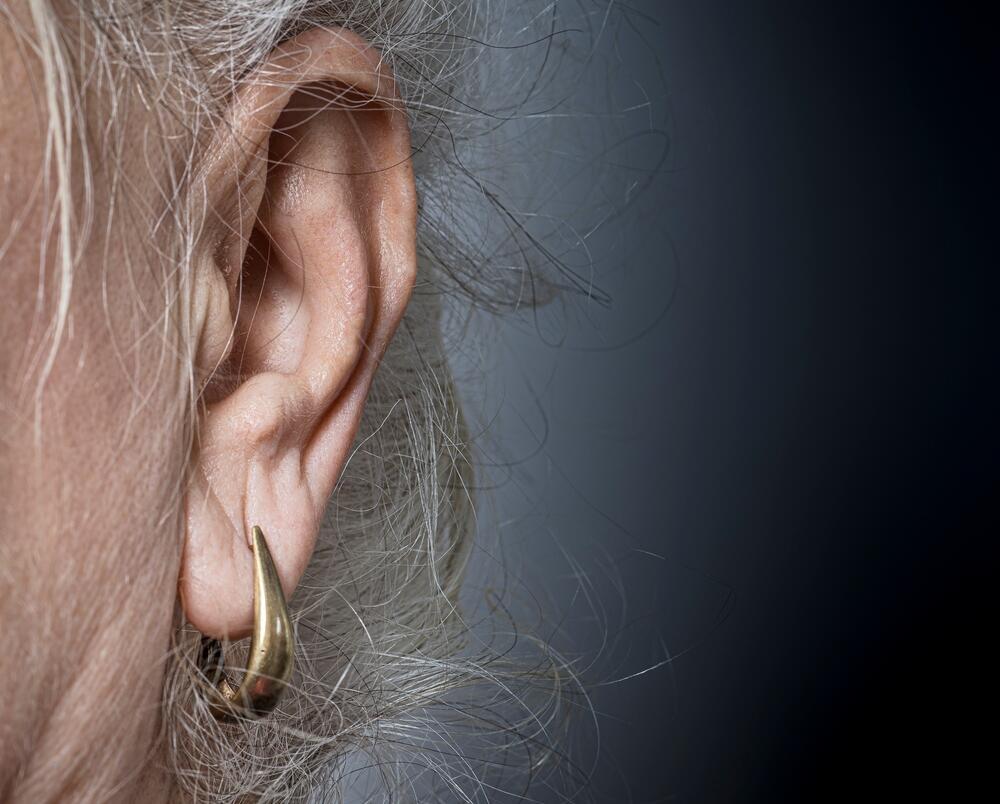
Heavy earrings pull continuously downward
(Photo: Shutterstock)
What’s in an earlobe?
The earlobe is made of dense connective tissue rich in collagen and elastin, two key proteins that give skin its firmness and flexibility. In youth, collagen is tightly packed, forming a stable structure, while elastin gives the earlobe the ability to bounce back after stretching.
Over time, as with the rest of the face, the quantity and quality of these fibers decline. The tissue loses its support, elasticity weakens and the skin becomes thinner and looser. In addition to the natural aging process, sun exposure, smoking and the loss of subcutaneous fat all contribute. What was once a plump, firm lobe may become elongated, saggy and even wrinkled.
Earrings and jewelry are not just decorative; they’re part of a long human tradition. For centuries, they’ve symbolized status, identity and belonging, from African and Native American cultures where tribal hoop earrings marked age and social standing to today’s fashion world, where they express personal style and freedom.
In recent decades, the trend of “ear stretching”, gradually enlarging the earring hole with specific jewelry, has gained popularity for its bold, dramatic look. But biologically, it places significant stress on the tissue. The skin stretches beyond its natural capacity, collagen fibers weaken and tears may form that don’t heal on their own.
Even without stretching, large or heavy earrings pull continuously downward. Over time, they can cause visible elongation of the lobe and even alter its shape.
How much do earlobes really stretch over time?
Morphometric studies show that the ear, including the earlobe, continues to elongate throughout life. According to the Aesthetic Surgery Journal, the earlobe grows by about 30 to 35 percent between the ages of 20 and 60.
Classical measurements suggest an average growth rate of about 0.22 millimeters per year. A study in Italy found a similar trend of an increase in ear length with age.
 Dr. Marina LandauPhoto: Courtesy
Beyond natural aging, wearing heavy earrings over the years worsens elongation and may even cause tearing. Influencing factors include genetic traits like skin thickness and collagen quality, as well as lifestyle habits such as sun exposure and daily earring use.
What can be done?
In recent years, there’s been growing awareness that earlobes also deserve cosmetic care. Injectable fillers, such as hyaluronic acid, can restore lost volume.
Energy-based treatments help improve elasticity. A minor surgical procedure can repair torn or stretched lobes, giving them a more youthful and refined appearance.
The principle is simple: like the skin of the face and neck, earlobes need protection and maintenance. Avoid heavy earrings, use sun protection on the ears and consider treatments that strengthen connective tissue. That’s how to keep the ears looking soft and aesthetic for years to come, even as time leaves its mark.
- Dr. Marina Landau is a senior dermatologist and founder of the cosmeclinical product line MAHUT.