


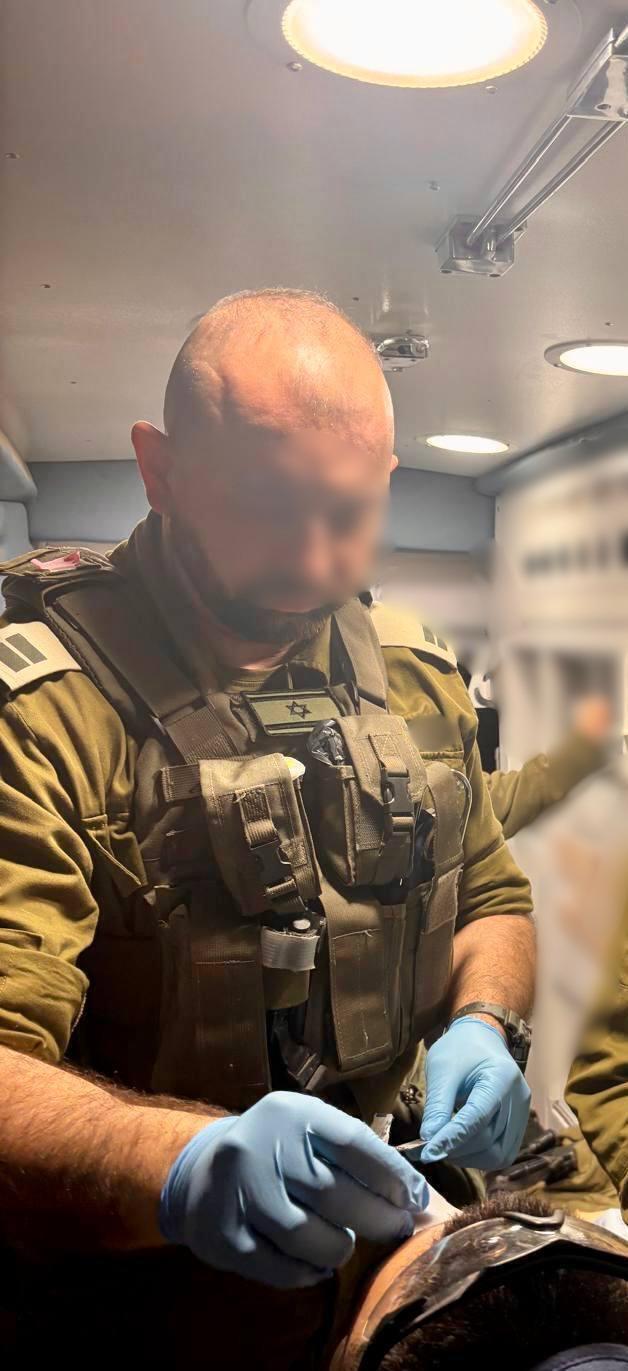
In Tashkent, his hometown, the life of Lt. S. was quiet. “There is no war there,” he says simply. Yet, from that quiet that the 35-year-old doctor chose to leave everything behind, immigrate to Israel and start over — a path that led him not only to hospital corridors, but also to combat military service, in the midst of one of the most turbulent periods in the country’s history. Now he wears a uniform as a doctor at the Kfir Brigade training base, treating soldiers in the field, while trying to fulfill a dream that took shape in his hardest moments: to be part of Israeli society.
What makes a person leave everything in the middle of life and start over in a foreign country? Lt. S. shaped all of his adult life in Uzbekistan, where he entered medical school right after high school and began building a clear, stable career for himself, alongside family life with his wife and young son. “I studied for seven years at the university and after that I started my residency,” he says today. “There it is not five years like in Israel but three years. I specialized in infectious diseases in children. I worked at a hospital in Tashkent and treated children with illnesses like coronavirus, tuberculosis and pneumonia.”
While in many places around the world Jewish identity has become more complicated, in Tashkent, he says, the reality was completely different. “There was no antisemitism abroad, thank God. In Uzbekistan everything was good. Before World War II many Jews from Ukraine, Russia and Belarus came there. We even had a synagogue.”
And yet, despite the career he had begun, something did not feel right. “There is a difference between the level of doctors abroad and the level of doctors in Israel,” he says. “My wife is also a doctor. She and I felt that our level was not good enough, and we knew the level in Israel was higher. We always had plans to come to Israel after retirement age, but my wife said we needed to do it now. We had a son who was 2 1/2. We understood it would be easier for him to immigrate at that time, learn the language and move ahead here.”
In April 2023, that theoretical decision took concrete form, and the family found itself landing in Israel and starting over, this time in Be'er Sheva. The first stage was not a direct jump into work, but a lengthy adjustment process meant to bridge the gaps between the health care systems. “We were in a special program for immigrant doctors called Masa — they explained to us how the hospital works, what departments there are, what kinds of doctors, the history of medicine. Everything was done through lectures. We were in that program for a year and a half.”
From the white coat to an IDF uniform
But he discovered the real gap only when he began entering the work itself. “We started working at Soroka Hospital. It’s not the same as in Uzbekistan. The doctors here are like an elite military unit,” he says. “They know how to do everything: intubation, chest drainage, surgery, urology, oncology. Everything. My wife and I thought we were in trouble.”
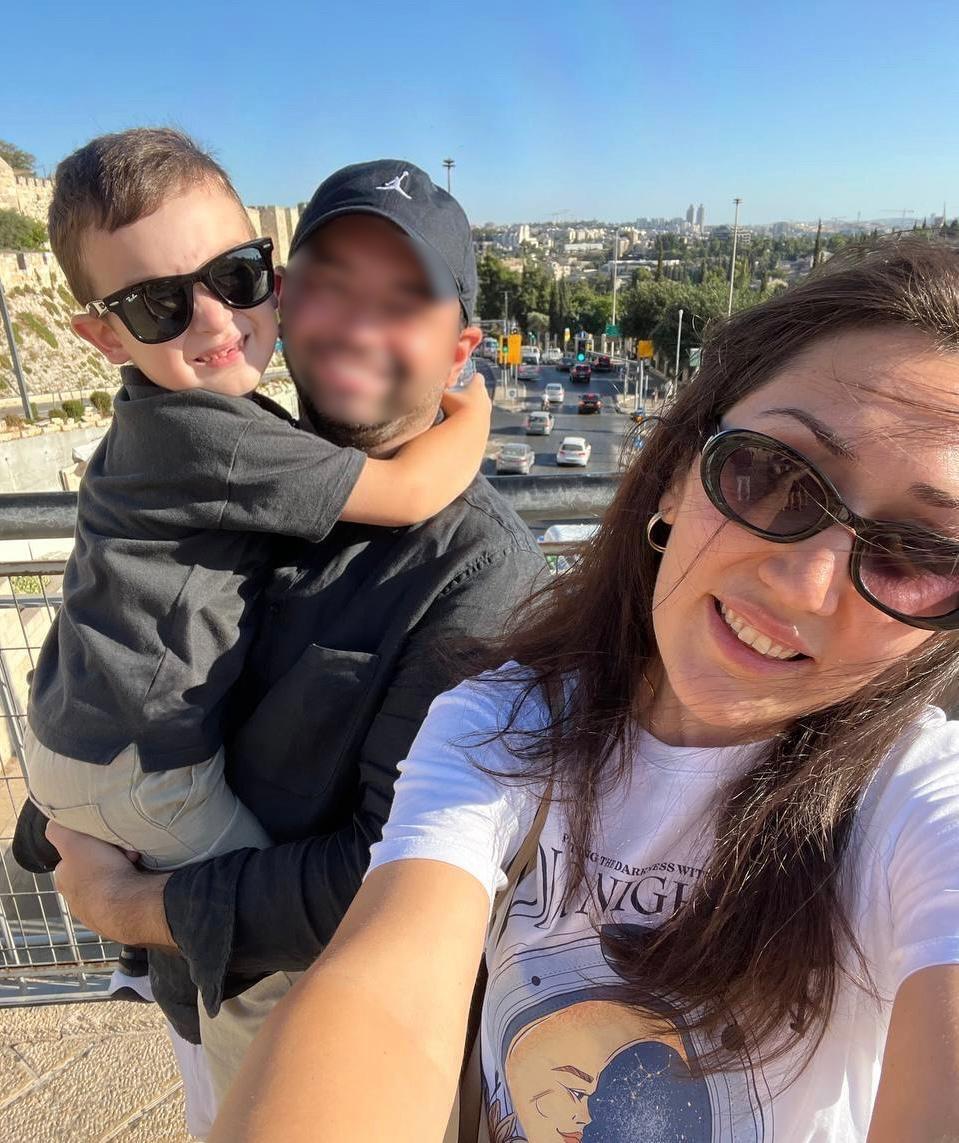
Lt. S. with his wife and son
Still, in the end each of them found a new place within the system. “After half a year, my wife started working as an internal medicine doctor and I as an anesthesiologist. We took a final exam to get a license. The exam was really hard and included more than 200 questions. Only after three months did I get the answer that we had passed.”
But just as his professional path in Israel was beginning to stabilize, another direction opened before him, one he had not planned in advance. “I have many friends who immigrated from Russia, Uzbekistan and Kazakhstan, and they work here as military doctors. They all told me, ‘You need to work in the army.’ I thought it wasn’t for me, but later I also came to the military medical school as part of a course they organized there. I saw how it works and suddenly I thought to myself: Why not?” Within the system itself, he got the same message — this time from a senior professional figure. “I spoke with a professor who is an anesthesia specialist and also a military doctor. He told me, ‘In order to advance in Israel, you need to be a military doctor. That is the goal. After that it will be easier for you.’”
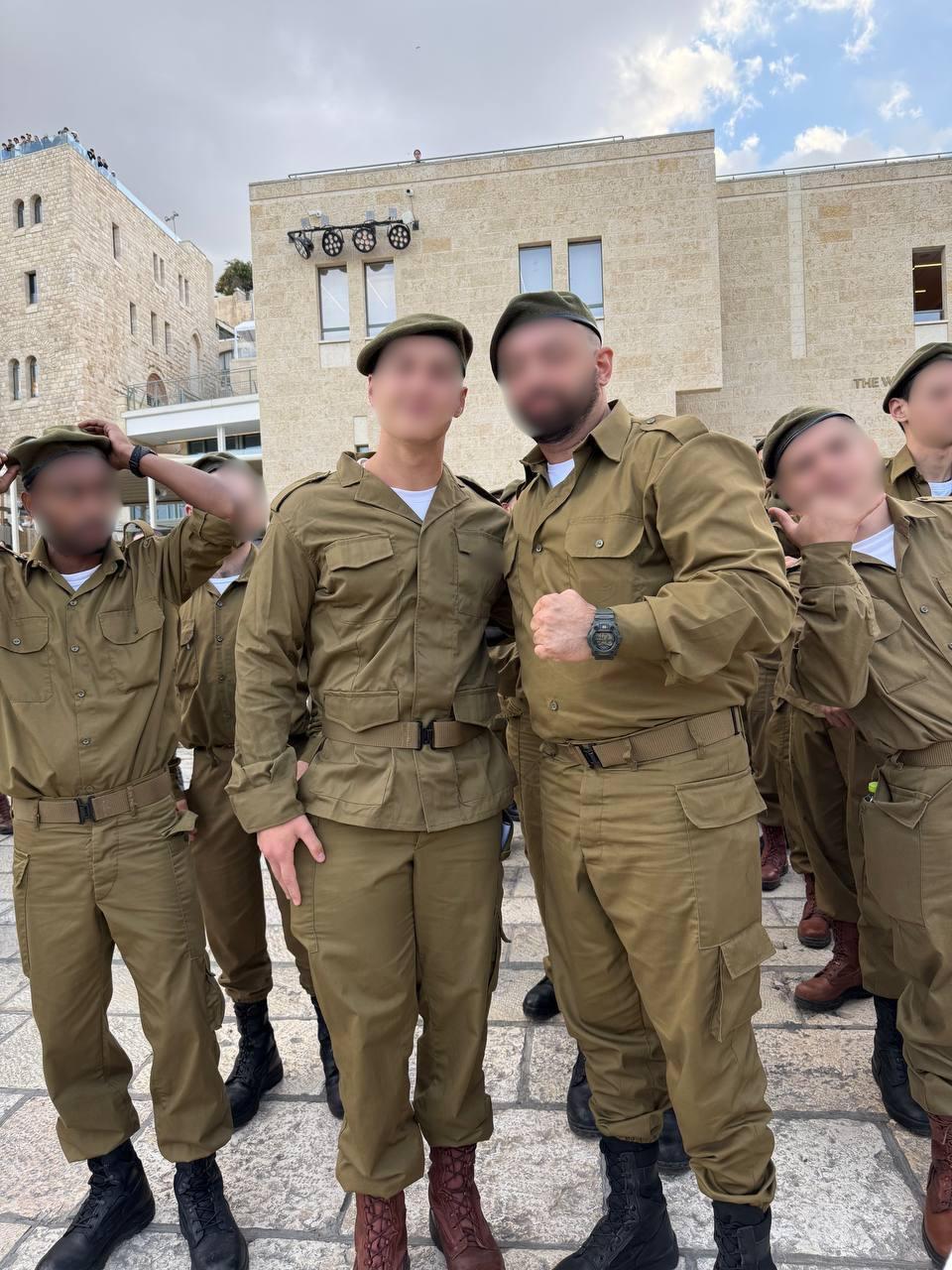
In the end, the real turning point did not come from a conversation, but from reality itself. “During the ground maneuver in Gaza after Oct. 7, I worked in intensive care at Soroka. At that time I saw many of our soldiers with gunshot wounds, with trauma. They told us there were not enough doctors in the army and more were needed: at training bases, in battalions, anywhere. There are immigrant doctors who work for two years and go elsewhere, but I thought about everything I had been through. I spoke with the professor and told him I wanted to work in the army and help our soldiers. I have motivation, I have everything. He called the personnel office and told me that in September there was an enlistment for new immigrants. I said: OK, I’m going to the army.”
(Photo: IDF)
The enlistment itself, he admits, came with no small amount of uncertainty. Beyond adjusting to the military framework, another challenge awaited him — the language. Even after time in Israel, the gap was still noticeable, especially in a professional environment. “I studied Hebrew there because my Hebrew was not good in the anesthesia department. Luckily, many anesthesiologists were of Russian origin, and if there were things I did not understand I could speak with them in Russian and they explained it to me in Russian. I did not know Hebrew well enough.”
Finally at home
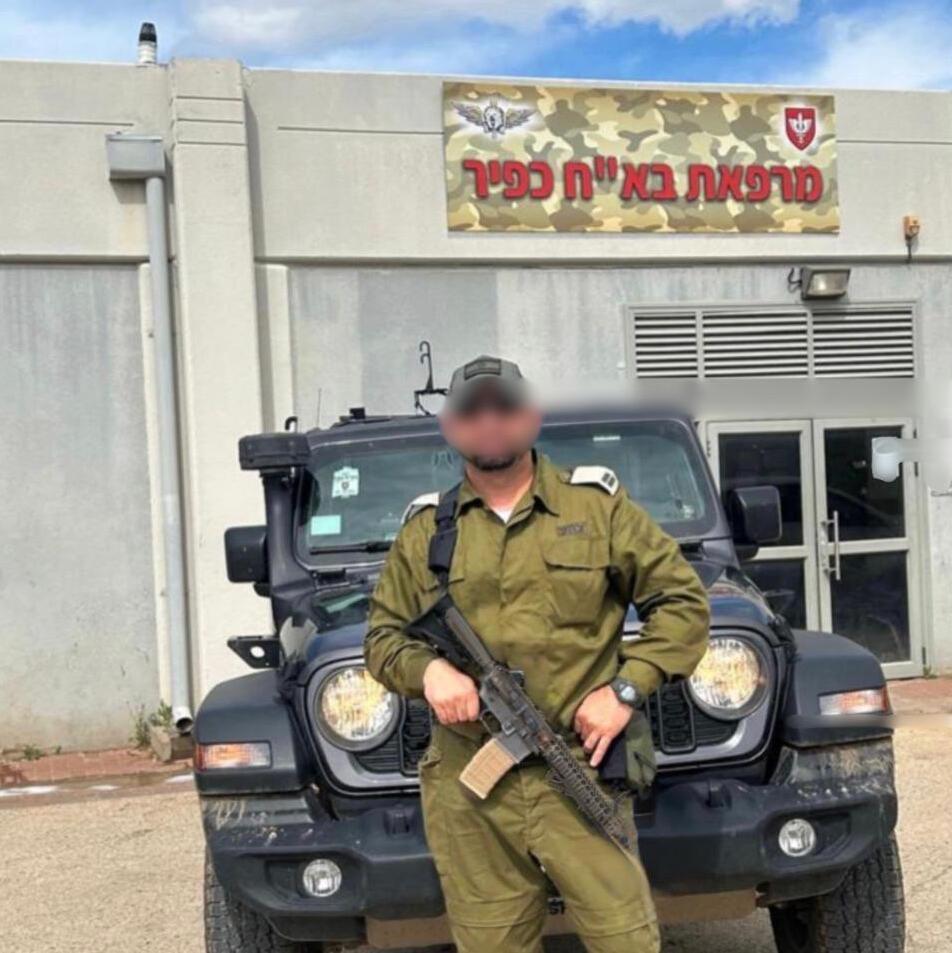
He began to close that gap after enlisting. “At Michve Alon base, where I went through basic training, there was a Hebrew course for new immigrants. After four months there, my Hebrew level really went up.” When it came time for placement, he had no doubt where he was headed. “In the placement interview they asked me what kind of role I wanted: a closed base or an open base, because I have a family. I immediately said I wanted a combat base, a closed base, because my dream is to help soldiers. Now I’m at the Kfir Brigade training base. I’ve been here for five months already. The doctor who was here had just left, so I arrived very quickly.”
Although his integration into the base was quick, it required him to shift into higher gear almost immediately. “My commander told me, ‘I want you to learn Hebrew,’ because all the protocols in the book are written in Hebrew. The officers course is in Hebrew and the first-aid course is also in Hebrew. He gave me three months, and I said, ‘Fine, I’ll take care of it.’ He was really with me. He told me he was here for me at any time. The team here is really like a family.”
(Photo: IDF)
Even during more tense periods, like the campaign against Iran, his personal routine continues to unfold between home and base, at times at a real cost. “Thank God, my family and I live in Ashdod, where it is relatively quiet. What is hard is the trip. I travel to the base by train, there are stations that are not operating, and the train does not always leave on time.”
But despite the challenges, for him service in the IDF is far more than a professional role. When he is asked what it means to him to be Israeli, his answer comes without hesitation. “There are good people in Israel, thank God,” he says. “Everyone helps me, especially here in the army: soldiers, commanders, officers. Everyone. I have a problem now with my child’s preschool, and the army is helping me. When I was in basic training I did not receive a salary for a few weeks, and the army helped me. The commander asked me again and again: Do you have food? Do you have what you need at home? I was shocked. In my life no one had ever asked me those things. I want to work in the army until retirement. That is my dream. I understand that this is my place.”
In the end, he says, that feeling comes together for him in something simpler: belonging. “Every person needs to do something in his life: there are people who work in the news, there are doctors, there are soldiers. I feel that I found my place. This is my home.”