

Itamar Franco, from the northern Israeli community of Nes Ammim, and Noam Chen, from nearby Nahariya, both 16, were simply seeking a bit of outdoor adventure.
The two friends decided to explore a manmade tunnel near their homes. But what seemed like a harmless excursion led to a rare medical mystery that only unraveled weeks later at Rambam Health Care Campus in Haifa.
Gallery
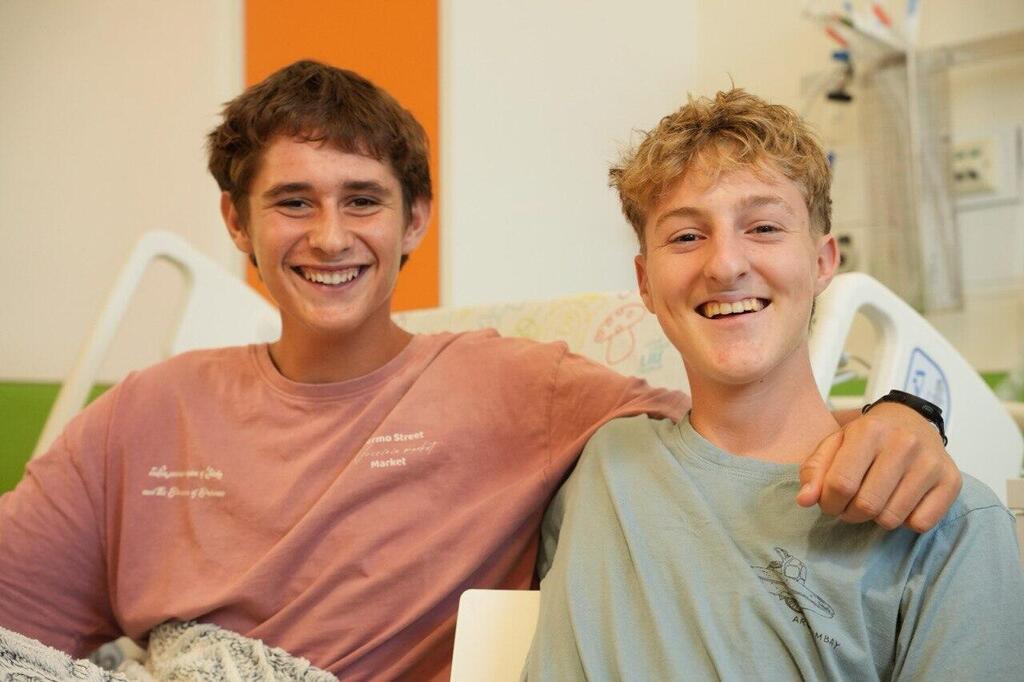
Noam Chen and Itamar Franco at Rambam Health Care Campus in Haifa
(Photo: Rambam Health Care Campus)
“This is a cave we know well from local stories,” Franco said. “I’d been there a few times before, as have other friends. It’s just a fun activity. You rappel into the pit, crawl through the tunnel and come out on the other side. A couple of months ago, I suggested Noam join me for a visit since he’d never been there before."
But just days after the outing, both began feeling unwell. "I had a high fever for a few days, then it went away, came back and disappeared again,” Chen said. “It kept happening for weeks, and at the same time, I started seeing shadows that got worse over time.” Franco said he experienced similar symptoms.
Their mothers, Reut Franco and Nili Goberman Chen, said they initially managed the fever, but worsening symptoms prompted them to consult eye specialists. Doctors found severe eye inflammation and referred them to the emergency room at Rambam.
“When we first examined Noam, he described pain, redness, light sensitivity and blurred vision,” said Dr. Yael Ben Arie, a senior ophthalmologist and coordinator of the Uveitis and Ophthalmic Pathology Service at the Department of Ophthalmology in Rambam.
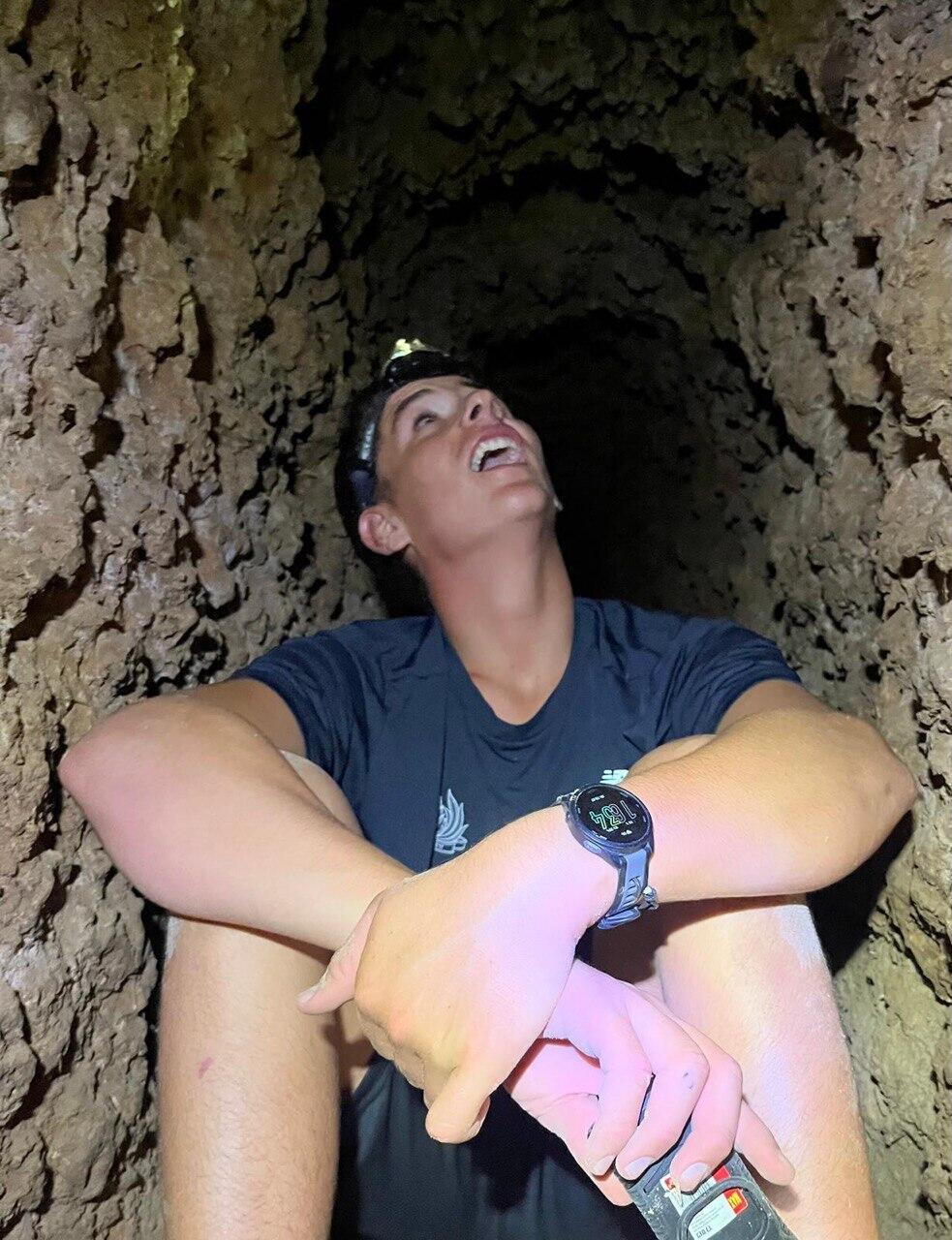
Noam Chen inside the cave
(Photo: Courtesy of the family)
“They also reported recurring fevers and vomiting. It was concerning and unclear, especially for two healthy, athletic teens. We conducted a thorough intake, but nothing stood out initially. The only thing clear was that this was serious uveitis (intraocular inflammation) requiring hospitalization."
In the following days, their condition didn’t improve. Then a crucial detail emerged. “The boys' parents stayed in touch and reported developments,” Ben Arie said. “At one point, Chen’s father mentioned they had explored a cave some weeks earlier. That immediately raised a red flag, and I consulted with an infectious disease specialist."
Caves can harbor soft ticks, which transmit the Borrelia persica bacterium. The tick detects human movement and carbon dioxide and may bite briefly before dropping off to lay eggs.
The infection it causes, known as tick-borne relapsing fever, can trigger recurring fever spikes, muscle and head pain and, in rarer cases, facial paralysis, nausea, vomiting, eye pain, uveitis and visual disturbances.
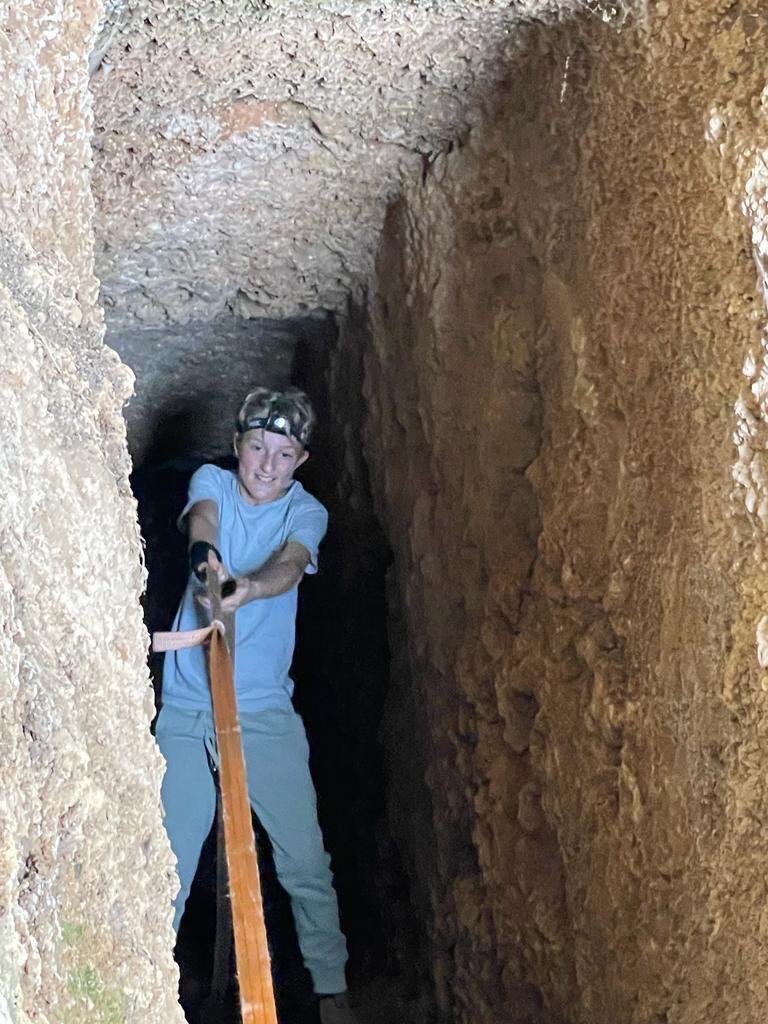
Itamar Franco inside the cave
(Photo: Courtesy of the family)
“Until we learned they had visited a cave, we couldn’t connect the fever and eye inflammation,” said Dr. Michal Meir, an active senior physician in the pediatric infectious diseases unit at Ruth Rappaport Children’s Hospital, part of Rambam.
“Their symptoms were nonspecific and could be attributed to a range of viruses. But both had almost identical timelines: fevers, then eye inflammation, pain and vision problems. Nothing pointed clearly to a single cause, especially since uveitis is a rare complication of relapsing fever."
Once the cave visit came to light, suspicion turned to Borrelia. A blood smear confirmed it: the bacterium’s distinctive spiral shape was visible under the microscope in one of the teens. The other is awaiting serology results, but doctors believe they were infected by the same source.
Treatment with antibiotics and steroids led to significant improvement. Both are expected to be discharged soon.
Experts advise avoiding prolonged stays or crawling in caves and recommend wearing high boots, long clothing and insect repellent on exposed skin when entering caves.
The teens say their next cave outing isn’t likely anytime soon. “A lot of people we know visit that site. We warned them all after what we went through,” they said.
“I’m done with caves for now,” Franco added. Chen agreed: “If they clear out those ticks, maybe we’ll go back one day, but right now, we’re just focused on recovering."