

Eighteen years ago, Morris Kahn, the Jewish billionaire and philanthropist, entered one of the most sensitive and complex arenas of modern medicine: fertility preservation for women with cancer. He did not do so with his name emblazoned on a building, through ceremonies or public declarations. In recent days, shortly after his death at age 95, Sheba Medical Center in Tel Hashomer marked a major milestone in a project that was closest to his heart: the establishment of the world’s largest center for fertility preservation in women with cancer.
Kahn was a businessman, high-tech entrepreneur and philanthropist, a co-founder of Amdocs and Golden Pages, and the driving force behind groundbreaking national initiatives — from Israel’s attempt to reach the moon with the Beresheet spacecraft to advancing research, medicine and young leadership in Israel. Prof. Dror Meirow, one of Israel’s leading experts in fertility preservation, spoke to ynet about his long partnership with Kahn, the medical achievements — and, above all, the man behind them.
Gallery
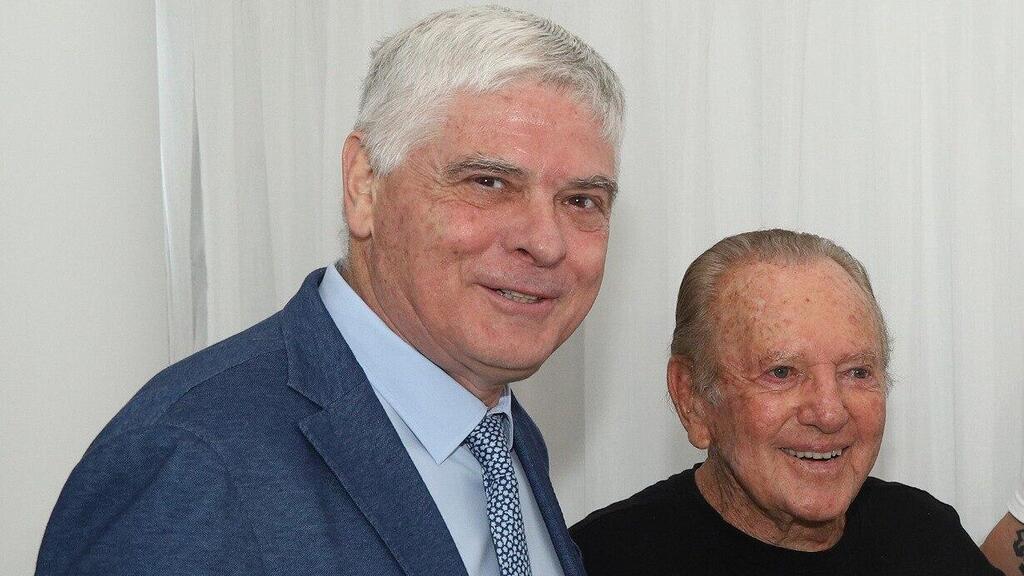
Morris Kahn (right) with Prof. Dror Meirow
(Photo: Courtesy of Sheba Medical Center, Tel Hashomer)
“Morris Kahn joined us 18 years ago,” Meirow says. “He was deeply interested in fertility preservation for women with cancer. It was a field that touched him personally. He loved the cases, he met the patients.” According to Meirow, they would meet every few months — at Kahn’s home, his office or at Sheba — to follow both the scientific progress and the women’s personal situations. “He was happy to meet them,” he says.
Global breakthrough in ovarian transplantation safety
Over the years, with Kahn’s support, Sheba established the world’s largest center for fertility preservation in women with cancer. Thanks to his involvement, Sheba also set up a dedicated laboratory — unique worldwide — focused on one of the field’s most sensitive challenges: the risk of reintroducing cancer cells through ovarian tissue transplantation. The lab developed a series of specialized tests to detect cancer cells in frozen tissue, particularly for leukemia patients, who face a high risk.
As part of this work, the world’s first safe ovarian transplant was performed in a woman who had recovered from leukemia, following extensive screening of the tissue. The procedure led to a pregnancy and birth, followed later by three more children. The case was published and widely cited in scientific literature, setting a new global benchmark in fertility preservation.
“We paved the way,” Prof. Meirow says. “He liked to say it was ‘a light unto the nations,’ and not to be afraid of failure.” Kahn, it turns out, was not seeking commemoration. “He used to say: I don’t need buildings, I don’t need my name on buildings. I want to contribute and advance things. And one patient — even one — is worth the entire effort. It gives me happiness, it gives me health.”
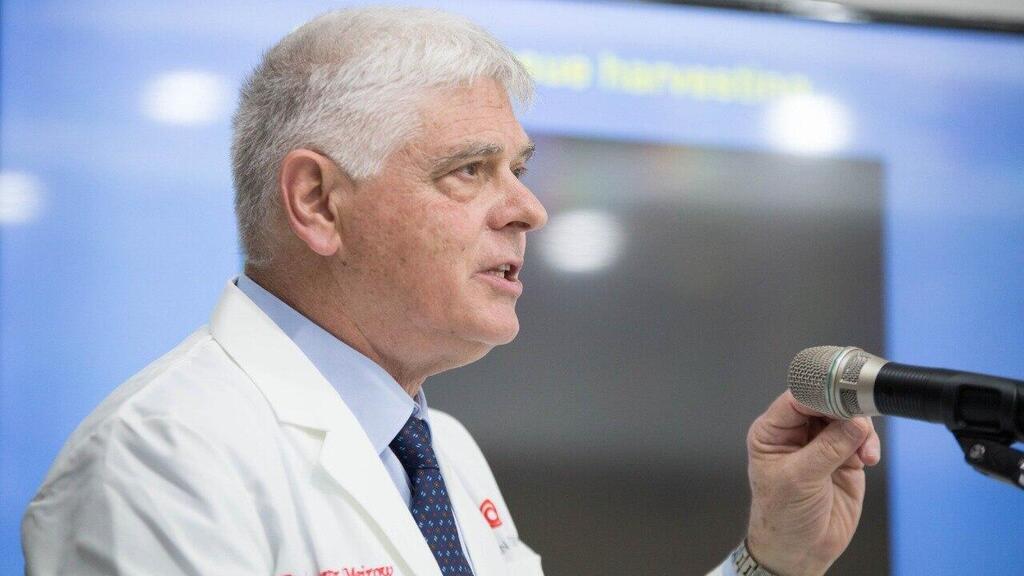
One of the leading experts in fertility preservation: Prof. Dror Meirow
Beyond the financial support, Kahn was personally involved. He came, asked questions, listened and met patients throughout the years. “For him, the work itself was the science, the treatment of patients and the results,” Prof. Meirow recalls. “That gave him happiness. He had an incredibly open hand, combined with personal involvement and genuine curiosity.” Even in his later years, when he was no longer in good health, he continued to support new projects. “Just two years ago, when he was 94, we launched a new groundbreaking initiative. He didn’t know whether it would materialize, and he said: yes, I’m in. It interests me, it’s worth engaging with.”
What drew him specifically to fertility preservation? Prof. Meirow explains that it is a relatively young field in medicine. “If you look at the past 20 years, fertility preservation is a groundbreaking and new discipline. Israel became a global center for its development, with extensive research.” One patient even told them, “We are writing the book,” because so many procedures were done for the first time, without knowing in advance where the road would lead — treatment and research side by side, at the patient’s bedside.
He offers one particularly moving, extreme example: a patient Kahn met who had undergone chemotherapy as a child, with no menstruation and no expectation of having children. After an ovarian transplant, she gave birth to four children. “These are edge cases,” Prof. Meirow says. “They make a difference.” For Kahn, that impact mattered more than any amount of money. “He used to say: ‘For the amount of money I give, what I get here — there is no price.’ If you see him in videos, he’s always smiling. He loved it, he loved listening.”
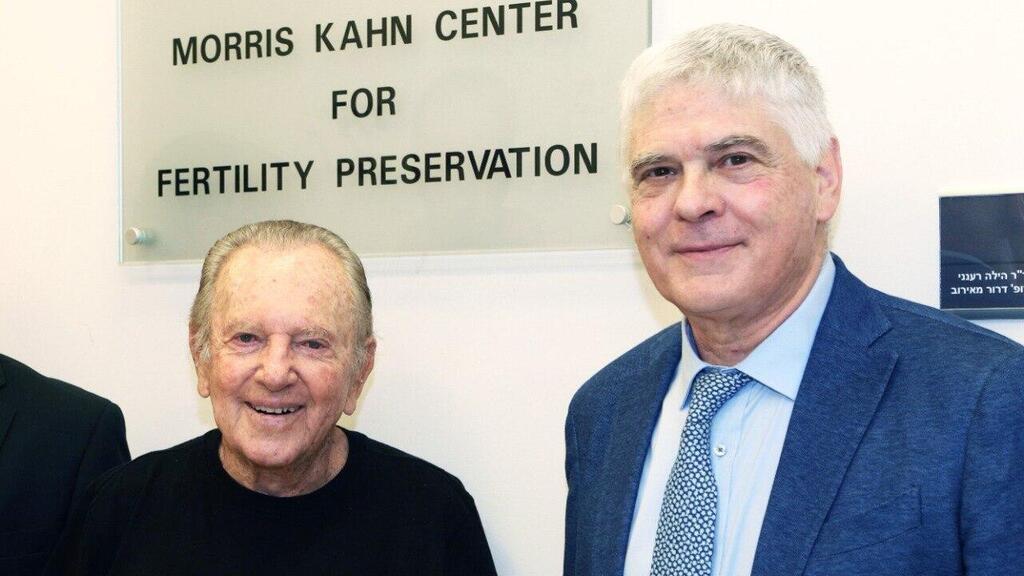
Morris Kahn (left) with Prof. Dror Meirow
(Photo: Courtesy of Sheba Medical Center, Tel Hashomer)
Over the years, Prof. Meirow has met many donors, but he says this case was exceptional. “Donors want involvement, but here it was extraordinary — both in duration, 18 years from the very beginning of the field, and in depth.” More than 100 scientific papers were written with the help of the donation, dozens of physicians from around the world came to train at Sheba, and the entire enterprise grew because of it. “We would discuss science at a very high level,” Prof. Meirow says. “He was not a scientist, but he wanted to understand deeply, to consult, to involve others.”
He recalls a birthday event Kahn hosted at his home, to which he invited dozens of leaders from Israel’s business community. “He told them: ‘Be like me. We don’t need the money in the bank. We need to be philanthropists. That will give you much more happiness.’”
The numbers speak for themselves. Each year, the center treats thousands of girls, adolescents and women with cancer. More than 1,000 women receive counseling and clinic visits annually, hundreds of fertility preservation procedures are performed, and more than 100 ovarian transplants have already been carried out in Israel — the highest number in the world at a single center. “There is no other center that has reached 100 transplants,” Prof. Meirow emphasizes. “And the results are the best in the world — more than 50% of the women became pregnant, about 20% more than anywhere else.”