


One of the major questions occupying aging researchers is whether aging is a one-way process, or whether some of the cellular changes that occur over the years can still be reversed. In recent years, scientists have increasingly come to understand that aging is not merely the body’s gradual wear and tear, but also a profound change in the way cells read and activate their genetic material.
Now, a new study from Bar-Ilan University suggests it may be possible to influence this regulatory mechanism even after it has already deteriorated.
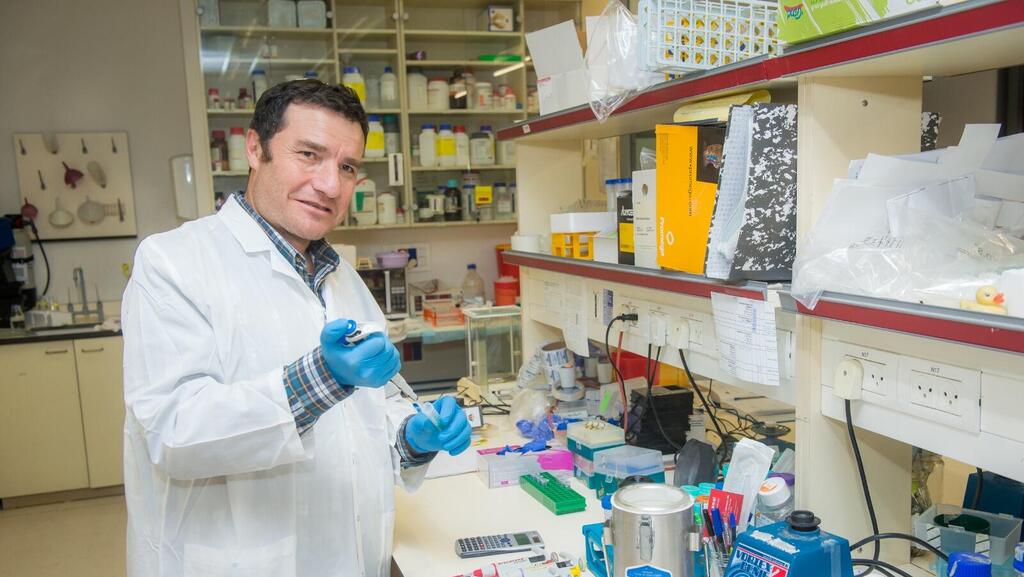
Researchers at Bar-Ilan found that a protein associated with longevity was able to restore activity patterns in the livers of aging mice to a state more closely resembling that of young livers.
According to the study, published in the journal Nature Communications, increasing the expression of a protein called SIRT6 affected the structure of chromatin, the way DNA is packaged inside the cell. Chromatin determines which genes are activated and which remain switched off, and its function deteriorates with age.
The researchers examined how chromatin structure changes in the liver during aging and found that SIRT6 helped restore some of that regulation, reduce inflammatory processes and improve pathways linked to metabolic activity.
SIRT6 is a protein that operates inside the cell nucleus and plays a role in several essential mechanisms, including DNA repair, regulation of gene activity, metabolism and coping with cellular stress. Over the past decade, it has become one of the more intriguing proteins in aging research, partly because previous studies linked it to longevity and better health in old age.
The study was led by Prof. Haim Cohen and doctoral students Ron Nagar and Zacharia Schwartz. Cohen, of the university’s Faculty of Life Sciences and head of the Sagol Healthy Human Longevity Center, has studied SIRT6 for years. In an earlier study, Cohen and his team found that mice engineered to overexpress the protein lived longer and showed a wide range of improved health indicators.
That study also pointed to a possible mechanism behind some of the effect: SIRT6 regulates the production of hydrogen sulfide, or H2S, a gas produced in small amounts by the body that has been linked to the beneficial effects of caloric restriction.
“We previously showed that SIRT6 is a key player in longevity and that mice engineered to overexpress it live 30% longer,” Cohen said. “It causes a variety of positive health changes: lower cancer risk, improved blood chemistry, more efficient sugar and fat metabolism and, of course, better use of energy reserves. When we’re young and exhausted, we know how to find and use energy sources in the body. In old age, we fail at that. This protein enables that process.”
But interest in SIRT6 is not based solely on mouse studies. According to Cohen, previous studies of centenarians also found a link between the protein and longevity. “Among those individuals, researchers found a more active variant of SIRT6,” he said.
The current study continues that line of research, but asks a different question: Can SIRT6 affect not only lifespan and metabolic markers, but also one of the most fundamental mechanisms of aging inside the cell, the way DNA is packaged, opened and closed for reading in the aging liver?
The cell’s instruction manual
To understand the question, researchers focused on a key concept: chromatin.
DNA inside every cell is not left loose, but packaged around proteins in a compact and organized structure. The way it is packaged largely determines which genes are accessible for reading and which remain closed off.
In simple terms, it is not enough to know which genes exist in a cell. It is equally important to understand which genes are available for activation, in which tissue and at what stage of life.
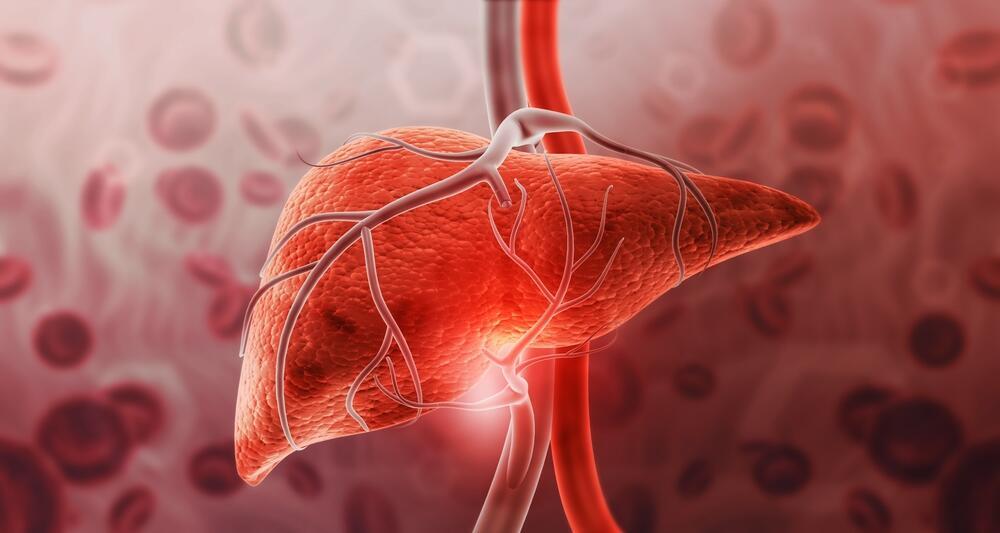
Human liver
(Photo: shutterstock)
This mechanism is critical to the identity of each tissue. Liver cells and heart cells contain the same genetic material, but function very differently because each activates a different genetic program.
As part of the study, researchers focused on changes occurring in chromatin and found that with age, regions of chromatin that were closed in youth become open, while regions that were open become closed. Biologically, this means liver cells may lose part of the program that allows them to function properly as liver cells, a process that contributes to aging.
“We found that this packaging process becomes disrupted with age,” Cohen said. “When you are young, certain regions are closed, and in old age they suddenly open. On the other hand, regions that were open suddenly close in old age. Many of the genes that activate the liver are no longer expressed and lose synchronization. This has enormous significance, and we also showed that it is not random, it happens in very specific regions.”
After characterizing the disruption, the researchers wanted to determine whether SIRT6 could influence it. Since one of the protein’s functions is linked to controlling chromatin structure, they examined whether higher levels of it could preserve the orderly packaging of DNA during aging.
“We know that one of its roles is determining what chromatin packaging looks like,” Cohen explained. “It interacts with proteins located in the chromatin and slightly modifies them. It essentially controls how chromatin is packaged, which genes are expressed and which are not.”
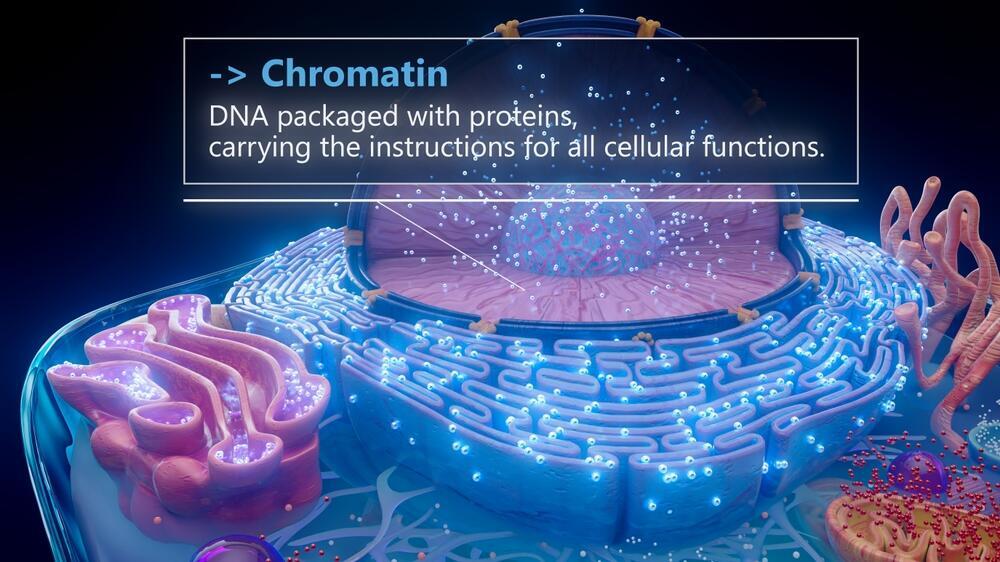
(Photo: shutterstock)
In the first stage, researchers examined mice genetically engineered to overexpress SIRT6 from a young age. In those mice, Cohen said, many of the age-related chromatin changes were prevented. “We asked what happens to the global chromatin changes associated with aging when we raise SIRT6 levels from birth,” he said. “In 95% of cases, SIRT6 restored the cells in old mice to a youthful state.”
But for the researchers, the more important question was whether the process could be influenced after aging had already begun. Any future treatment for humans, if developed, would not begin at birth, but later in life, when some tissue changes have already occurred.
“There’s a difference between starting with a mouse from birth that constantly expressed SIRT6 and therefore was protected throughout its life, and a mouse whose treatment begins at an older age,” Cohen said. “So we took normal mice, allowed them to age, and only then performed a genetic activation — we increased SIRT6 protein levels at 24 months old, which is roughly equivalent to ages 70 to 80 in humans.” Within a month, the liver returned to a younger pattern
The researchers divided elderly mice into two groups. In one group, they activated SIRT6 in the liver. In the control group, they activated a gene not expected to affect aging, serving only as a marker.
“We essentially took the gene that causes SIRT6 overexpression and placed it on a virus that infects only the liver,” Cohen said. “In the control group, we used a marker — a fluorescent protein.” The result was a relatively rapid change in chromatin patterns in the liver.
“We know that chromatin in older mice becomes completely disrupted — the entire instruction manual is distorted,” Cohen said. “But in mice that received SIRT6, the chromatin returned to resemble that of young mice. Within a month, 80% of the changes reverted to a youthful state. That demonstrates the enormous therapeutic potential.”
The changes were observed not only in DNA packaging, but also in liver activity and physiological markers in the mice. “Many things improved following the injection,” Cohen said. “We essentially took the liver and rejuvenated it. We restored it to being a young liver at the most fundamental level — an original instruction book without spelling mistakes, torn pages or wrinkles.”
Doctoral students Ron Nagar and Zacharia Schwartz
(Photo: Bar-Ilan University)
With the publication of the study, Cohen said the findings are significant not only because they reveal another fundamental mechanism in aging, but mainly because they suggest it may be possible, at least in principle, to intervene even relatively late in life. In other words, not only to protect tissue in advance, but to attempt to repair some of the changes that have already occurred.
“This has enormous potential,” he said. “Now we can potentially treat older people, activate SIRT6 in them and replicate what we did in elderly mice.”
Still, he stressed that considerable scientific and clinical work remains before such treatments could be used in humans. At present, no approved treatment exists that performs a similar function. Nevertheless, he said, the field is already moving toward early-stage development.
“A company we founded in Israel called SirTLab is developing such a drug and is currently preparing for clinical trials,” he said. “The goal is to target the liver and improve the physiology of older individuals.”
Alongside enthusiasm over the therapeutic potential, Cohen also emphasized the researchers who carried out the day-to-day laboratory work.
“It’s very important to explain and remember that this research was conducted by two outstanding doctoral students — Ron Nagar and Zacharia Schwartz,” he said. “In the end, they are the ones who did the work, and they deserve all the credit.”