

“As long as I’m breathing and can move my hand to the board, I’ll keep teaching until my last day. There is nothing I love more than teaching and education.” For Lior Bar, 50, a veteran physics teacher in the southern Israeli town of Yeruham, those words are not a figure of speech.
Eight years ago, at the age of 42, Bar was diagnosed with Parkinson’s disease. The illness has changed the way he moves, sleeps and functions, but it has not changed the role he sees as central to his life. “The moment I can no longer teach, that will be my tragedy,” he said.
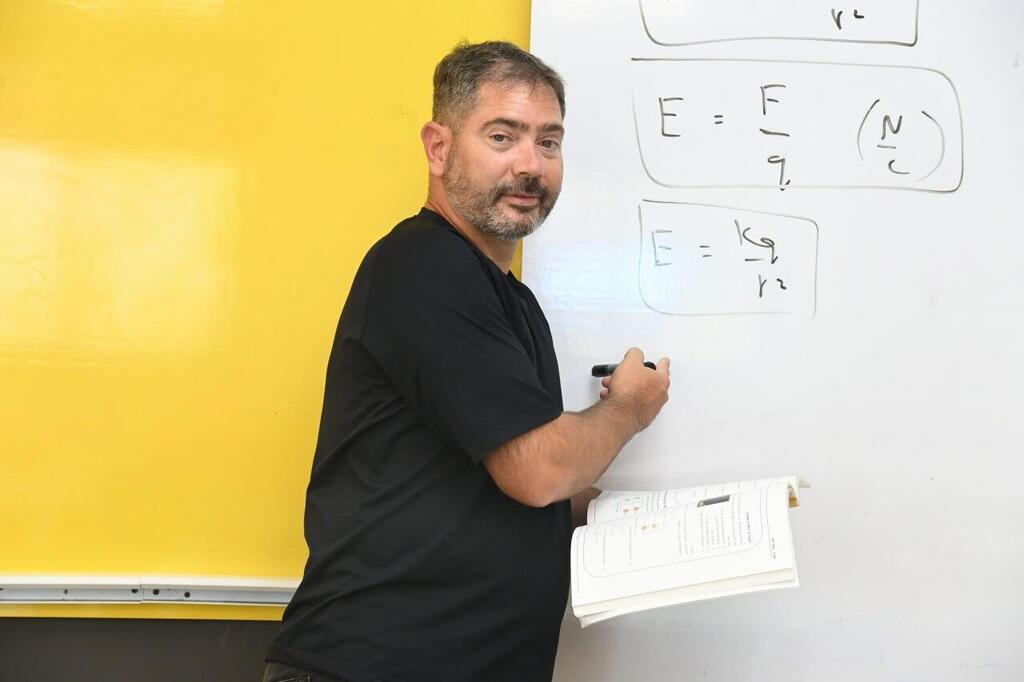
Bar is a teacher and educator, social entrepreneur, poet and musician. He also serves as CEO of a Yeruham nonprofit focused on developing community, culture and opportunities for young people in Israel’s Negev desert.
He kept his diagnosis private for seven years before revealing it publicly last year, joking that he had “come out of the health closet.”
The first shock
His initial response to the diagnosis was denial. Bar struggled to absorb the news and chose not to talk about it. Even as his symptoms progressed, he tried to continue living and teaching as before.
But Parkinson’s gradually imposed new limits. Movement, coordination and physical control became more difficult. Simple tasks such as tying shoelaces, writing or walking required more effort. Fatigue increased, sleep deteriorated and everyday activities took longer.
For a teacher, the challenges were not merely physical. Standing before a classroom requires energy, movement, concentration and the ability to react quickly. “There were signs, tremors and dragging my feet, and I would tell people I had fallen off my bicycle,” Bar said. “Some thought I had suffered a stroke and didn’t want to burden me. The students didn’t ask.”
“They can see that there are times when I can’t move my hand and I stutter, but it didn’t change anything for them.”
Bar kept coming to school. He continued entering classrooms, teaching students and leading educational projects. He was determined to remain, first and foremost, a teacher rather than allow the disease to become his defining identity.
Only after seven years did he decide to stop hiding the diagnosis. At the same time, he opened a new creative outlet, turning his experience with the disease into poetry, music and a book.
Bar said his condition fluctuates during the day, in part because of the way his medication works. “The difficulty is mainly at night,” he said. “I suffer from pain and have trouble sleeping. I sleep an average of four hours a night and my body barely moves.”
“At the same time, I’m curled up, my right hand and leg don’t move. It feels like I want something, but the body doesn’t respond.”
Morning is a process of preparation. “I mobilize myself into a routine of medication, nutrition and movement for several hours, until I can function,” he said. “I prefer to save my best time for the classroom or the nonprofit.”
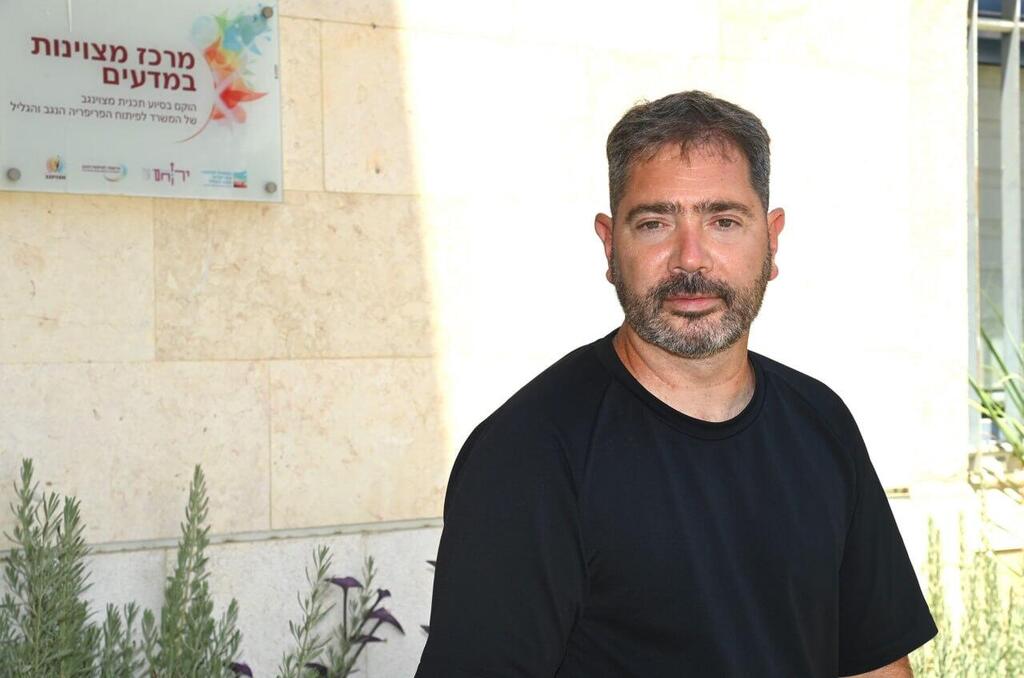
'The nights are the most difficult'
(Photo: Herzl Yosef)
After his medication begins working, Bar typically has a window of about three hours in which he can function more freely.
He rushes to school to use those hours for teaching physics. “My schedule starts at 10 and I hold out for two or three hours,” he said. “In between I take a pill. At my peak, I used to work continuously from eight in the morning until nine at night.”
His students know about his condition. When his hand stops cooperating, Bar said, they immediately step in to help. “I try to live with this disease like a friend,” he said. “I know how to bring it into the better moments.”
‘Just let me be a teacher’
Bar trained as an electrical engineer because of his love of science. But education quickly felt like his true calling. Long before programs encouraging academics to retrain as teachers became common, Bar had already made the transition.
He moved from Beersheba to Yeruham for what was supposed to be one year after hearing that the town lacked physics teachers. That was 25 years ago. “I love science, but something in my soul felt different, and the passion for teaching has stayed with me to this day,” he said.
The classroom, his students and the ability to affect their lives became the center of his professional and personal world. Even after decades in education, he still gets excited before lessons. “I felt I had found what I was meant to do,” he said. “Teaching was never a job for me. It was a way of life.”
“I only want to be a teacher. It moves me,” he said. “Physics is the excuse. The meeting with the students is the main thing. Just let me be a teacher, invest in the students and see them achieve.”
Bar works to push the pain and physical limitations into the background while focusing on those sitting in front of him. “The noise in the classroom doesn’t interest me. I’m focused on the ones sitting in front of me, on their strengths and their dreams,” he said.
“I live the classroom, but the great tragedy will come the moment I can no longer teach. The ability to influence and take part in shaping Israeli society is an extraordinary feeling.”
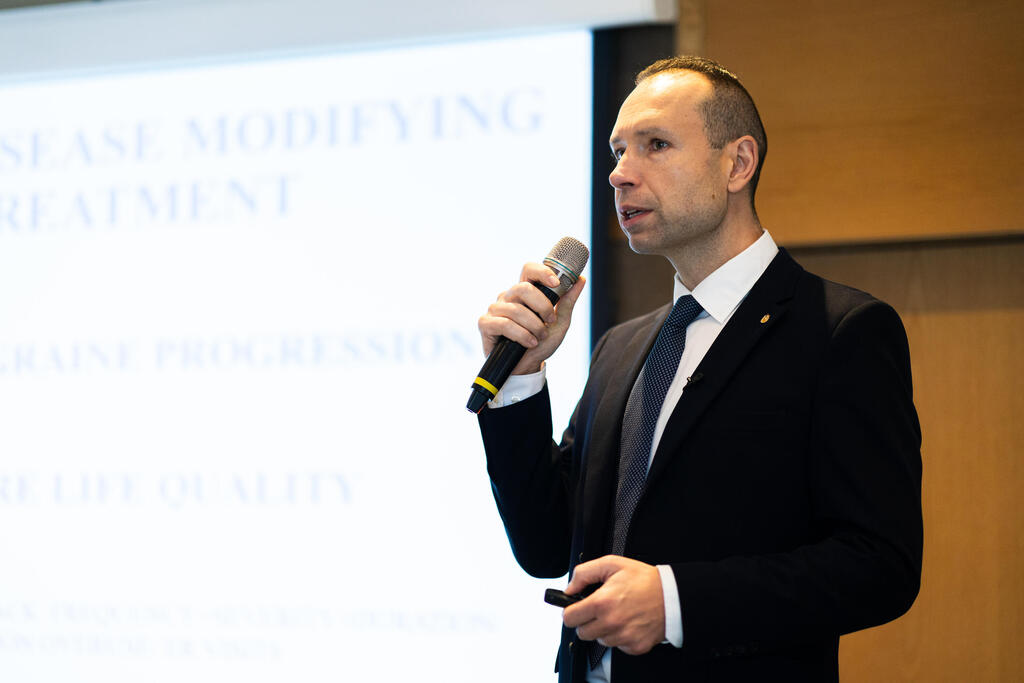
Dr. Petr Melikov
(Photo: Yona Kaplan)
Dr. Petr Melikov, a neurologist and medical director of the Melikov Center for Neurology and Advanced Medicine, said Bar’s story is a reminder that Parkinson’s can change a person’s life without necessarily ending a career or creative life.
With early diagnosis, appropriate medication, physical activity and professional support, he said, many people continue working and creating for years after diagnosis.
Teaching, however, presents particular challenges. “Teaching requires concentration, energy, constant movement, social interaction and the ability to respond quickly to changing situations,” Melikov said.
“When someone continues standing in front of a classroom despite the motor difficulties, fatigue and challenges brought by the disease, it is a significant personal and professional achievement.”
“Lior did not let the disease define him. He continues to see himself first and foremost as an educator, and his persistence conveys to his students a message no less important than any lesson taught in class.”