

Doctors are fundamentally changing how they understand diseases of the immune system. For years, treatment was guided mainly by a diagnosis or the organ affected. Today, research shows that seemingly unrelated conditions may be driven by the same immune pathway.
That means a therapy developed for one disease may also prove effective against another. The key question is no longer only what condition a patient has, but which biological mechanism is driving it.
This shift has been driven largely by a growing range of precision biological drugs that target specific immune pathways. Although these treatments are developed for particular conditions, doctors sometimes find that the same pathway is active in other diseases as well.
Gallery

When treatments fail, doctors should ask whether a different immune pathway is driving the condition
(Photo: Shutterstock)
That makes it possible to use a drug in an entirely new context, treating the mechanism behind the illness rather than relying solely on its diagnostic label.
That was the case for a cancer patient who had endured years of severe, unrelenting itching despite his malignancy being under control. The condition came to dominate his life: He barely slept, struggled to function and suffered around the clock. Antihistamines, steroids and other standard treatments brought no relief.
Eventually, overwhelmed by the pain, he bought a ticket to Switzerland to seek assisted death, not because of the cancer, but because of the itching.
The failure of standard treatments did not mean that all options had been exhausted. Instead, it offered an important clue. If antihistamines provided no relief, histamine was unlikely to be the main driver of the itching. The lack of response to other conventional therapies also suggested that a different immune pathway might be involved.
Doctors therefore considered the role of cytokines linked to type 2 inflammation. These proteins allow immune cells to communicate and trigger inflammatory responses. The same pathway is known to play a central role in conditions such as asthma and atopic dermatitis.
Based on this understanding, doctors tried a biological therapy targeting the same immune pathway, even though it had not been developed for cancer-related itching.
After just three injections, the patient improved dramatically. The relentless itching that had tormented him around the clock disappeared. At a later appointment, he tore up his ticket to Switzerland.
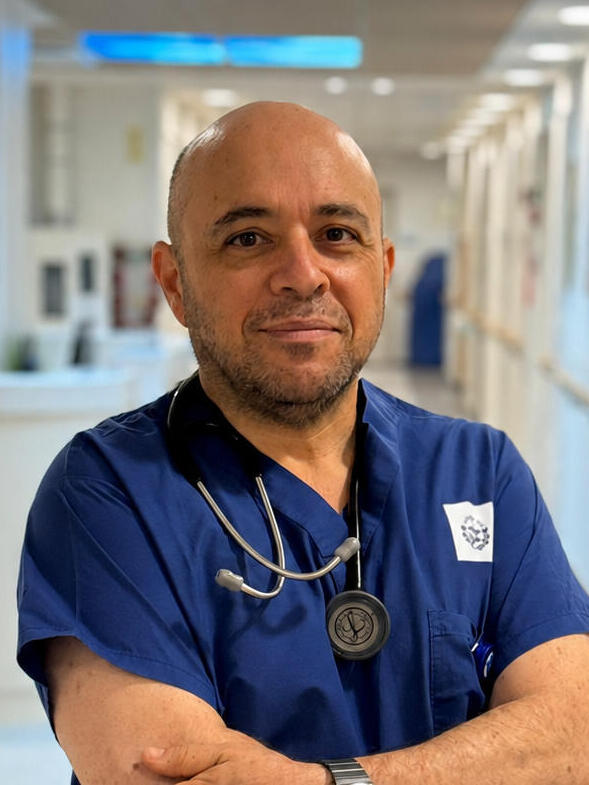 Prof. Yuval TalPhoto: Hadassah Medical Center
This was not an isolated case. As doctors found that other patients with severe itching linked to cancer or its treatment might benefit from the same approach, the clinical observation evolved into a formal research project.
Not every patient responds in the same way, and the underlying mechanisms are not yet fully understood. Still, these cases underscore the importance of identifying the immune pathway driving the condition.
The revolution accelerating medical science
For years, immunology was regarded as a relatively narrow research field concerned mainly with the functioning of the immune system. That picture has changed dramatically in recent years, following major advances in understanding immune mechanisms and developing treatments that target them.
The COVID-19 pandemic demonstrated to the general public how deeply the immune system affects health and everyday life. In reality, however, the revolution began much earlier.
As scientists gained a deeper understanding of immune mechanisms, it became clear that they were involved in every organ and in many areas of medicine.

Relentless itching nearly cost him his life. Illustration
(Photo: Shutterstock)
It is worth clarifying several basic terms. Immunology is the field that studies the immune system as a whole, including how it protects the body from infection and the conditions in which its activity is disrupted.
Allergy is one part of that much broader field. It is an abnormal immune response to substances that are generally harmless, such as food, medication, pollen or insect venom.
The immune system can identify and fight viruses, bacteria, fungi and parasites, but its role is much broader. It also participates in inflammation, responses to injury and healing, the identification and destruction of malignant cells, and the constant maintenance of balance between protecting the body and harming it.
Sometimes, however, it overreacts to a harmless substance, fails to respond sufficiently to a dangerous one or turns against the body itself. The result may be an allergy, an immune deficiency, an autoimmune disease, chronic inflammation or, in some cases, involvement in the development of tumors. In simple terms, allergy is only one part of the broader immunological picture.
That is why the work of an immunologist extends far beyond familiar allergic diseases. It includes congenital and acquired immune deficiencies, autoimmune illnesses, eosinophilic and complex inflammatory diseases, and conditions in which multiple manifestations of the same disease occur in a single person.
In such cases, it is not enough to treat the skin, lungs or digestive system separately. Doctors must identify the shared immune mechanism connecting them.
New biological treatments make it possible to precisely target a specific cell, protein or pathway involved in a disease, rather than broadly suppressing the entire immune system. That ability is based on the understanding that immune mechanisms play a role in many different diseases. Immunology now touches almost every area of medicine, from hematology and oncology to rheumatology, dermatology, pulmonology, gastroenterology, neurology, infectious disease and even gynecology, as well as fields that until recently were rarely considered connected to the immune system.
The prevalence of misdiagnosis
The sharp rise in food allergy diagnoses among children is hard to overlook. Yet not every suspected allergy proves genuine, and a diagnosis made in childhood may remain in a patient’s medical record for years without being reassessed.
An allergist’s role is therefore not only to identify allergies, but also to determine when one has resolved or may never have existed in the first place.

New biological treatments make it possible to precisely target a specific cell, protein or pathway involved in a disease
(Photo: Shutterstock)
In appropriate cases, doctors use a food challenge, gradually introducing the suspected food under medical supervision. The process often ends with reassuring news: The child is not allergic. That finding lifts not just the dietary restriction, but also the constant vigilance, fear of a dangerous reaction and heavy emotional burden carried by both the child and the family.
Penicillin allergy is another diagnosis that can remain in a patient’s medical record for years, even when it is no longer accurate or was never correct in the first place.
Hundreds of thousands of Israelis carry a penicillin-allergy label. In some cases, a genuine allergy has resolved over time. In others, the label began with a reaction unrelated to the antibiotic.
A child treated with antibiotics during a viral illness, for example, may develop a rash caused by the infection itself. Yet unless the diagnosis is reassessed and removed, that child may be considered allergic to penicillin for life.
Avoiding penicillin unnecessarily can narrow treatment options and lead doctors to prescribe alternative antibiotics that may be less appropriate for the patient.
This distinction is far more than semantic. Correctly identifying whether a patient has a true allergy, an intolerance or another condition can significantly affect treatment and quality of life.
Lactose intolerance, for example, may cause abdominal pain, bloating and gas after consuming dairy products. But it is not a milk allergy. It results from difficulty digesting lactose because the body lacks sufficient lactase enzyme.
Another example is an inherited deficiency in the G6PD enzyme, sometimes referred to as a “fava bean allergy.” The deficiency is particularly common among people of Kurdish and Iraqi descent, though it also occurs in other populations.
Eating fava beans, and sometimes exposure to certain medications or substances, can cause the destruction of red blood cells in people with the deficiency.
For years, there was also a widespread belief that people with G6PD deficiency could not receive the painkiller Optalgin. Today, however, there is no blanket recommendation to avoid the drug solely because of the deficiency. Many people still avoid it unnecessarily and are left with fewer options for treating pain. This enzyme deficiency is not an allergy, but an entirely different biological mechanism.

Not everything described as a fava bean allergy is truly an allergy. Illustration
(Photo: Shutterstock)
Just as important as introducing new treatments is the willingness to revisit an old diagnosis. Medical labels often become entrenched, following patients for years even when they are no longer accurate or were never correct to begin with.
That was the case for a woman from Canada who came to Israel for a second opinion and treatment review. For nearly 30 years, she believed she had common variable immunodeficiency, or CVID, a primary immune deficiency.
Her life was shaped by fear of infection, and she rarely left home without a mask. When she arrived for evaluation, we did more than repeat a few tests. We reopened the entire case, carrying out a comprehensive assessment with specialists from several fields.
Only after a comprehensive review could we say with confidence that the diagnosis she had carried for three decades was wrong and that she had never had CVID.
But correcting the medical record was only the beginning. Thirty years of feeling vulnerable, fearing infection and seeing herself as chronically ill could not be undone overnight. It took further appointments, patience and compassion to help her trust that she could live differently.
What is driving the disease?
The transformation in allergy and immunology lies not only in the expanding range of treatments, but also in a new way of thinking. By asking which mechanism lies at the heart of a disease and what is driving it, doctors can treat many allergic and immunological conditions with greater precision and effectiveness. In some cases, this approach can restore a quality of life that patients had nearly given up hope of recovering.
A better understanding of the immune system opens new possibilities for innovative treatments
(Photo: Shutterstock)
That progress offers real grounds for optimism. Over the past decade, immunology has reshaped entire fields of medicine. Rather than suppressing the immune system as a whole, biological therapies can target a specific cell, protein or pathway involved in disease.
As a result, conditions that doctors once could only manage symptomatically can now often be brought under meaningful control, and in some cases into prolonged remission.
The immune system remains far from fully understood and still holds many mysteries. But as researchers learn more about how immune cells communicate and how shared mechanisms connect seemingly different diseases, new treatment options continue to emerge, and with them, new reasons for hope.
Prof. Yuval Tal is chairman of the Israeli Association of Allergy and Clinical Immunology and director of the Immunology and Allergy Unit at Hadassah Ein Kerem Medical Center