


A new option is emerging for people with chronic migraines: Sheba Medical Center recently began performing minimally invasive microsurgery for patients whose condition has not responded adequately to conventional treatments.
Sheba says the service is the first of its kind in Israel and focuses on relieving pressure on sensory nerves in the head and face.
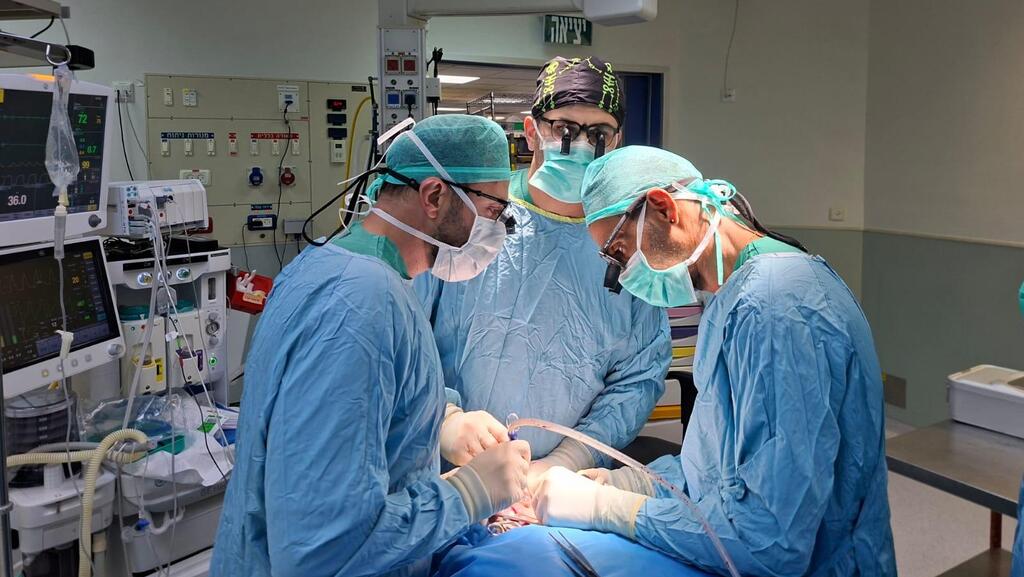
The approach is based on identifying an anatomical “trigger point” — the area where the pain begins and where a muscle, connective tissue or blood vessel may irritate or compress a sensory nerve. Once the point is located, the surgeon releases the nerve using microsurgical techniques.
The service is led by Dr. Ayman Khoury, a specialist in hand and peripheral nerve surgery and a senior physician in Sheba’s Department of Hand Surgery, Limb Salvage and Microsurgery.
Khoury completed advanced training at leading centers in Taiwan in peripheral nerve surgery and microsurgery under Prof. David Chwei-Chin Chuang. During the fellowship, he received specialized training in surgery for nerve-related headaches, including the identification and targeted release of pressure points on nerves in the head and face.
A significant impact on quality of life
Migraine is a common neurological disorder that can affect not only a person’s ability to work, but also family life, social activity and daily functioning.
“Some patients have three or four days a month when they are unable to function and have to miss work,” Khoury said. “In more severe cases, the impairment can last for as much as half the month.”
He said the impact is not limited to the hours when the pain is at its worst.
“Migraine affects every aspect of life,” he said. “Patients struggle to function day to day, go out or meet friends because of the severe attacks.”
The mechanisms behind migraine are complex, and the condition is not caused by a single factor.
“One theory focuses on a combination of nerve irritation and the involvement of blood vessels,” Khoury said. “According to this approach, pressure on a specific nerve or blood vessel may activate the pain mechanism and contribute to the development of an attack. That is why we examine whether a nerve is under pressure and whether that pressure can be relieved.”
A range of treatments is currently available for migraine, with the choice depending on the frequency and severity of attacks and the extent to which they interfere with daily life.
In addition to medications used to relieve symptoms during an attack, there are preventive drugs taken regularly, as well as biological treatments that target mechanisms involved in migraine development.
For many patients, these treatments reduce the frequency and intensity of attacks. Others, however, continue to suffer despite repeated treatment attempts, struggle with side effects or find that the treatment becomes less effective over time.
“Patients receive various medications from their neurologists, including drugs developed specifically for migraine and biological treatments designed to block mechanisms involved in generating pain,” Khoury said.
“But some treatments require daily use or repeated use during attacks. Some patients experience side effects, while in others a treatment that initially helped no longer has the same effect after several years.”
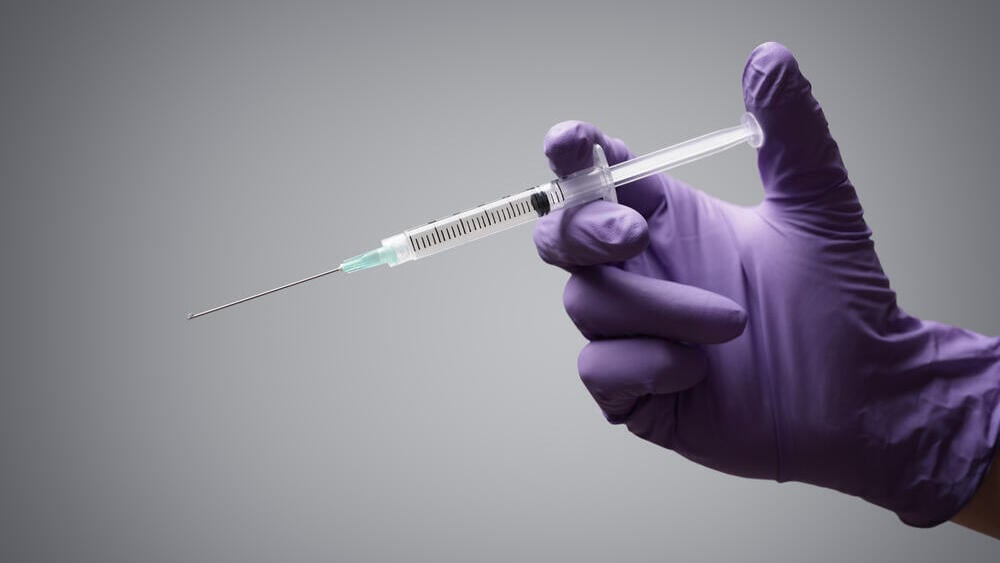
Botox injection for migraine treatment; an expensive treatment with limited effectiveness
(Photo: Shutterstock)
Another treatment option for some people with chronic migraine is the injection of botulinum toxin at specific points in the head and neck.
“In severe cases, patients need to repeat Botox injections every three months, and in milder cases every six months,” Khoury said. “The treatment can help, but its effect is temporary and weakens after several months, so the procedure has to be repeated.”
Repeated injections also raise questions of cost and availability.
“Botox is an expensive treatment, and when it is not covered for the patient, a series of injections at a private clinic can cost several thousand shekels,” he said. “When the treatment must be repeated every few months, the cumulative expense can become significant.”
When conventional treatments are not enough
When medications, biological treatments and Botox injections fail to provide sufficient relief, or when their effect is temporary and does not allow patients to control the condition, the new surgical option may be considered in selected cases.
Khoury stressed, however, that the surgery is not suitable for everyone with migraine.
“A thorough evaluation is required to understand where the pain begins and determine whether a specific nerve is involved,” he said.
The screening process begins with a detailed medical history focused on the pattern of the patient’s headaches. The team examines where the pain starts, how it spreads, how long it lasts, how often it occurs and which treatments have already been tried.
“In the first stage, we want to understand where the pain begins,” Khoury said. “The patient marks on a diagram where the migraine starts and the route along which the pain spreads. After a detailed interview, we perform a focused physical examination.”
The examination includes a search for a sensitive area and a nerve pathway that may correspond to the patient’s description of the pain.
“It is not enough for a patient to report a headache,” Khoury said. “We need to determine whether there is a consistent point from which the pain begins and whether it corresponds to the path of a specific sensory nerve.”
In suitable cases, a diagnostic nerve block is performed.
“We inject a local anesthetic and wait about 15 minutes,” Khoury said. “If the patient reports a significant reduction in pain, that may indicate that the nerve is involved in generating it.”
 Dr. Ayman Khoury Photo: Courtesy
A previous response to botulinum toxin may also help guide the selection process.
“A partial response to Botox or a nerve block can support the assumption that there is a localized nerve component,” he said. “Only after the evaluation is complete can we assess whether the patient may be a candidate for surgery.”
The procedure is planned according to the location of the trigger point and the number of suspected areas.
“If one trigger point has been identified, we mark the area,” Khoury said. “When blood vessels pass through the site, we use Doppler imaging to map them. We then make a small incision, usually 2 to 3 centimeters long, within the hairline.”

The preoperative assessment includes a focused physical examination
(Photo: Shutterstock)
After making the incision, the surgeon locates the nerve and the structures around it.
“We expose the nerve and examine it under a surgical microscope to see whether it is being compressed, trapped in connective tissue or irritated by a nearby blood vessel or muscle,” he said.
“We then gently release it from the surrounding tissue. The principle is similar to surgery for carpal tunnel syndrome, except that in this case we are working with delicate nerves in the head and face.”
The procedure usually takes 45 minutes to an hour.
'Breaking the cycle of pain'
Khoury said one possible advantage of the surgery is that its effect is not limited by the duration of a drug or injection.
“The goal is to break the patient’s cycle of pain,” he said. “Unlike a nerve block or Botox, whose effects tend to fade after a certain period, surgery is intended to provide a longer-term solution to the pressure on the nerve.
“We see patients whose condition continues to improve over time. Once the pressure on the nerve is removed and the irritation decreases, the aim is to gradually reduce the pain cycle and the frequency of attacks.
“One of the most recent patients I operated on reported the day after surgery that he was no longer in pain. Still, continued follow-up is essential, and the outcome must be assessed over time. It is not enough to check the patient’s condition the day after surgery. We need to examine how the frequency and intensity of attacks and the need for medication change over the following months.”
Sheba says the surgical wound usually heals within two to three weeks. Patients are generally advised to wait about two weeks before fully returning to their routine, including until the stitches are removed.
“Because the incision is closed with stitches, we usually recommend returning to a full routine after about two weeks,” Khoury said.
“Many patients are concerned about scarring, but after the healing period it is difficult to notice. At first, the surgical area must be protected and the wound allowed to heal properly.
“We recommend avoiding direct sun exposure to the area and swimming in the sea for about six weeks. The goal is to allow it to heal well and reduce as much as possible the risk of a visible scar.”

An approximately 85% reduction in pain intensity
(Photo: Shutterstock)
As with any surgery, the procedure carries risks. These may include bleeding under the skin, infection, altered sensation, numbness, localized pain or nerve injury.
The level of risk depends on the area being treated, the extent of the procedure and the patient’s condition.
“We work in a small area under magnification, without entering the skull,” Khoury said. “Still, as with any surgical procedure, patients must be told about the risks and the possibility that the operation may not produce the expected improvement.”
Studies of carefully selected patients have found reductions of up to about 85% in pain intensity and about 70% in attack frequency, along with improved quality of life.
However, study results have not been uniform and depend on how patients were selected, the type of surgery, the area treated, the length of follow-up and how success was defined.
The operation is therefore not intended as a first-line treatment for migraine, but as an option that may be considered in selected cases after evaluation by headache specialists and when conventional treatments have failed to provide adequate relief.