

Researchers have developed an innovative method to transform apple industry waste — including blemished or undersized fruit — into a nutrient-rich powder packed with fiber, antioxidants and vitamins. The breakthrough offers a sustainable solution to global food waste while opening new possibilities for the food industry with a natural, functional ingredient for healthier products.
The global apple industry has grown by 48% over the past two decades, but 15–20% of the harvest is discarded due to cosmetic defects, size, bruises, or fruit falling prematurely. Despite apples’ popularity and nutritional benefits, much of this surplus ends up in landfills or as animal feed. In Israel alone, nearly 20,000 tons of apples are wasted annually.
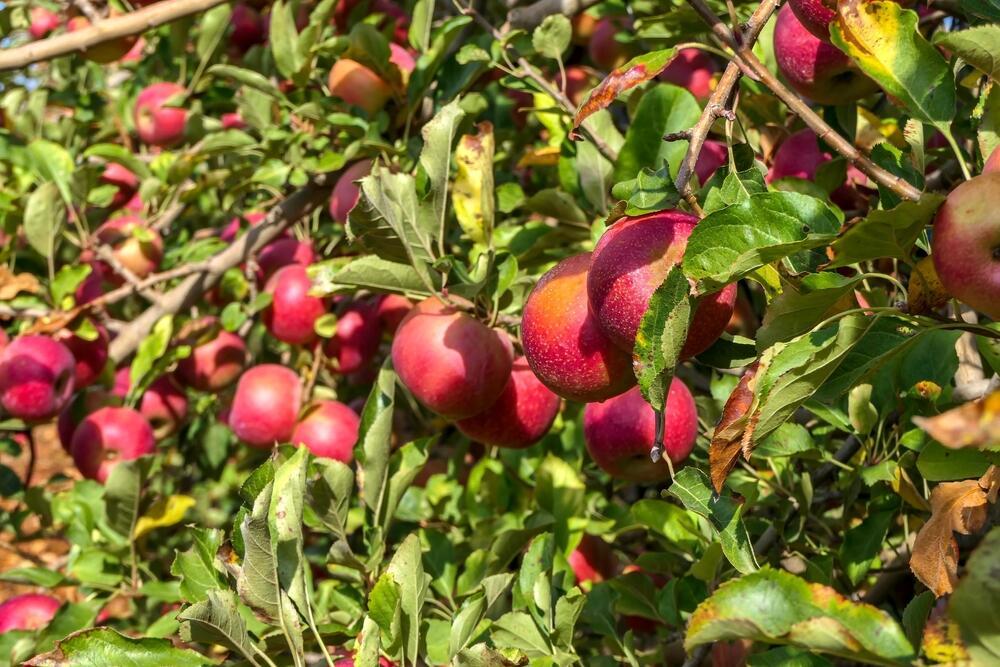
To tackle this challenge, a team led by Prof. Ofir Benjamin of Tel-Hai College’s Department of Food Sciences, together with Dr. Asaad Safadi, CEO of the Alsharq packing house in Majdal Shams, developed a unique process to produce high-quality apple powder from discarded fruit. The juice is used to make apple cider vinegar, while the powder retains essential nutrients.
The project recently received a 3 million shekel ($800,000) grant from the Israel Innovation Authority to advance development and fund pilot-scale production.
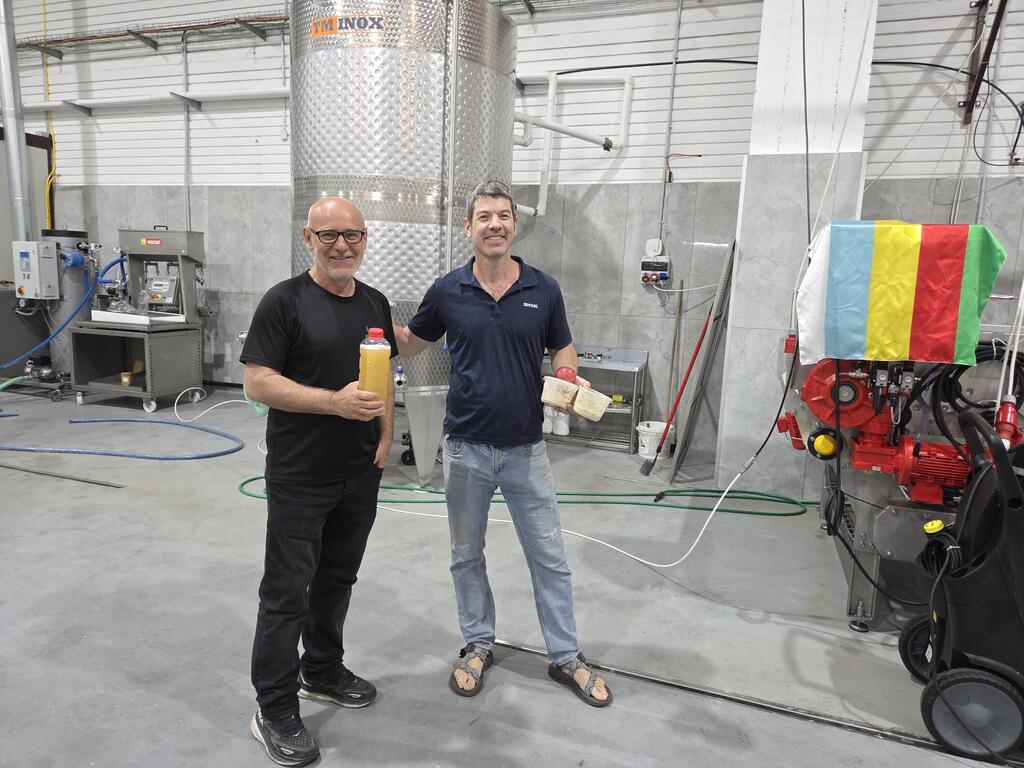
Prof. Ofir Benjamin from Tel-Hai College’s Department of Food Sciences (right) and Dr. Asaad Safadi from Majdal Shams
(Photo: Tel-Hai Academic College)
“This innovation has several key aspects,” Prof. Benjamin said. “First, sustainability — directly addressing food waste by maximizing the use of the fruit. Second, health — the powder is rich in essential nutrients and offers a natural alternative to synthetic additives used in today’s food industry. Third, innovation — the process preserves the fruit’s nutritional value. Finally, the economic potential is enormous, creating new opportunities for the global food sector. We already have interest from international companies.”
Dr. Safadi said the discovery could significantly impact farmers struggling with climate change and rising crop losses. “This solution encourages sustainable farming, minimizing waste and economic losses,” he said. “Our collaboration with academia has opened the door to new possibilities for apples and, later, other crops.”
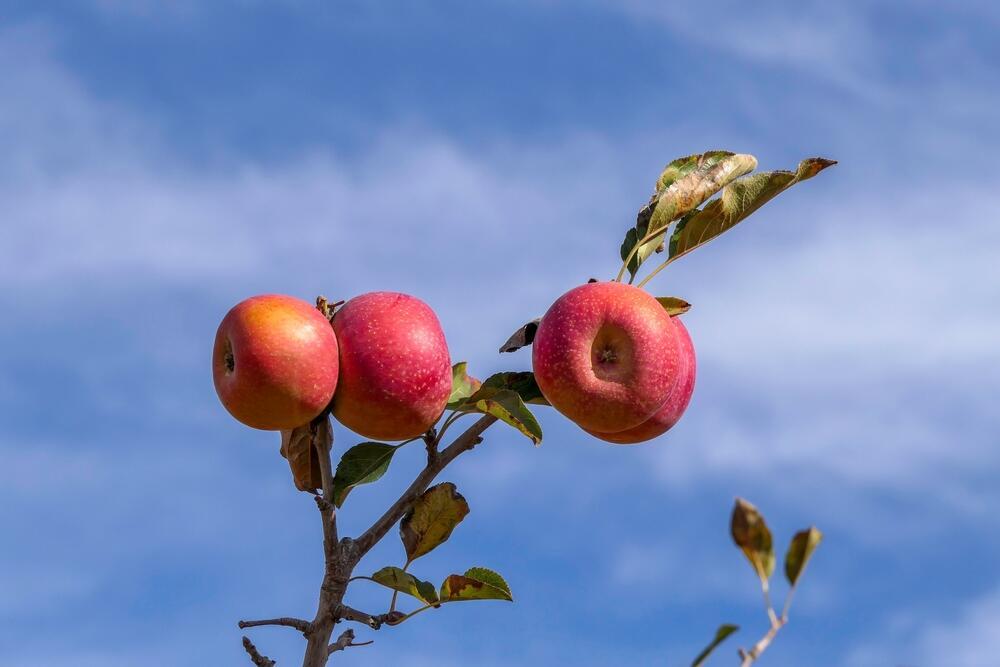
Apples in the Golan
(Photo: Emma Grimberg, Shutterstock)
The team now plans to establish a production facility, aiming to position Israel as a global leader in food-waste utilization. Regional officials say the project is a model for food-tech ventures that will be promoted at Israel’s upcoming National Food Institute in Kiryat Shmona.