


One in two people believes drinking beer can help prevent kidney stones. A similar proportion puts its faith in parsley. But it turns out many patients are relying on methods that have not been proven effective and, in some cases, may do more harm than good.
That is the conclusion of a new study involving people who have already suffered from urinary tract stones. The research, conducted by Dr. Dor Golomb, Dr. Amir Cooper and Dr. Orit Raz of Assuta Ashdod Public Hospital and recently published in the international journal World Journal of Urology, reveals just how strongly folk remedies continue to shape the way patients try to prevent their next stone.
Gallery
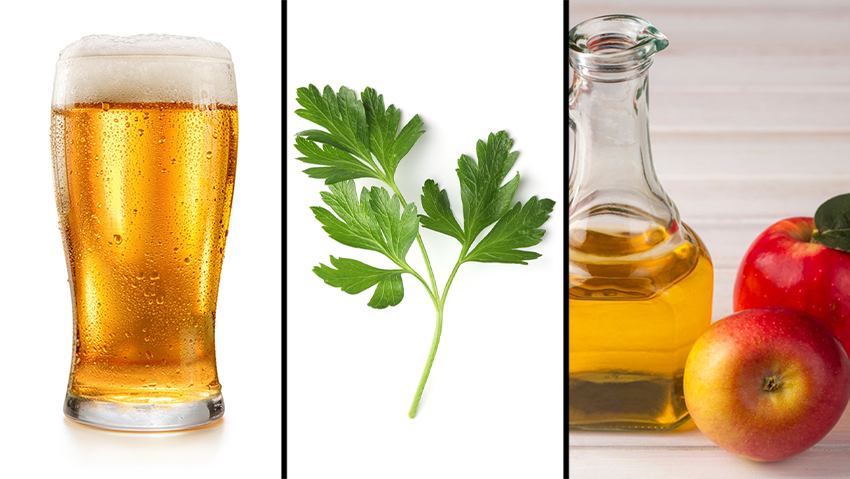
Beer, parsley and apple cider vinegar; which of them really helps prevent kidney stones?
(Photo: Shutterstock)
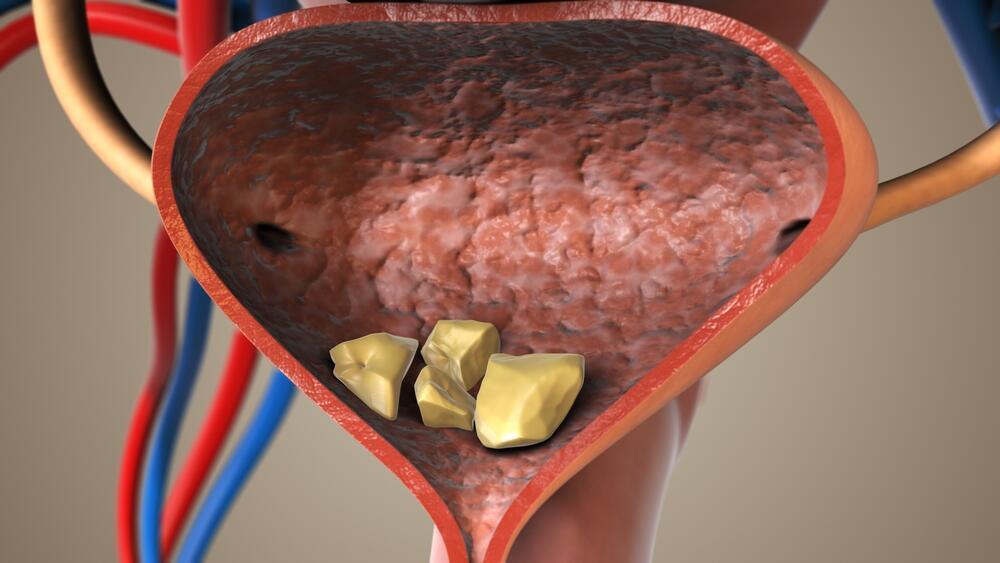
Kidney stones are hard deposits that form when minerals and salts in the urine crystallize and accumulate in the kidney. They can be very small but may also grow over time, sometimes remaining in the kidney for long periods without causing symptoms.
“That same stone sits in the kidney and patiently grows,” said Golomb, director of the urinary stone service at Assuta Ashdod. “A stone in the kidney can do one of three things: stay where it is at the same size, stay where it is and grow, or begin moving and cause significant pain that sends people to the emergency room, what is known as renal colic.
“As long as the stone remains in the kidney, it usually does not hurt. It is only when it begins to break free and move down the ureter toward the bladder that the significant pain appears. It really is a stone in every sense. It looks and feels like one.”
The power of belief
Kidney stones can form for a variety of reasons.
“The main cause is not drinking enough, which leads to concentrated urine. The salts in the urine become more concentrated and form crystals, which in turn form stones,” Golomb said.
Other causes, he said, include “excess calcium in the urine, excess sodium in the urine, magnesium deficiency, citrate deficiency and excess uric acid in the urine, which is mainly associated with metabolic syndrome and obesity.”
The problem is that a kidney stone episode is not necessarily a one-time event.
“Stone disease is a chronic condition that affects 10% to 15% of the population, and we are seeing those rates increase over the years for various reasons,” Golomb said. “I call it a chronic disease because after the first episode, there is a 50% chance of developing another stone within the next 10 years.
“That is why the key is not only treating the stone when it causes pain or when one is found in the kidney, but truly preventing the next stone.”
That risk of recurrence also drives the search for preventive solutions.
“Because this is a disease that can come back, many people fear another episode and try all kinds of methods that have been passed down over the years, but they have not actually been scientifically proven,” he said. “That is essentially what the study is about.”
Golomb encounters this gap between patients’ desire to prevent another stone and the methods they use in his daily work as well.
“When I returned from my fellowship in Canada in 2021, I opened a clinic at the Ashdod hospital for the prevention and treatment of urinary tract stones, where patients with stones meet with me, a nephrologist and a dietitian with the goal of preventing stone formation,” he said.
“We encounter a great many myths or unsupported beliefs about how to prevent stones, all kinds of folk remedies, such as drinking beer.”
According to Golomb, beer is one of the most common myths.
“Every day in the clinic I hear, ‘I drink a lot of beer. I was told to drink beer. It helps prevent stones.’ The opposite is true,” he said.
 Dr. Dor Golomb Photo: Assuta Ashdod spokesperson
Another recurring recommendation is parsley.
“It has been examined in various studies to see whether it can help, and it was shown that it does not,” Golomb said. “It contains a substance called oxalate, and excess oxalate in the urine can actually contribute to stone formation.”
Apple cider vinegar enjoys a similar reputation, he added.
“That is also an unsupported belief that has been shown to be incorrect,” he said.
When myths meet research
To determine how deeply rooted these beliefs are among people who have already experienced kidney stones, the researchers moved from observations in the clinic to a structured study.
“The study was conducted using a questionnaire in which we asked 100 patients who had suffered from stones about their understanding or beliefs regarding how to prevent stone formation,” Golomb said.
In addition to measuring how common each belief was, researchers examined which participant characteristics were associated with those beliefs and whether they were linked to adherence to medical recommendations for preventing stones.
The findings showed that the myths doctors encounter in the clinic are far from marginal.
Half of the participants, 50%, believed drinking beer could help prevent kidney stones, while 52% believed parsley could do so. Apple cider vinegar drew less support, but 17% of respondents still viewed it as a preventive measure.
Kidney stones
(Illustration: Shutterstock)
When researchers examined belief in either beer or parsley together, they found it tended to be more common among younger patients, though the association did not reach statistical significance.
No significant association was found with sex, obesity, family history of stones or previous surgery. Adherence to drug treatment and completion of a metabolic evaluation were also somewhat lower among people who held these beliefs, though those differences were not statistically significant either.
The findings point to a broader problem: Even after suffering kidney stones, patients do not always know what they should actually do to reduce the risk of another episode.
“First, as doctors, it is important for us to understand that there are very significant information gaps among the public regarding how stones can be prevented,” Golomb said. “Some people do not even know this is a problem that can recur.
“Second, even when they are aware of that and want to prevent another stone from forming, they are using the wrong tools to do it. They are trying to prevent the problem in ways that are not good for them, and in some cases it has been scientifically shown that those methods can even harm them.”
So how do you really prevent the next stone?
For Golomb, treatment should not end once a stone has passed or been treated.
“After a stone episode, it is important to see a urologist or nephrologist who specializes in urinary tract stones, try to understand why the stone formed and prevent the next one,” he said.
“There is a process called a metabolic evaluation, which includes blood tests and a 24-hour urine collection. Through that process, we try to determine whether there is an excess or deficiency of a particular substance that could lead to stone formation and then tailor treatment to the specific problem that caused the stone in the first place.”
Still, he stressed that the aim is not to criticize patients who turn to remedies passed along by word of mouth.
“The point here is not to criticize but to raise awareness that people should not turn to folk remedies. They should consult a professional and undergo a proper evaluation to try to understand the source of the problem and treat it specifically.”
That is also one of the reasons the urinary stone prevention and treatment clinic was established at Assuta Ashdod.
“The goal is to provide comprehensive, multidisciplinary care for stone disease and tailor treatment rather than simply give general advice, such as telling every patient to drink a lot,” Golomb said. “In some cases, treatment can be targeted through dietary changes and in others with medication.”