

As coronavirus spreads throughout Israel with renewed vigor with the help of the new Omicron variant, Israeli hospitals are bracing for an influx of COVID-19 patients that are expected to flush medical centers across the country in large numbers.
Jerusalem's Hadassah Ein Kerem Medical Center opened a new coronavirus ward on Monday as part of its preparations for the forming wave of morbidity.
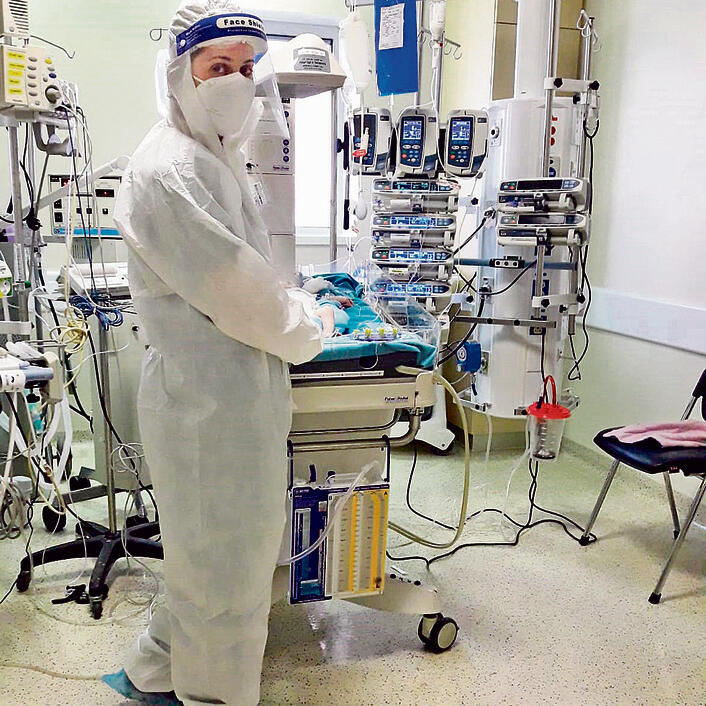
"At this point, we begin to transfer patients to a new dedicated ward, which we are opening for at least the fifth time, and preparing for the wave that is beginning to roll," said Prof. Dror Mevorach, the hospital's director of Research Center for Rheumatology and Internal Medicine B.
"Although there are fewer severe patients relative to the number of confirmed cases, the number of patients will still be high since it is a very, very contagious variant, so it is likely that until the wave subsides, there will be a large influx of patients."
Prof. Mevorach noted that hospitalizations linked to the seasonal flu have spiked concomitantly with rising coronavirus cases, creating an ever-growing pressure on hospital capacity.
"We're very busy at the moment, about ten to 20% are hospitalized for the flu and its complications," he noted. "At the same time and contrary to what some might think, I think the flu's effect will be negligible relative to Omicron."
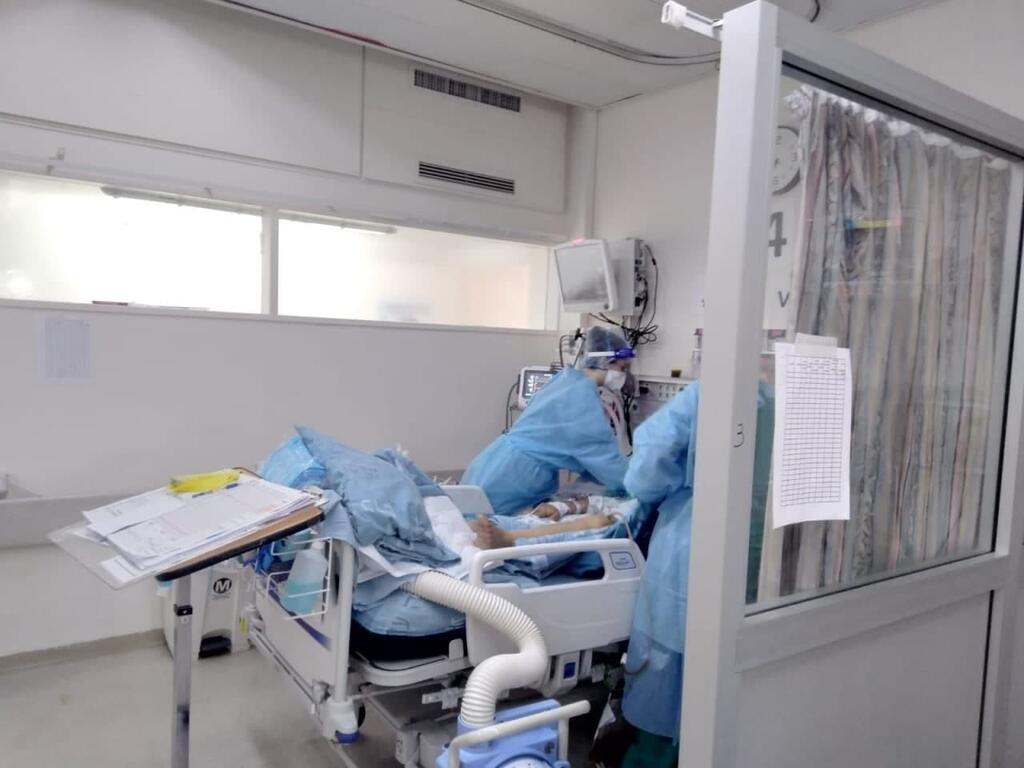
(Photo: Hadassah Medical Center)
However, Prof. Meorach says he doubts the number of hospitalizations would exceed that of Israel's third wave of infections, which came before Israel first rolled the vaccine.
"During the third wave, we treated ten percent of all hospitalized patients in the country, we've reached almost 200 patients and I don't think we'll come to that, but we may get there and even top that," he said.
"There are other important elements in play here, like the introduction of Pfizer's new drug that can be given in the community and it can significantly reduce the number of severe patients, and I very much hope that it will come into use very quickly."
The Health Ministry announced on Sunday that Israel has finalized an agreement to purchase about 100,000 units of Pfizer’s antiviral COVID-19 pill and is set to receive the first shipment in the coming week.

Pfizer's anti-COVID Paxlovid pills
(Photo: AFP)
The antiviral pill will be available free of charge to Israelis in high-risk groups.
The U.S. Food and Drug Administration (FDA) last week granted emergency authorization to the medication that was shown in clinical trials to be nearly 90 percent effective in preventing hospitalizations and deaths in patients at high risk of developing severe illness.
Recent lab data suggests the drug — marketed under the brand name Paxlovid — retains effectiveness against the Omicron variant.
Prof. Cyrille Cohen, an expert on immunology from Bar-Ilan University, considers Paxlovid to be a game-changer in the world's battle against the virus.
"It completes the war effort against the virus," he said. "There is a window of opportunity here in terms of taking the drug, it should be given right in the first days after exposure and the onset of symptoms, because after that it will simply not be effective in preventing the viral overload. We must identify an infection and administer the medicine on time."