

Some people have already exercised, showered and had their coffee by 6 a.m. Others would rather not be spoken to at that hour at all.
The latter group, often described as “night owls,” tend to feel more alert and productive after the sun goes down, sometimes well into the night. But two studies suggest that preference may come with a cost, particularly when routinely staying up into the early morning becomes a habit.
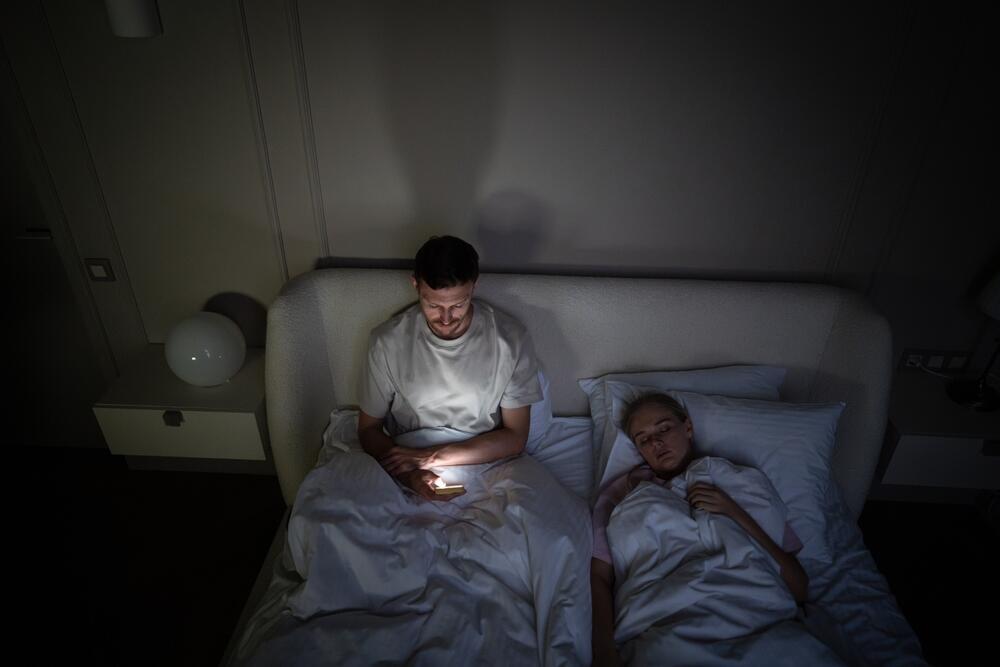
A large Stanford University study involving nearly 74,000 people found higher rates of mental and behavioral disorders, including depression and anxiety, among those who regularly went to bed late.
The surprising finding was that the association also appeared among people who identified as night owls — meaning late hours aligned with their natural preference. Based on the findings, the researchers generally recommended trying to fall asleep before 1 a.m.
For the study, participants were classified according to their “chronotype,” or their natural tendency to be more active and alert earlier or later in the day, as well as the hours they actually slept. Sleep patterns were measured for seven days using wearable monitoring devices, while researchers also examined participants’ medical records.
The most striking finding involved night owls themselves. Those who regularly went to bed late, in line with their natural preference, were about 20% to 40% more likely to be diagnosed with a mental health disorder than night owls who maintained earlier or more moderate sleep schedules. Morning types who maintained early schedules had the most favorable results.
Researchers also examined whether the relationship might work in reverse — whether people already experiencing mental health difficulties were simply more likely to stay awake late at night.
To investigate, they followed some participants who had not previously been diagnosed with a mental health disorder for eight years. In that follow-up, night owls who stayed up late remained the group with the highest risk of subsequently developing a mental health disorder.
There is an important caveat: The study was observational, meaning it cannot establish that going to bed late itself causes depression, anxiety or other disorders.
When work follows you into the night
A separate study published this year in the journal Sleep Health adds another dimension to the issue.
Researchers at the University of Helsinki studied 2,266 workers in Finland between ages 20 and 65. Evening types reported more symptoms of anxiety and depression, but they also had greater difficulty disconnecting from work during their free time.

(Photo: Shutterstock/Frame Stock Footage)
Put simply, their internal clocks do not always align with the schedules imposed by everyday life.
Someone who feels most alert at 11 p.m. may continue working, answering messages or finishing tasks while others are winding down for the night. But the following morning, that person may still have to get up at the same time for work, school or family responsibilities.
The result is a day that stretches deep into the night while the morning wake-up time remains unchanged.
Strong evening types in the Finnish study were more likely to report that work spilled over into their personal lives and that they had greater difficulty recovering from the workday. Researchers found that difficulty recovering explained part of the association between an evening chronotype and anxiety.
The relationship remained even after researchers accounted for other factors that can affect mental health, including age, sex, insufficient sleep, physical activity and alcohol consumption.
Another phenomenon familiar to night owls is known as “social jet lag.” During the workweek, they may be forced to wake early for work or school, while on weekends they revert to the schedule that feels more natural, going to sleep and waking much later.
The result is a body repeatedly forced to switch between two different schedules.
Stanford professor Jamie Zeitzer has compared the phenomenon to repeatedly traveling between time zones without ever boarding a plane.
So do you have to become a morning person?
Not at all.
Researchers stress that there is nothing magical about precisely 1 a.m. Falling asleep a few minutes after that time does not suddenly put someone in a “risk zone.” In the Stanford study, participants were divided into groups according to their sleep timing, meaning the definition of a “late” bedtime could also vary among different populations.
(Photo: Shutterstock/KieferPix)
Still, the two studies suggest it may be worth paying attention not only to how many hours you sleep, but also to when you go to bed and what happens in the hours before sleep.
Zeitzer recommends making sufficient sleep the first priority and paying particular attention to the habit of extending the day deep into the night, when people are more tired and may make poorer decisions.
One possible explanation for the findings is sometimes called the “mind after midnight” hypothesis. The idea is that during the late-night hours, people may become more impulsive, perceive things more negatively and make poorer decisions.
Researchers still do not know, however, whether simply being awake late at night is the problem or whether the activities people tend to engage in during those hours are responsible for the association.
Either way, if you are someone whose brain seems to come alive around midnight, there is no need to suddenly transform yourself into a morning person.
But if you routinely fall asleep in the early morning hours and still have to get up early for work, the research offers another reason to consider moving bedtime a little earlier.