

Britain’s largest nursing union, the Royal College of Nursing (RCN), has decided to sever its commercial ties with Teva UK, the British arm of the Israeli pharmaceutical company, The Guardian reported Friday. The decision came amid pressure from two pro-Palestinian groups.
The RCN, which represents more than 500,000 nursing staff, including nurses and health care support workers, announced the decision in a letter sent by Carmel O’Boyle, chair of its governing council, to Nurses for Palestine.
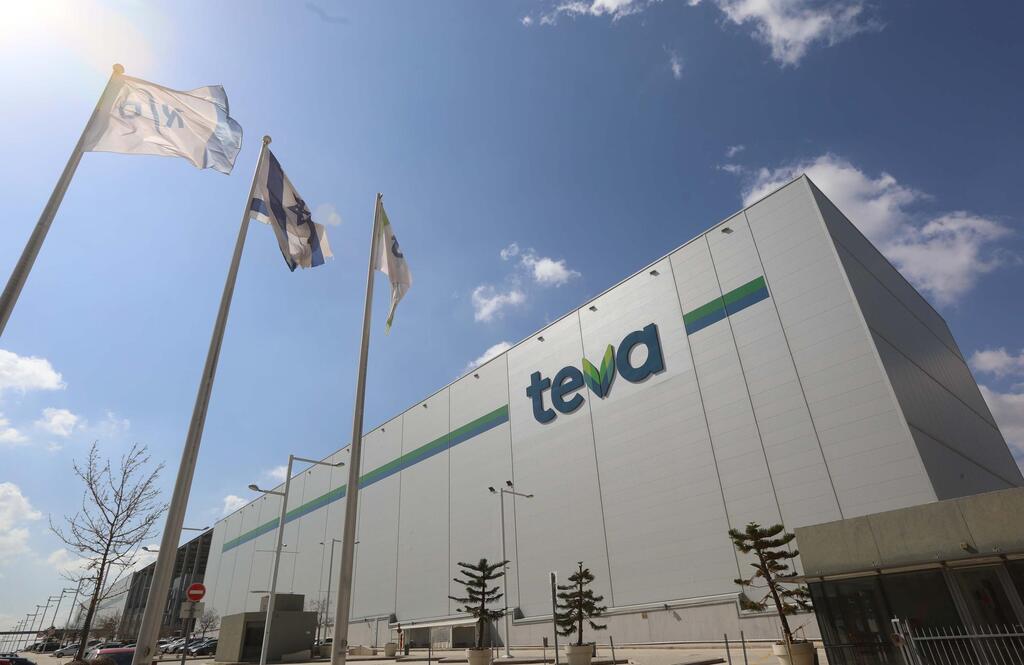
“Going forward [the] RCN is ending its commercial partnership with Teva UK. Teva UK will no longer be a sponsor of the RCNi nursing leadership summit: migraine and headache services event on 30 October 2026. The event will go ahead as planned,” she wrote.
RCNi is the union’s publishing and training arm, and the conference will be held at the RCN’s headquarters in London.
O’Boyle’s explanation focused on the company’s legal troubles: “We are taking this action because further due diligence showed that there are a number of Teva Pharmaceuticals’ operations, which have been the subject of legal sanction and public scrutiny, which are not in line with RCNi [the union’s publishing and education arm] and RCN values. We know how important it is that the RCN only enters commercial relationships with companies that represent the values of the nursing profession.”
Next target: pharmacists’ organization
The Guardian noted that over the past decade, Teva has been required to pay about 1 billion pounds, roughly $1.34 billion, in fines and other payments to the European Commission and U.S. authorities over bribery, price-fixing and abuse of market power. In 2024, the European Commission fined the company 462.6 million euros after finding that for between four and nine years it had prevented other companies from competing with Copaxone, its multiple sclerosis drug, in seven European countries.
The groups behind the pressure campaign, however, made no secret of their political motivation. Nurses for Palestine and UK Healthcare Petitions to Royal Colleges (UKHPRC), which coordinates petitions directed at the royal colleges representing health care professions, welcomed the decision, calling it "a major breakthrough" or the international Boycott, Divestment and Sanctions (BDS) movement.
Israeli and British flags. The boycott of Teva is another sign of anti-Israel sentiment in many circles in Britain. Illustration
(Photo: shutterstock)
A Nurses for Palestine spokesperson said: “Teva has no place sponsoring professional bodies dedicated to healing, care and preserving human life.”
UKHPRC added: “It is unthinkable that in this day and age healthcare organisations continue to enter into commercial relationships with companies linked to sustaining state systems accused or found by international bodies to involve grave violations of international law, including crimes against humanity, apartheid and genocide.”
The activists have already identified their next target: They are calling on the Royal College of Pharmacy to remove Teva UK from the list of sponsors of its annual conference, which will be held next month, and cancel the exhibition booth the company has booked.
Teva said in response to ynet: “The health care system works best when its focus is on patients, not political involvement. Our deep commitment, as a global pharmaceutical company operating in nearly 60 markets worldwide, to supporting health care professionals and patients by ensuring access to high-quality, affordable medicines remains unchanged. While we disagree with the decision, we will continue to act with integrity and focus on what matters most: helping patients gain access to the medicines they need.”
Optimism in the labs and on Wall Street
The calls to boycott Teva — most of them coming from extremist groups with no meaningful professional standing in the medical world — come at a time when the company is gaining momentum.
In its second-quarter results, Teva reported that combined sales of its three leading innovative medicines rose 43% from the same quarter last year, surpassing $1 billion: Austedo, which treats involuntary movements associated with Huntington’s disease and tardive dyskinesia, a side effect of prolonged use of antipsychotic medications; Uzedy, a long-acting injection for schizophrenia; and Ajovy, for migraine prevention — the very field covered by the conference from which Teva’s sponsorship was removed.
Ajovy recorded the sharpest increase of the three, rising 56%. According to Teva, innovative medicines are expected to account for 22% of its total revenue this year, compared with just 9% in 2022.

A pro-Palestinian activist at a BDS demonstration
(Photo: lev radin / shutterstock)
The company has also made progress in its development pipeline. In September, Teva reported positive results from a Phase 2a trial of the antibody TEV-’408, which blocks IL-15, a signaling protein that activates the immune system against the intestinal lining when people with celiac disease consume gluten.
The trial involved 50 adults with celiac disease who received a single injection of the antibody or a placebo, then consumed gluten daily for six weeks under medical supervision. Those who received the antibody experienced significantly less damage to the intestinal lining than those in the placebo group.
There is currently no approved drug for celiac disease, and the only treatment is avoiding gluten. The U.S. Food and Drug Administration has granted the antibody Fast Track designation, and Teva estimates that annual sales for celiac disease alone could reach $1.5 billion to $2 billion at their peak.
The next step is a Phase 2 trial using repeated doses, which will determine the dosage ahead of a Phase 3 trial.
At the same time, the company is awaiting an FDA decision, expected by the end of the year, on a monthly injection of the antipsychotic drug olanzapine for the treatment of schizophrenia. Another antibody, duvakitug, being developed with Sanofi to treat Crohn’s disease and ulcerative colitis, is in Phase 3 trials.
Wall Street is also rewarding the trend. Teva shares, which traded at $31.21 at the beginning of the year, closed Friday at $39.31, up about 26% since the start of 2026.
The larger surge began earlier: A year ago, the stock was trading at around $20, meaning it has nearly doubled in value over the past 12 months. The company’s market capitalization now stands at about $46 billion, and it is scheduled to report third-quarter results on Nov. 3.