

Noa was 9 when she walked into a health clinic with her mother. They had come for an ordinary routine checkup, and the doctor asked the girl to step on the scale.
The doctor looked at the screen, compared it with a previous measurement and then said out loud: “Wow, what’s this? Noa gained 10 kilos over the past year. She needs to see a dietitian.”
Gallery

Parents may miss the warning signs when a teenager is sliding into anorexia
(Photo: Shutterstock)
That sentence, which Noa heard clearly, became one of the moments that helped push her toward an eating disorder.
“She will never forget it, and I will never forget it either,” says Tamar, a pseudonym used to protect the family’s privacy. “It wasn’t the only comment she received over the years about her weight, but it was one of the moments that was burned into her.”
Noa, also a pseudonym, is now a teenage girl entering 11th grade. Over the past few years, she struggled with an eating disorder and was diagnosed with anorexia nervosa. She recently completed about six months of treatment through a home hospitalization model.
From the outside, Tamar says, it was very difficult to understand how serious the situation had become. Noa still went to Scouts, met friends, went out and argued like an ordinary adolescent. But beneath that routine was a whole world of hunger, concealment, fear and shame.
“Noa was always a chubby child,” Tamar says. “She loved to eat. She had cheeks, she had a small belly. But at home we never commented on her weight. Never. We are not a family that talks that way. We didn’t tell her she was fat, we didn’t talk about diets, and I didn’t walk around the house saying I needed to lose weight. That was very far from us.”
So where did the comments come from?
“From the environment. From friends, from after-school activities. She would go to dance class, wear a tight leotard, and girls would laugh at her. They told her she had a fat belly, a watermelon belly, asked her if she was pregnant. And I’m talking to you about a girl of 5, 6, 7. A little girl. She would come home crying and not want to go back the next day.”
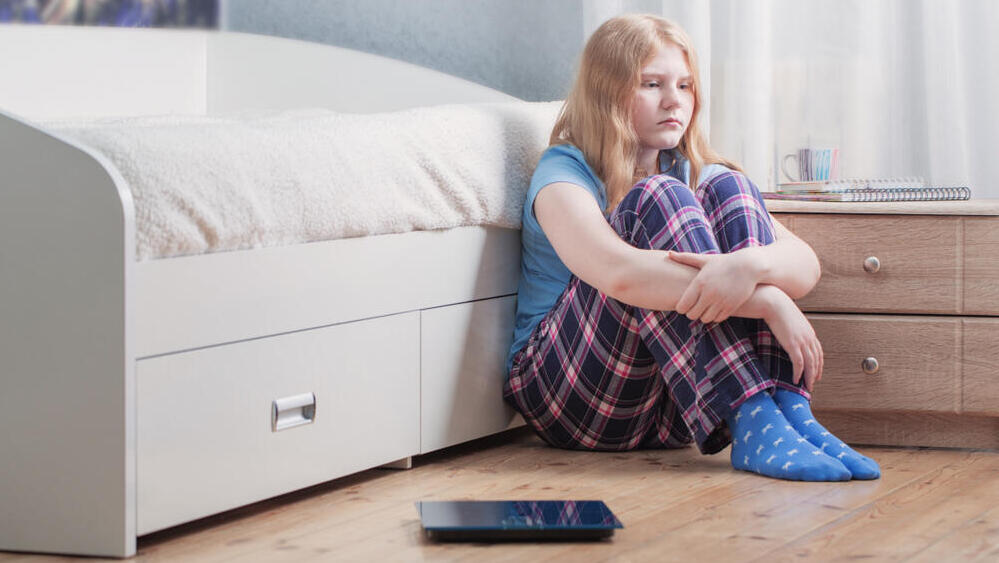
'She was always a chubby child, but we never commented on her weight'
(Photo: Shutterstock)
At home, Tamar says, they tried to wrap her in protection, not make a big deal of it and not turn her body into a subject. But Noa grew up knowing she was “full.” She knew there were certain stores she did not want to enter because she might not find clothes there. She never asked her mother directly, “Why am I fat?” but the awareness was there.
Then came middle school.
A letter on the desk
“Middle school was the big crisis,” Tamar says. “It wasn’t one dramatic thing you could point to, but a period when something in her changed. She started losing weight, shut herself in her room more and slept a lot. If she didn’t have Scouts, she would come home from school and sleep for three, four, five hours. Today I understand she did that partly so she would not have to deal with the hunger.”
When did you begin to understand that something was wrong?
“We saw that she was losing weight and not taking food to school. I would ask her, ‘Did you eat?’ and she would say, ‘Yes, I ate something small. I’m not hungry. I’ll eat later.’ We had arguments about it. We would tell her, ‘Noa, you need to eat. I don’t see you eating.’ And she would say, ‘Yes, yes, soon. Not now. I’m at Scouts. I can’t.’”
Did you think at the time that it was an eating disorder?
“Not at all. I told myself, ‘She is in adolescence, she is going through something. Sometimes she feels like eating and sometimes she doesn’t.’ You try to explain it to yourself logically. She also sometimes spoke to me and said she wanted to lose a little weight, do sports. We talked about it. We even talked about the dangers of not eating. It’s not that we didn’t talk, but I didn’t understand that it was already there.”
At one point, Noa told her mother she had vomited. At first, Tamar thought it might be a virus or something she had eaten. But when the vomiting happened again and again, a warning light went on.
“One day we came home after she had again written to me that she had vomited, and I remember entering the house very upset,” Tamar says. “My anxiety came out as anger. I said to her: ‘Do you know what you are doing to yourself? You are going to harm yourself.’ My husband and I lectured her, and she cried and said she wasn’t doing it on purpose and that I was exaggerating. Today I understand that she herself did not fully understand how deep she was in it.”
Then Noa wrote a letter.
“It was about two months later,” Tamar says. “Noa left the house for Scouts and sent me a message: ‘Mom, I left you a letter on the desk in my room. Go read it.’ I went into her room, opened the letter, and she had written everything. That she was not eating, that she was vomiting, that she knew it was harming her, but she did not know how to stop it. That she wanted us to help her. That she asked us not to be angry and to understand her. I will never forget that day.”
‘How does my daughter have an eating disorder?’
The next day, Tamar and her husband made an appointment with the family doctor.
“My husband went with her, and the doctor looked at her and said: ‘I don’t see a thin girl here,’” she says. “But after we told him about the letter, he understood that he needed to refer us onward.”
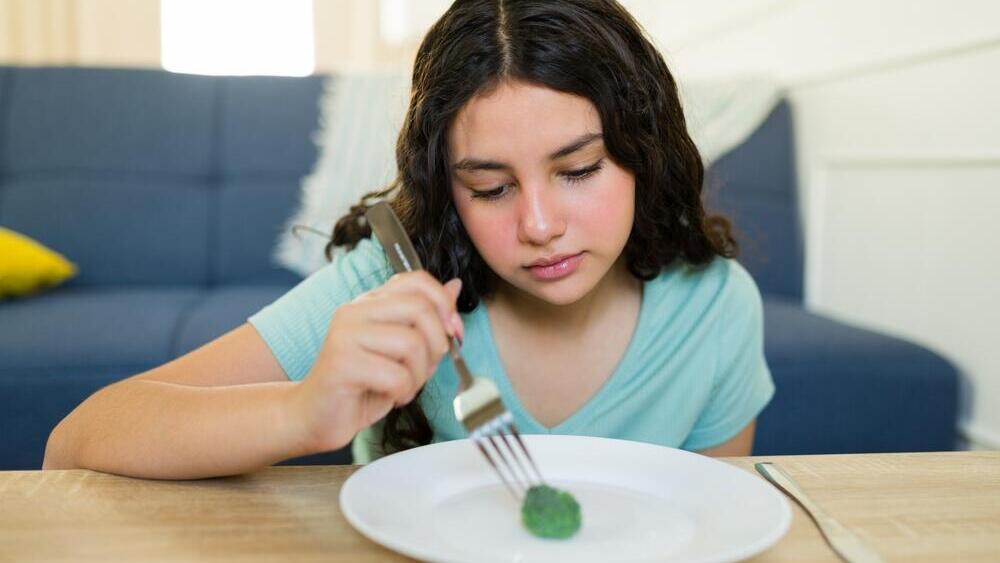
'She would say she wasn’t hungry'
(Photo: Shutterstock)
From there, the race began. Tamar searched for psychologists, including privately, just so someone would meet Noa and help the family understand what was happening.
“Almost everyone I spoke to told me: ‘Based on what you are describing, this is a teenage girl with an eating disorder, and she needs a full support system.’ And I still couldn’t even say that sentence. I didn’t understand how it could be that my daughter had an eating disorder.”
Meanwhile, Noa continued to function partially. She ate with the family, went to restaurants and met friends. That, Tamar says, confused them.
“We saw her eating. She wasn’t sitting in front of us with a lettuce leaf. She could eat pizza, pasta, things she liked. But in hindsight, it turned out that sometimes that was her only meal that day, or that afterward she would go and vomit. You are not with a 15-year-old girl 24 hours a day. You don’t see everything.”
School also became a difficult arena. Noa stopped attending regularly, sometimes going only one day a week.
“We fought with her every morning,” Tamar says. “‘Get up, go, you have to go.’ She would go for an hour and come back, or leave at 10 instead of 8. We involved the counselor and the homeroom teacher, tried to understand what she was going through. But because she did go to Scouts and did have friends, it didn’t look like total withdrawal.”
At that stage, it was already clear to the family that Noa needed professional treatment, but getting there was not easy. Tamar and her husband contacted treatment frameworks again and again, only to encounter long waiting lists or be told that Noa needed a broader support system than ordinary psychological therapy could provide.
“They told me six months, a year,” she says. “And I said: I cannot wait a year with a girl who has an eating disorder. I was afraid she would deteriorate to a place that would harm her irreversibly. I remember really crying.”
The recovery journey
Then came the turning point. A psychologist from Leumit Health Services passed along Noa’s details, and a call came from Sabar Health, Hospital at Home, which operates a home hospitalization and treatment service for adolescents with eating disorders.
The service, provided to members of the health fund with full funding, is based on treatment within the girl’s natural environment: at home, alongside the family, without cutting her off from school, friends or routine. Sabar explains that treatment is built individually and accompanied by a permanent multidisciplinary team, including, among others, an adolescent physician, family therapist, mentor and dietitian, and when needed also a child psychiatrist and child psychologist. Some meetings take place at home and others online, with the goal of integrating treatment into the daily life of the teenager and the family.
Tamar says the treatment was very different from what she had imagined.
“I thought it would just be a few meetings with a psychologist and that’s it, but it isn’t like that,” she says. “It is a whole support system: psychologist, psychiatrist, doctor, dietitian, a mentor who came several times a week and ate meals with her, guidance for the parents, a support group with other parents. It was a journey. Truly peeling off layer after layer.”

'She stopped going to school; we were arguing with her every morning'
(Photo: Shutterstock)
During treatment, Tamar learned more details she had not known. Noa told her about days when she barely ate, about using sleep as a way to escape hunger and about the endless preoccupation with her body. Alongside that came physical signs: weakness, dizziness, hair loss, menstrual disruption and recurring illnesses.
“Once she started eating in an organized way, we saw a change very quickly,” Tamar says. “The color came back to her face, her hair looked different, the shedding decreased. She herself said to me: ‘Mom, look at my hair.’ It was as if life had come back to her.”
But recovery was not simple.
“There were moments when she would cry before meetings and ask me to cancel. It was hard for her to be exposed. When her body started changing, she would wake up at night and cry: ‘Mom, I’m starting to get fat.’ And I would tell her: ‘You are not getting fat, you are becoming healthy again. You are a beautiful girl.’ But it required many conversations, a lot of presence.”
What was required of you as parents during the treatment?
“For six months, my husband and I took shifts so one of us would be with her at meals. Someone would sit with her at lunch or dinner, eat with her, make sure she was not alone with it. You have to understand that in home hospitalization, after the professionals leave, the parents remain there. They need to implement the tools, hold the home together, hold the child, and also hold themselves together.”
Today, after completing treatment, Tamar says Noa is in a different place.
“I truly feel that the treatment saved her life,” she says. “I won’t say it simply disappeared. The preoccupation with appearance is still there, and it will probably accompany her. When we go shopping for clothes, I still see the self-criticism in front of the mirror. But today she knows more. She understands what happens when she does not give her body what it needs, and she also knows she has tools to cope. She went through an amazing process.”
What do you suggest to parents of teenagers?
“First of all, don’t be ashamed to say the words: eating disorder. I remember Noa once saying to me in the car: ‘Mom, why is it so hard for you to say that I have an eating disorder?’ And she was right. It was hard for me. But you have to say it, raise it, ask for help.”
Beyond that, she asks parents to pay attention even to what may look like “just adolescence.”
“A child who closes the door, sleeps a lot, talks back, doesn’t want to go to school, it may really be adolescence, but sometimes there is something else there. You don’t need to go into hysteria over everything, but you also shouldn’t dismiss it. Talk to the children, even when they don’t want to. Be present. Open the door, ask how they are, sit next to them even in the most ordinary conversation. Sometimes the most important things come out of a small conversation.”
Most important, she says, is not to get angry at the child.
“When I discovered that Noa was vomiting, I was angry with her. In hindsight, I know it was fear. Today I would want to say to her immediately: ‘I am not angry. I am here. We will help you.’ Because that is what children need to hear. That they are not alone.”
The warning signs parents should not ignore
According to Dr. Tal Shnir, director of the home hospitalization service for adolescents with eating disorders at Sabar Health, Hospital at Home, it is important to understand that an eating disorder is not a whim, an attempt to get attention or an excessive preoccupation with appearance, but a real illness.
“This is an illness that has emotional components and physical components,” she explains. “It is an illness that requires a full treatment team, because the body, the mind and the family all need to be addressed.”
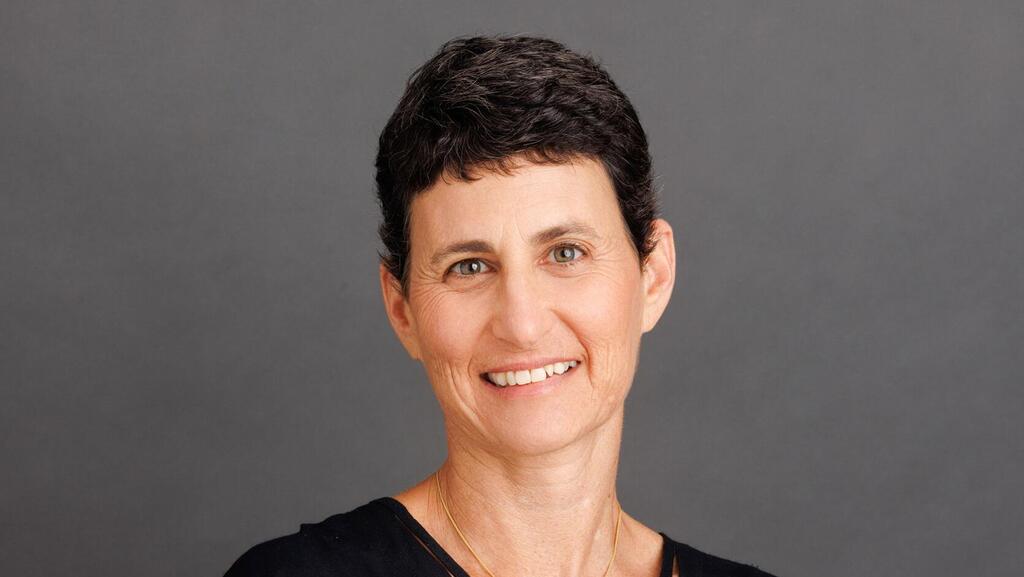
Dr. Tal Shnir
(Photo: Yahav Trudler)
In recent years, she says, there has been a significant rise in eating disorders among adolescents.
“When we talk about eating disorders in the Western world and also in Israel, we are talking about 1% to 2% severe eating disorders, with a very significant increase since the COVID period,” she says.
As for the past two years, against the backdrop of the war, she describes a more complex picture.
“At the beginning of the war, we actually saw a decrease in referrals, but today, after a prolonged period of stress, we are seeing more complex and severe illness. In some cases, it turns out that processes had been going on for a long time and were not spoken about, meaning diagnosis comes later.”
One of the difficulties in identifying an eating disorder, Shnir explains, is that it is not always a girl who is underweight.
“Today we see more adolescents with anorexia at a normal weight, or those who started at a higher weight and lost a lot sharply,” she says. “From the outside, you do not always see the severity of the situation, but the body may be in severe distress.”
Shnir says the warning signs that should alert parents include avoiding meals, sharp weight loss, weakness, dizziness, a change in functioning, absence from school or unusual behaviors around food.
“The earlier the diagnosis and the earlier treatment begins, the better the chances of recovery,” she says.
“The parents are not to blame,” Shnir emphasizes. “On the contrary, they know their child best, and therefore they can be one of the most important factors in treatment and recovery. But that requires a lot of guidance, support and professional assistance.”