

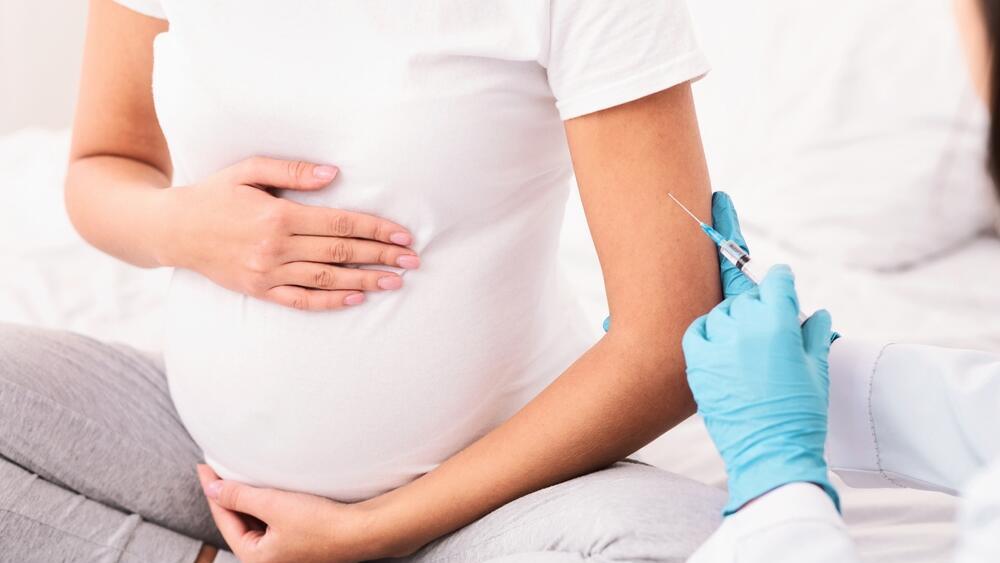
In an era of fake news and growing concerns about vaccines, pregnant women often find themselves torn between evidence-based medical recommendations and persistent rumors. A large Israeli study, one of the most comprehensive in the world on the subject, offers a clear answer to one of the most sensitive questions: Does receiving a flu shot during pregnancy increase the risk of autism in newborns? According to the data, the unequivocal answer is no.
The study, recently published in the scientific journal JCPP Advances, found no link between receiving an influenza vaccine during pregnancy and the development of autism spectrum disorders in children. The large-scale Israeli study was based on data from more than 150,000 births and provides a solid scientific response to concerns that have grown in recent years among pregnant women.
The research was conducted in collaboration with Soroka University Medical Center, Ben-Gurion University of the Negev, the Azrieli National Center for Autism and Neurodevelopment Research and Clalit Health Services.
Data of more than 153,000 children
Researchers analyzed medical data from 153,321 children born in Israel between 2016 and 2020. Thanks to extensive databases that included pregnancy, birth, vaccination and long-term medical follow-up records, the children could be followed for several years, through 2024, to determine which were diagnosed with autism.
After adjusting for a wide range of sociodemographic and clinical variables, including maternal age, ethnicity, place of residence and health care system characteristics, researchers found no association between the vaccine itself and autism risk. The findings were consistent across all stages of pregnancy, regardless of the trimester in which the vaccine was administered. “We took data on women who gave birth within Clalit,” said Prof. Gal Meiri. “Soroka is one of Clalit’s largest hospitals, but beyond that we had data on all women insured by Clalit during a defined period, between 2016 and 2020. From this large database, we were also able to conduct follow-up for several years afterward and see how many of the children, at least by the end of the study period, received an autism diagnosis.”
And the conclusion?
“There is no connection between giving a flu vaccine to a woman during pregnancy and autism in the newborn,” Meiri said. “This is a very important conclusion, especially during the winter, with everything going on around influenza and concerns about vaccines.” According to Meiri, these concerns are well known from clinical practice. “As physicians, both neurologists and child psychiatrists, we constantly deal with questions from parents who worry about their child’s health and development. Over the years, there have been various rumors that vaccines could, God forbid, cause autism.”
 Prof. Gal Meiri Photo: Soroka medical center
Access to health care services makes the difference
In an initial analysis of the data, autism rates appeared slightly higher among children born to mothers who received a flu vaccine during pregnancy. However, once researchers adjusted for sociodemographic and clinical variables, including maternal age, place of residence, ethnicity and pregnancy characteristics, the association disappeared entirely. The researchers stress that the initial gap did not stem from the vaccine itself but from other background factors.
They note that the early differences observed were related to patterns of health care utilization. Women from populations with higher vaccination rates, primarily Jewish women living in central Israel, also tend to have higher autism diagnosis rates, in part due to greater access to health services and higher diagnostic awareness. By contrast, in populations with lower vaccination rates, such as parts of the Bedouin population in southern Israel, diagnosis rates are also lower. Once these factors were taken into account, no link remained between the vaccine and autism risk.
An analysis by stage of pregnancy, including the first trimester, which raises particular concern among many women, likewise found no association between the timing of vaccination and autism risk after statistical adjustments. The researchers explain that women who are vaccinated earlier tend to have higher health awareness and are more likely to seek diagnosis, rather than there being a biological effect of the vaccine itself.
Vaccines, acetaminophen and everything in between
The discussion around vaccination during pregnancy does not take place in a vacuum. In recent years, and more intensely since the COVID-19 pandemic, statements and policy shifts in the United States have fueled public concern not only about vaccines but also about common medications such as acetaminophen. “We hope this information reaches policymakers and the general public to help allay fears,” Prof. Meiri said. “Fever or infection during pregnancy is far more dangerous to the fetus. There was also a publication that tried to claim acetaminophen during pregnancy is dangerous, and that too has been refuted by several studies. It is important for women to protect their health during pregnancy, to be sick as little as possible and, if there is a fever, to treat it.”
And what about influenza itself?
This is one of the study’s central messages. “Infection during pregnancy, especially infection accompanied by fever, can indeed increase the prevalence of neurodevelopmental problems, including autism, in newborns,” Prof. Meiri emphasized. “Influenza is one of the most common illnesses that causes prolonged fever, which is why it is so important to protect health during pregnancy. The vaccine protects both the mother’s health and the fetus’ health.”

(Photo: Shutterstock)
Is there any difference between trimesters?
“Absolutely not,” he said. “We tested that. Because we had such a large sample, we could compare by the trimester in which the vaccine was given, and we saw no difference at all in autism prevalence. The main and important result is that there is no increased risk of autism as a result of the vaccine itself.”
The study was conducted by Shahar Naaman and Maor Hamo, MD/MPH students in medicine and public health at the Goldman Medical School at Ben-Gurion University of the Negev, under the supervision of a multidisciplinary team that included Meiri, Prof. Idan Menashe and Dr. Dorit Shmueli.
Prof. Menashe, head of the Department of Epidemiology, Biostatistics and Community Health Sciences at Ben-Gurion University and the study’s principal investigator, said the findings reinforce existing medical recommendations. “The study underscores that influenza vaccination during pregnancy is a safe and important measure to protect the health of the mother and the fetus, while providing significant evidence of its neurodevelopmental safety,” he said.
 Prof. Idan Menashe Photo: Ben-Gurion University
Dr. Shmueli, a specialist in neurology and child development, head of child development services at Clalit Health Services and the study’s initiator, added: “A febrile illness lasting more than a week during pregnancy is one of the factors that has been linked to increased autism prevalence in offspring. Influenza is one of the common illnesses that can cause this, which is one of the reasons pregnant women are advised to get vaccinated. This study strengthens that recommendation and emphasizes the vaccine’s safety.”
 Dr. Dorit ShmueliPhoto: Courtesy
How much does public discourse actually influence the decisions of pregnant women in Israel?
“Women here are intelligent women who listen both to their doctors and to social media,” Prof. Meiri said. “We definitely see concerns and questions directed at us. We always try to stick to facts and research and encourage reliance on large, well-founded data. In the end, most women and couples listen to mainstream medicine and act in the best interests of their own health and their children’s health.”
The current study appears to add another significant layer to that data-driven medicine and, above all, a reassuring message to pregnant women: Getting a flu shot during pregnancy is not only safe but also part of broader protection for the health of both mother and child.