


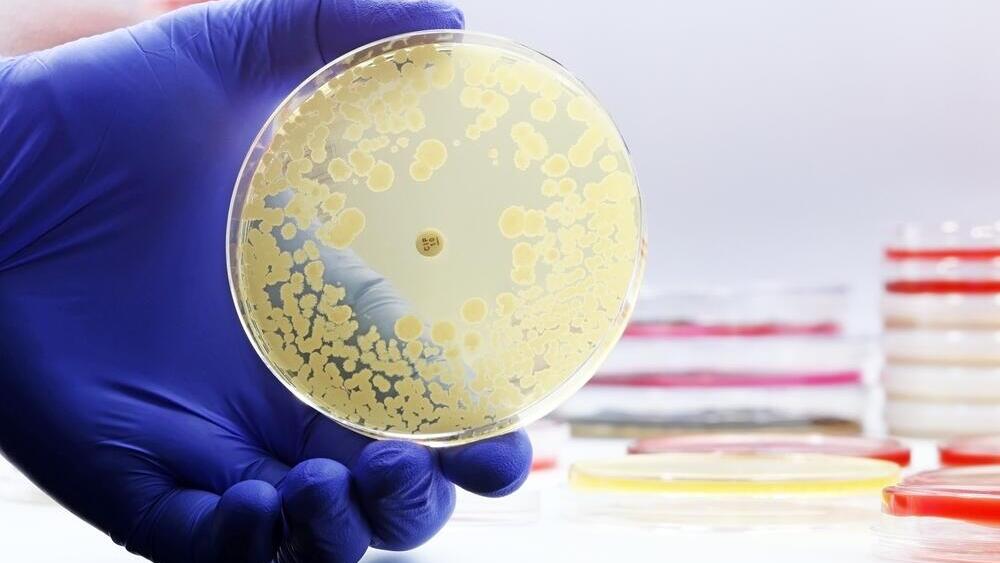
Antibiotic-resistant bacteria are considered one of the leading threats to public health. Researchers at the Technion – Israel Institute of Technology have now uncovered a hidden mechanism that allows bacteria to adapt rapidly to treatment by creating dozens of copies of specific genes that help them survive.
The discovery does not currently change how patients are treated, but it could pave the way for drugs designed to disrupt the mechanism and improve the effectiveness of antibiotics.
The study, conducted by Dr. Idan Yelin and Professor Roy Kishony of the Technion’s Faculty of Biology, was published in the journal Nature Microbiology. It was supported by the Israel Science Foundation and the European Union’s Horizon Europe program.
The researchers developed a new computational tool called AmpliFinder and used it to scan more than 10,000 samples of bacteria that had evolved under laboratory conditions.
‘Antibiotics have a dual effect’
The dangers associated with excessive antibiotic use have become increasingly clear in recent decades. The more frequently bacteria are exposed to antibiotics, the greater the risk that they will develop resistance and stop responding to treatment. In such cases, infections that were once readily treatable may become far more difficult to control.
The mechanism identified by the researchers is based on gene amplification, a known evolutionary process in which bacteria increase the number of copies of genes that provide a survival advantage. When the genes are linked to resistance, multiplying them may help the bacteria withstand antibiotic treatment.
The study, however, revealed an unfamiliar way in which this amplification occurs. The researchers call it “unconventional amplification.”
It is created through a single DNA segment that connects distant regions of the bacterial genome, making it difficult to detect. The process allows bacteria to rapidly and selectively produce dozens of copies of certain genes, giving them a faster and more effective response to antibiotic treatment than previously known amplification mechanisms could explain.
“In the immediate term, the discovery does not affect treatment, but it provides new directions for research and development,” Yelin said. “One promising direction is to inhibit the mechanism in a way that prevents bacteria from developing resistance rapidly.
“The development of resistance, including hidden resistance in bacteria, creates clinical problems that this study offers new ways to address.”
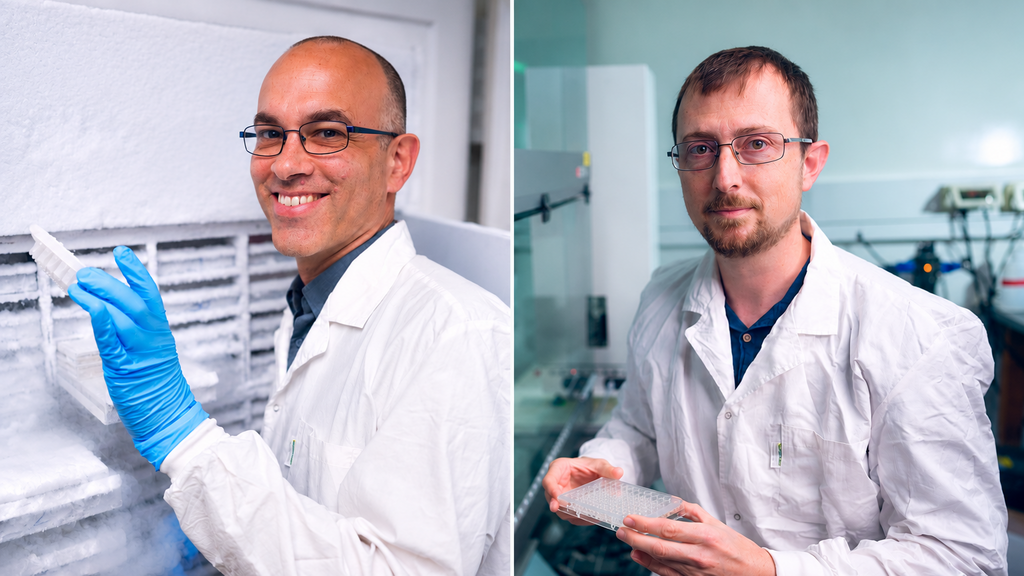
Professor Roy Kishony and Dr. Idan Yelin
(Photo: Nitzan Zohar, Technion)
How bacteria adapt to treatment
The study examined two bacterial species: Escherichia coli and Acinetobacter baumannii.
In an experiment using the antibiotic chloramphenicol, the researchers found that amplification of a DNA segment containing the mdfA gene not only increased the bacterium’s existing resistance but also enabled it to adapt to progressively higher levels of the drug.
According to the researchers, the process constitutes a form of accelerated evolution that improves the bacteria’s chances of survival. They found that the mechanism was neither rare nor limited to chloramphenicol.
“The mechanism is relevant to the development of resistance to a very broad range of antibiotics,” Yelin said.
“In the study, we saw how it led to resistance to ampicillin, which is widely used to treat many kinds of infections, and to trimethoprim, which is commonly used to treat urinary tract infections.
“This is a general mechanism that can attach itself to a wide variety of genes in the bacterium and amplify them in ways that promote resistance.”
Yelin said it was reasonable to assume that the mechanism could also operate during a standard, short course of antibiotic treatment.
“The study focused on how bacteria develop resistance after being exposed to antibiotics in the laboratory, but gene amplification is also known to occur in bacteria exposed to ordinary antibiotic treatment,” he said. “It is reasonable to assume that in many cases, the same mechanism is involved.”
The researchers also found that the gene amplification was not necessarily permanent.
“As long as the bacterium is exposed to the antibiotic, the gene amplification is expected to remain,” Yelin said. “When we removed the antibiotic, the bacterium reduced the number of copies of the genes that gave it resistance and returned to its normal, sensitive state.”
Does the mechanism also operate in hospitals?
One of the central questions raised by the study is whether the same mechanism operates in resistant bacteria found in hospitals and patients.
Both bacterial species examined in the research can cause infections in humans. Resistant strains of the two are classified as “superbugs” and are listed by the World Health Organization as high-priority targets for the development of new drugs and treatments.
However, the current study was conducted on laboratory bacteria rather than samples taken from patients or hospitals.
“These are laboratory bacteria that are closely related to resistant, infection-causing bacteria found in hospitals,” Yelin said.
“The mechanism that enables gene amplification is based on mobile genetic elements that exist in all types of bacteria, and certainly in these related strains. We therefore assume that the mechanism exists in them as well. Follow-up studies will need to measure how common it is among resistant bacteria in hospitals.”
Overuse of antibiotics accelerates the development of bacterial resistance
(Photo: Shutterstock)
The mobile genetic elements on which the mechanism depends can pass from one bacterium to another. According to Yelin, this suggests that other bacteria capable of causing human infections may also be able to develop resistance in the same way.
In the future, detecting the mechanism could potentially help identify bacteria with “hidden resistance,” which may not initially be visible but emerges only after exposure to an antibiotic. That possibility, however, remains a research direction rather than an established clinical application.
A drug that works alongside antibiotics
One possibility raised by the researchers is the development of a drug that could be administered alongside an antibiotic and disable the gene-amplification mechanism. Such a treatment might reduce the bacterium’s ability to adapt rapidly.
“Just as an antibiotic disables essential systems in a bacterium, it is possible to envision an additional drug that works in synergy with the antibiotic and disables the mechanism that gives the bacterium an advantage in acquiring resistance,” Yelin said.
At this stage, it remains unclear how long it might take, if ever, for the discovery to lead to a test or treatment used in medicine.
The researchers also do not yet know whether the findings should affect how doctors currently choose antibiotic dosages or treatment duration. The research therefore does not change existing clinical recommendations.
The team further found that the mechanism is not limited to antibiotic resistance.
“We found that it can provide bacteria with other advantages, for example in dealing with bacteriophages, which are viruses that attack bacteria, or with other environmental challenges,” Yelin said.