

Have you ever had your life turned upside down without warning, in a moment that remains seared into your body and soul forever? “Who else goes through two life-changing upheavals in three years, all while still basically a 21-year-old kid?” Omer Alon asks aloud as he confronts a difficult new reality, not for the first time.
“I’m Omer, 21, from Bat Hefer. I was born into sports,” he said. “My father is a triathlete, and he passed his love of sports on to me and my younger brother. From a young age, he pushed me onto the basketball court.”
Gallery
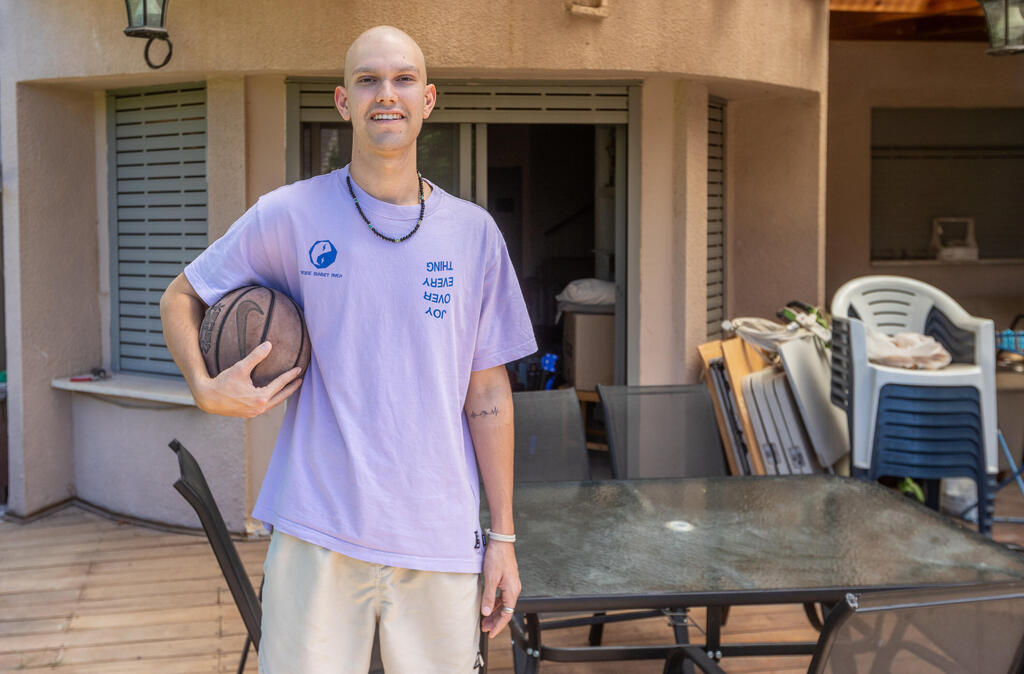
'I suddenly realized what a crazy whirlwind I was in.' Omer Alon was diagnosed with cancer
(Photo: Ido Erez)
In the home where he grew up, the television was permanently tuned to a sports channel. “We weren’t picky. We loved everything,” he said. At 1.95 meters tall, with discipline and an ability to remain focused on a fast-moving court, Alon became an outstanding basketball player.
From basic training straight into war
“When I received my draft notice, I debated whether to pursue the outstanding athlete track and postpone or give up military service, or enlist,” he said. “But friends who enlisted before me inspired me and gave me motivation.”
Alon enlisted in March 2023 and was assigned to the Golani Brigade. “Basic training lasts eight months, and we were two weeks away from our beret march when the October 7 disaster happened and changed everything. The beret march was suddenly irrelevant.”
The young soldiers were immediately sent south to join the Golani Brigade’s 51st Battalion, which had been deployed along the Gaza border over the weekend and holiday. “We equipped ourselves, and the next day, October 8, we were thrown into the arena,” Alon said. “It was insane. We went from zero to a million, from children in basic training to fighters.”
“The bubble of basic training burst, and it was replaced by the real thing: a war for everyone’s lives and for our country. Even today, when I think about that upheaval, how one day I was just a clueless recruit and the next I was fighting as an equal alongside officers and veteran soldiers, I’m still amazed.”
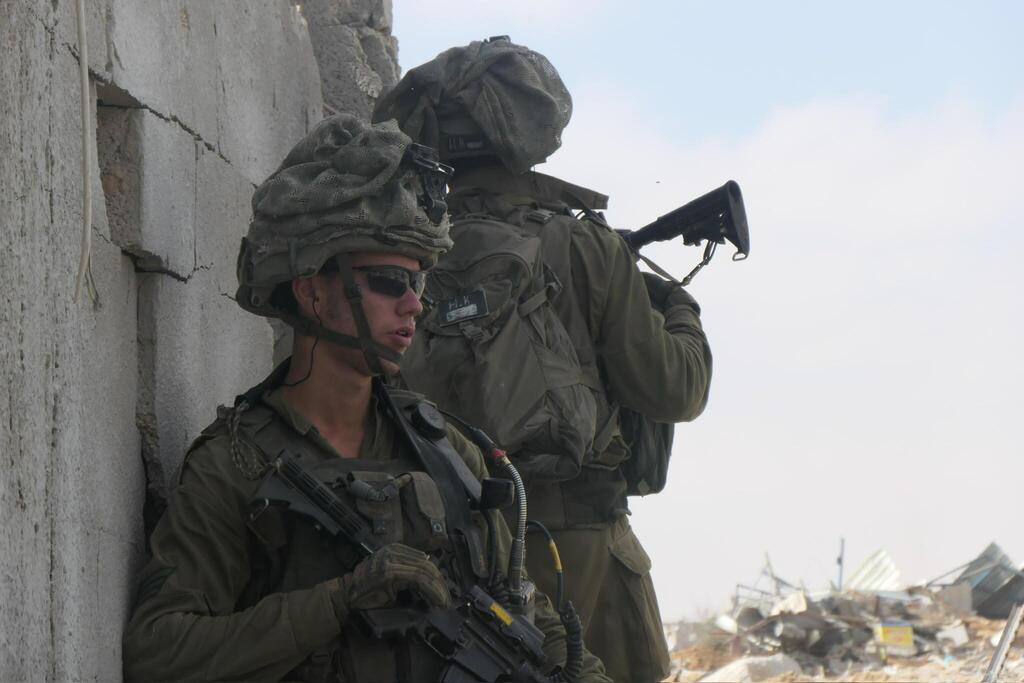
Omer during his IDF service
(Photo: Courtesy)
Alon spent his three years of military service in a reality of continuous war. He fought in the flat terrain of Gaza under one set of conditions, then was sent to mountainous Lebanon, by then as a commander, under entirely different conditions.
“Where was it harder? Clearly Lebanon,” he said. “The terrain is extremely complicated. In places where vehicles couldn’t pass, we went in on foot with a 16-kilogram pack on our backs, climbing through dense, steep and rocky terrain.”
It began with an irritating pain
During breaks in the fighting, Alon and the soldiers in his platoon planned their post-army trip in detail. Under difficult conditions, they built a dream that eventually became reality. “We were discharged in November 2025, and pretty quickly, in December, 10 close friends who had gone from recruits to real combat soldiers boarded a plane to Thailand.”
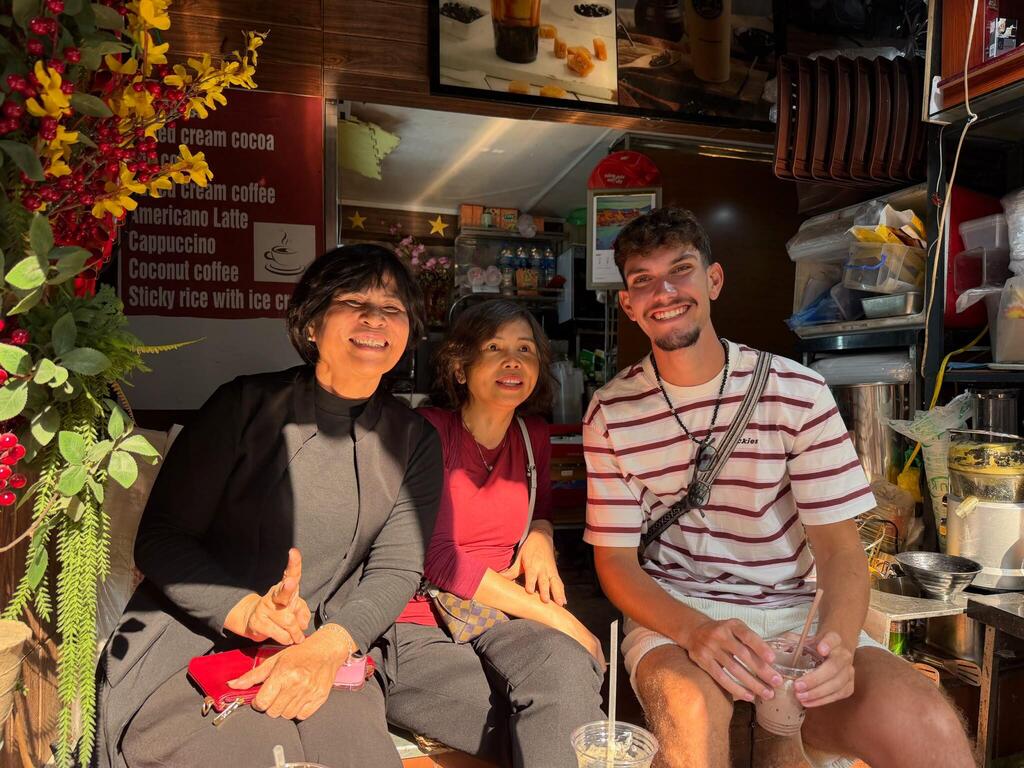
After finishing their travels there, nine of his friends returned to Israel. Alon joined friends from home on a trip through Laos and Cambodia. “We were overwhelmed by all the experiences we had in those two countries. It was magical.” He then continued with his friends to Vietnam, where his life was shaken for a second time.
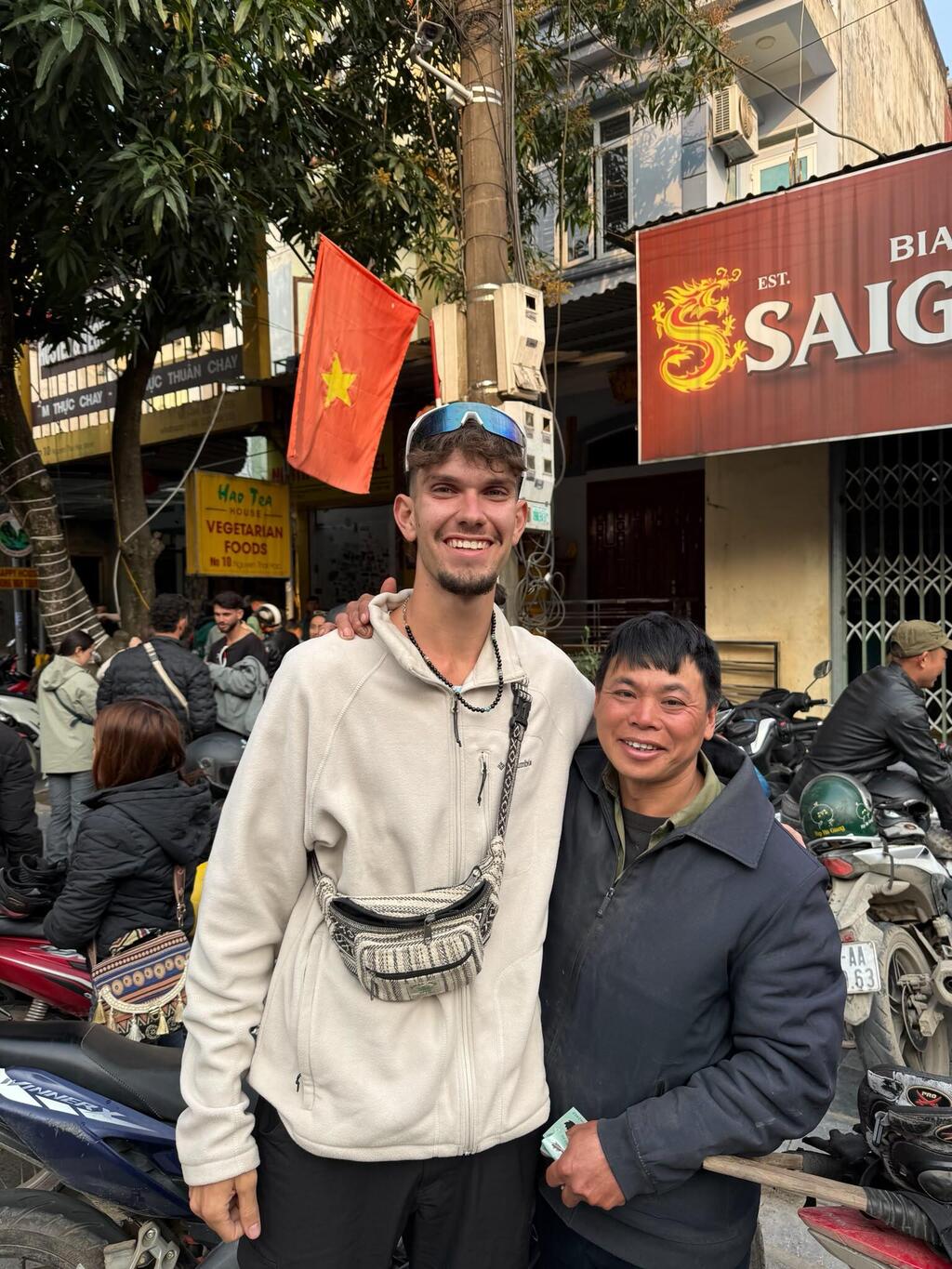
The Far East trip cut short
(Photo: Courtesy)
(Photo: Courtesy)
It was March 2026, and Alon and his friends had joined a three-day organized motorcycle tour. Local guides drove the motorcycles, with each traveler seated behind a driver. “The idea was that we could see the road, hear explanations and get to know the places,” he said.
After one of the stops, Alon felt something unusual. Each time he climbed onto the motorcycle, a minor pain bothered him in his left leg. “I had been a combat soldier. I knew my body’s endurance, so I didn’t give it much thought,” he said. “I told myself I was on a trip. Whenever it felt strange, we stopped, I shook out my leg and we continued.” Looking back, I can say I didn’t think it was the kind of pain that required medication. It was more of an irritation that stayed with me but didn’t stop me.”
By the end of the motorcycle trip, his leg began to bother him while standing. “I didn’t make a big deal out of it because there was no reason to,” he said. About three weeks later, he played basketball with local residents. “I wasn’t exerting myself much. They were short,” he joked.
That night, however, the pain became severe. “I tossed and turned and couldn’t sleep for even a second,” he said. “I suspected that maybe I had an infection, and in the morning I went to a doctor to get an antibiotic prescription before flying to Nepal for a trek.”
‘I didn’t understand what was happening’
When his friends offered to accompany him, Alon told them it was only a prescription and nothing serious. After hearing about the pain, the doctor sent him for an X-ray. At that moment, the life Alon knew ended and another one began. “I returned to the doctor with the X-ray results, and he looked like someone who had just received terrible news,” Alon said.
The doctor and nurse spoke to each other in Vietnamese. “I found myself in the most bizarre scene,” he said. “I was in a developing country, facing a doctor who didn’t know a word of English and was communicating with me through Google Translate.” At one point, they left the room, and I remained alone in a strange place without understanding what all the commotion around me was about.”
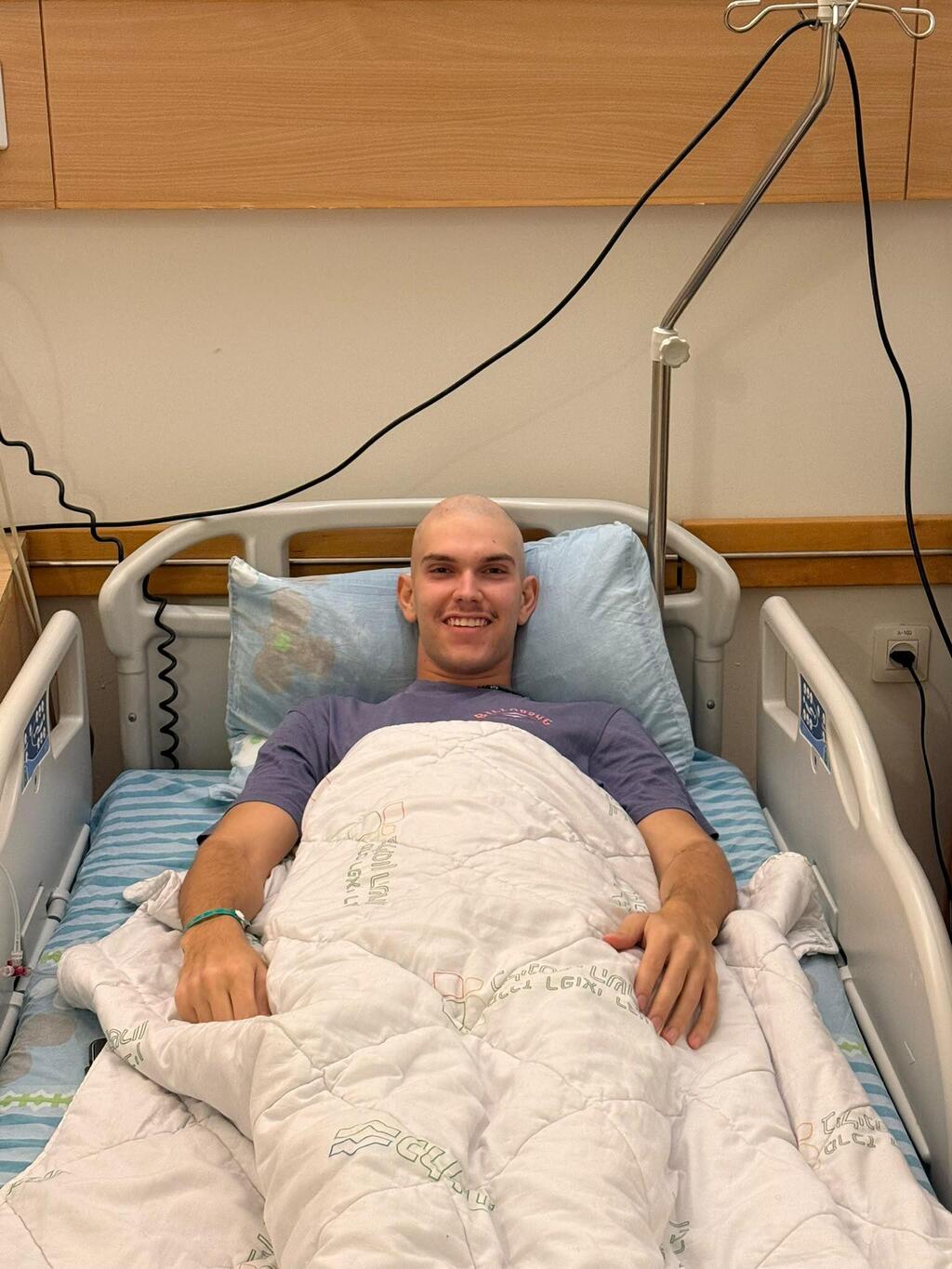
Omer’s life changed completely after the diagnosis
(Photo: Courtesy)
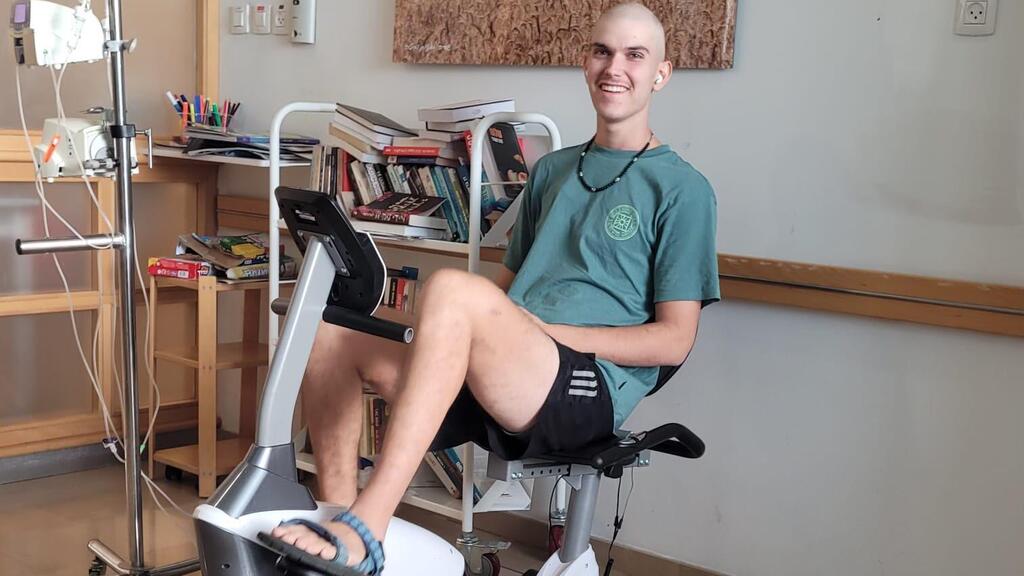
Omer Alon during treatment
(Photo: Courtesy)
When they returned, the doctor sent him to what he called a “big doctor.” The senior physician also appeared alarmed. With the limited English he knew, he told Alon: “MRI now.”
“I honestly didn’t understand what was happening,” Alon said. “Just like basic training suddenly turned me into a combat soldier, this time I had only gone to a doctor for a prescription, and suddenly there was all this commotion. What had frightened them? I understood from their body language that they were under pressure.”
Alon underwent the scan. When he returned, the senior doctor used Google Translate to tell him that the finding might be a cancerous tumor and that surgery would take place the following day. “I went into shock,” Alon said. “What do I have to do with a cancerous tumor?”
He managed to pull himself together and texted his friends, who quickly arrived. He sent the test results to his insurance company in Israel and informed his parents. Dr. Israel Weiss, director of orthopedic oncology at Beilinson and Schneider children’s hospitals, recalled receiving information about a Golani veteran traveling in Vietnam.
“I don’t remember who told me about a Golani soldier on a post-army trip in Vietnam, but from the scans they sent me, I strongly suspected that the finding in his leg was cancerous,” Weiss said. “I didn’t merely recommend that he return to Israel. I told him explicitly to come back.”
Rescue flight during the Israel-Iran war
The timing created another complication. The Israel-Iran war was underway, and Ben Gurion Airport was closed apart from one daily rescue flight departing from Thailand. “The insurance company recommended that I get to Bangkok and wait for a flight,” Alon said.
He arrived there at 2 a.m. on a Friday, alone and deeply distressed. “My leg hurt badly. I had no certainty about the finding or when the flight would leave. For two and a half days, I was living through a nightmare.”
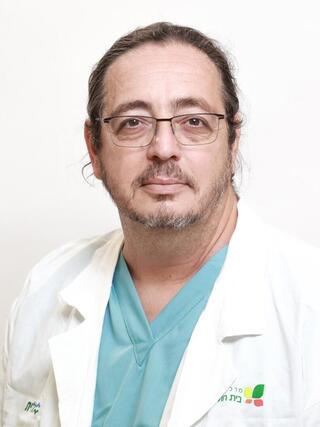 Dr. Israel WeissPhoto: Shlomi Yosef
Alon landed in Israel at the end of March 2026. His parents were waiting for him and drove him directly from the airport to Beilinson Hospital.
An emergency room doctor examined the scans he had brought and ordered some of them to be repeated. After receiving the results, the doctor referred him to Weiss with a grave expression. “I arrived with my parents feeling that everyone had exaggerated, that I didn’t have cancer,” Alon said. “Then we entered his room, sat across from him and I received the shock of my life.”
Dr. Israel Weiss told him: “Omer, you’re already a grown man. Until we perform a biopsy, we cannot be certain, but based on the appearance of the tumor, I strongly suspect bone cancer.”
“Suddenly, I understood what a crazy whirlwind I was in and how dramatically my life had changed in almost no time,” Alon said. “I landed in Israel when I was supposed to be trekking. I arrived at a hospital, and out of nowhere they were about to define me as a cancer patient.”
The following day, Dr. Weiss performed a biopsy and told him the results would arrive within two weeks. Alon spent the agonizing waiting period slowly recounting everything he had experienced.
High chances of recovery
The biopsy confirmed Dr. Weiss’ suspicion. Alon was diagnosed with osteosarcoma, an aggressive form of bone cancer that accounts for the majority of primary malignant bone tumors. “After I informed him, he underwent fertility preservation and we prepared a demanding, personalized treatment plan,” Dr. Weiss said. “But he is strong physically and mentally, and there is no doubt that he will withstand it.”
The treatment protocol was designed to eliminate possible metastases that may still be too small to appear on current imaging. “Fortunately, his cancer is localized, so his chances of recovery are high,” Weiss said.
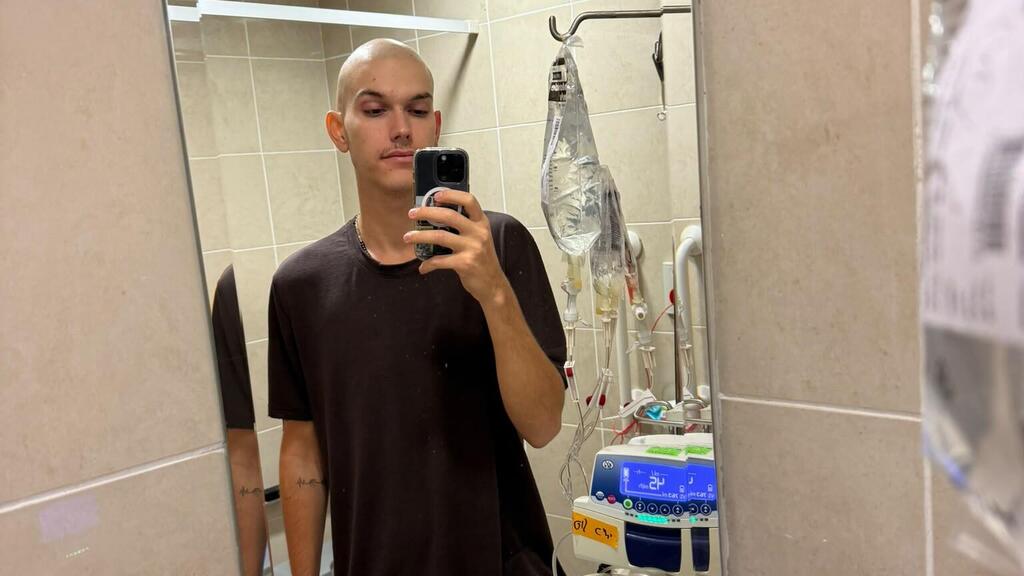
Saying goodbye to his hair during aggressive treatment
(Photo: Courtesy)

(Photo: Courtesy)
Alon was referred to oncologist Dr. Yonatan Daliot at the Davidoff Cancer Center, who prepared him for an intensive course of chemotherapy. “I sat across from him, and as far as I was concerned, he was speaking Chinese,” Alon said. “In the background, I heard him say that because the cancer is aggressive, the treatment would also be aggressive.”
The plan included a week of continuous inpatient treatment, a period of rest at home and then another two weeks of hospitalization, with the cycle repeated several times. After the first treatment, Alon’s hair began to fall out, and he decided to shave his head.
“Except for the bald head, there is no visible sign of the difficult treatment I’m undergoing in my fight against the cancer that attacked me,” he said. “I’m responding well to treatment. I have almost no side effects, and I’m living nearly at full capacity.”
His greatest frustration, he said, is surprisingly ordinary. “When I go out with friends to bars, cafés or anywhere else, I’m always the designated driver because I’m not allowed to drink.”
First published: 08:26, 08.04.26