

A research team led by astrophysicist Lukas Böhme at Bielefeld University in Germany has uncovered surprising new findings about the speed and direction of our Solar System’s motion through the universe, findings that challenge the standard model of cosmology. The results are published in the journal Physical Review Letters.
“Our analysis shows that the Solar System is moving more than three times faster than current models predict,” said Böhme. “This result clearly contradicts expectations based on standard cosmology and forces us to reconsider our previous assumptions.”
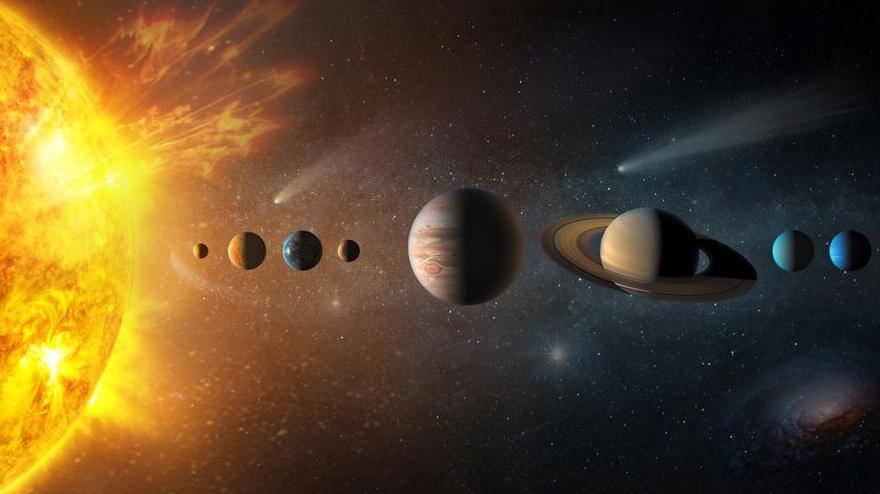
The team analyzed the distribution of radio galaxies—distant galaxies that emit particularly strong radio waves, which can penetrate dust and gas that block visible light.
Because the Solar System’s motion through the cosmos creates a subtle “headwind," slightly more radio galaxies should appear in the direction of travel. Detecting this requires extremely sensitive measurements.
Using data from LOFAR (Low Frequency Array)—a network of radio telescopes across Europe—and two additional radio observatories, the researchers achieved an especially precise count of these radio galaxies. They also introduced a new statistical method to account for the fact that many radio galaxies consist of multiple components.
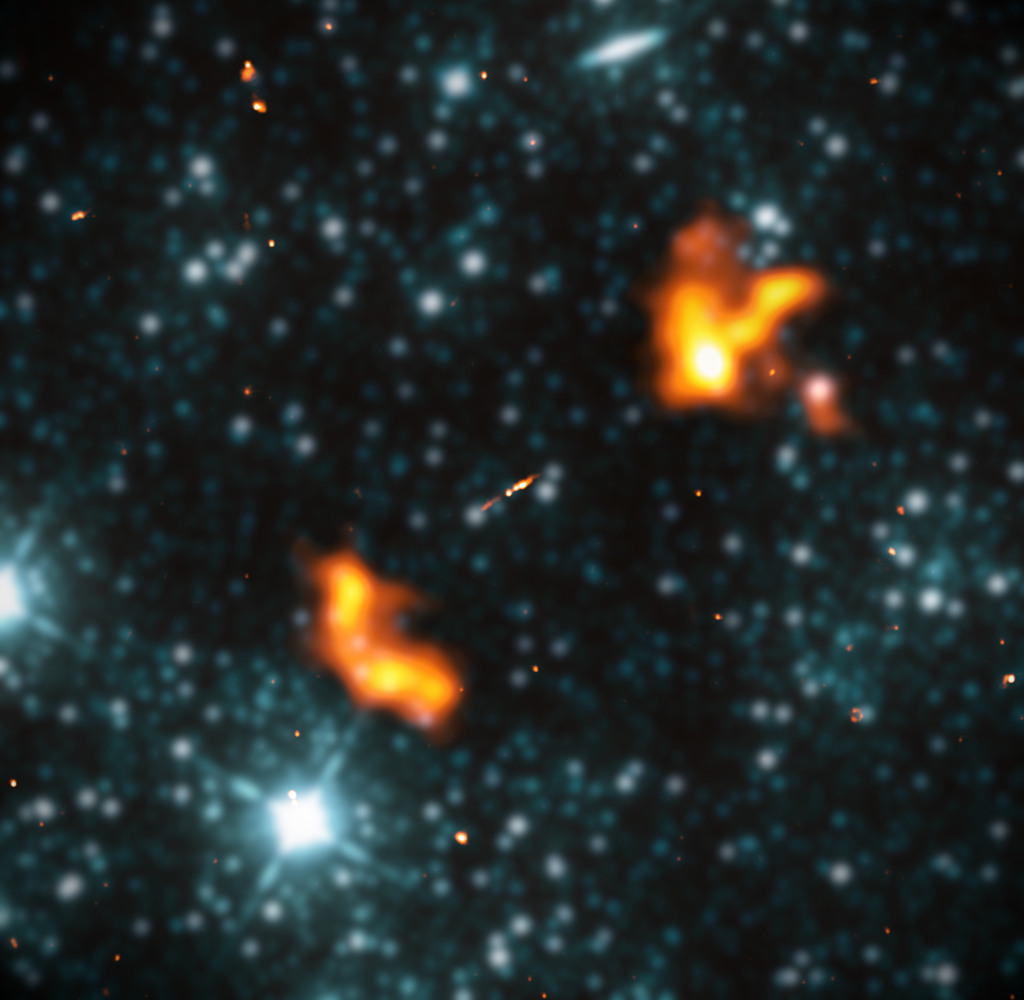
Alcyoneus Galaxy, a giant radio galaxy that is the largest known galaxy
(Photo: Martijn Oei/Wikipedia)
The measurement reveals an anisotropy (a “dipole”) in the radio‑galaxy distribution that is about 3.7 times stronger than predicted by the standard cosmological model.
The deviation exceeds five sigma, a level of statistical significance widely regarded in science as evidence of a real effect.
According to cosmologist and study co-author Dominik J. Schwarz: “If our Solar System is indeed moving this fast, we need to question fundamental assumptions about the large‑scale structure of the Universe. Alternatively, the distribution of radio galaxies itself may be less uniform than we believed.”
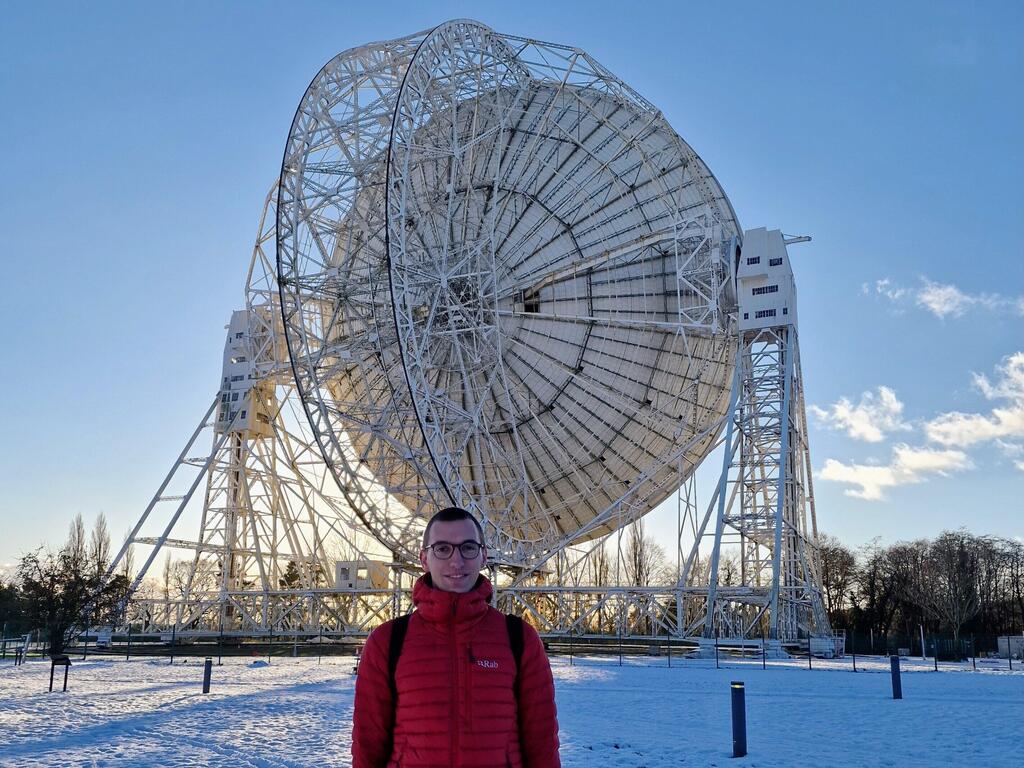
Lukas Böhme, who led the research team from Bielefeld University, with the Lovell Telescope
(Photo: Bielefeld University)
The standard cosmological model (ΛCDM) assumes that matter is nearly uniformly distributed at large scales. These findings suggest either the Solar System’s velocity is much greater than expected, or the matter distribution is far less uniform.
Why this matters
The revelation forces the scientific community to re‑evaluate core assumptions about cosmic structure and motion. If confirmed, either our understanding of how fast we are moving is wrong, or the “background” of the universe—the matter we use to define that motion—is not as homogeneous as our models assume.
“The study highlights how new observational techniques can fundamentally reshape our understanding of the cosmos and how much there still remains to discover in the universe.