


In recent years, more Israeli men have been opting for vasectomies, a procedure long accepted and widespread in other parts of the world. Despite its advantages and minimally invasive nature, many men in Israel still undergo it under sedation or general anesthesia.
A new study conducted at Haifa Assuta Medical Center presents a different picture: 95% of men who chose local anesthesia reported only minimal pain and high satisfaction rate, and 81% said they would opt for the same method again. The study's findings were presented at the annual urology conference held in Eilat.
Gallery
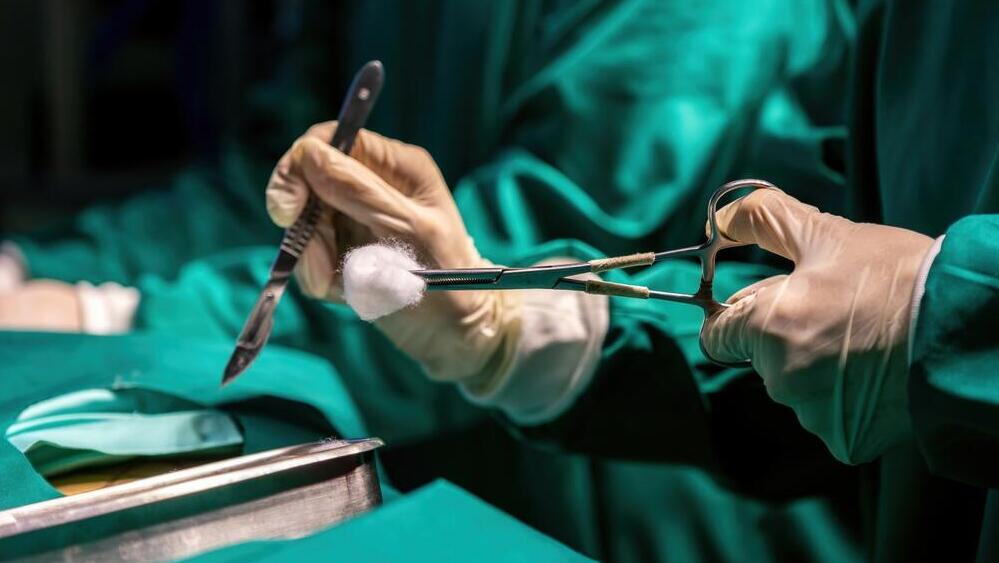
The data tip the balance in favor of performing the procedure under local anesthesia
(Photo: Shutterstock)
“A vasectomy is a surgical procedure that involves cutting the vas deferens (the tubes that carry sperm) as a permanent form of male contraception,” explained Dr. Kabha, Urologist with a subspecialty in Andrology, male infertility and sexual health issues at Assuta Medical Center.
“It’s suitable for men who have completed their family planning, whose partners have difficulty with other birth control methods, or who simply want to take responsibility for contraception."
Over half a million men per year in the U.S.
According to Dr. Kabha, the procedure is routine in the U.S., with over 500,000 men undergoing it annually. “We’re seeing it become more common in Israel too, narrowing the gap with Western countries like the U.S. and Canada,” he said.
Addressing common fears, Dr. Kabha emphasized that a vasectomy has no effect on sexual performance, libido, erection, orgasm, or ejaculation. “About 95% of ejaculate fluid comes from the seminal vesicles and prostate, not the sperm, which the vasectomy blocks,” he explained.
He also pointed to studies, mostly from the U.S., suggesting possible improvements in sexual function post-procedure due to reduced anxiety over unintended pregnancies. “It’s also the most effective method of contraception compared to those available for women, such as IUDs or pills,” he said.
As the procedure has gained popularity, surgical techniques have evolved. “It can be done under local anesthesia or sedation,” said Dr. Kabha. “The traditional approach involves two incisions in the scrotum, but the advanced ‘no-scalpel vasectomy’ method requires only a single puncture."
In this newer method, a sharp-tipped surgical tool creates a small opening in the center of the scrotum, through which vas deferens are accessed, cut and sealed.
The no-scalpel method shortens recovery time and reduces the risk of bleeding or infection, says Dr. Kabha. However, while international guidelines recommend local anesthesia as standard practice, Israeli norms still favor sedation due to social attitudes about masculinity and bodily autonomy.
Vasectomy. In Israel, the traditional technique is still preferred
(Photo: Shutterstock)
High satisfaction
The 2024 study evaluated the feasibility and tolerability of vasectomies under local anesthesia among Israeli men. “Patients could choose their anesthesia method,” said Dr. Kabha. “Of 55 participants, 52 underwent the procedure with local anesthesia. Of them, 32 completed a questionnaire assessing their reasons for choosing the method, pain levels, recovery, and overall satisfaction."
The study found that the leading reasons for choosing local anesthesia included doctor recommendations (75%), fear of general anesthesia (44%), and lower costs (12%)
Pain levels were reported as very low: “The injection pain was mild and tolerable, and the average pain score during the procedure was just 1 out of 10,” Kabha said. Most participants (81%) said they would choose local anesthesia again, with an average satisfaction rating of 4.6 out of 5.”
Still, 19% (six participants) said they would not choose local anesthesia again. One cited pain during the procedure; the others cited discomfort related to undergoing the procedure in an operating room.

Many patients choose local anesthesia based on their doctor’s recommendation
(Photo: Shutterstock)
“In Israel, current Health Ministry regulations require the procedure to be done in an OR, which can feel uncomfortable,” Kabha explained. “In contrast, in the U.S. and Canada, vasectomies are routinely performed in outpatient clinics, making the experience more comfortable for patients.”
Beyond satisfaction and pain ratings, nearly half of all patients reported no post-operative symptoms. Among those who did, discomfort was generally mild and temporary. Within three days, 47% had resumed regular activities, and 65% had returned to sexual activity within two weeks.
Dr. Kabha concluded that no-scalpel vasectomies performed under local anesthesia offer a safe, effective and well-tolerated option for men in Israel. He called for broader use of the method to reduce costs and risks while increasing accessibility.
“Improving the surgical environment and patient counseling could help shift current practices,” he said, adding that allowing the procedure to take place in clinics, as is common in the U.S. and Canada, could further improve patient experience and uptake.
First published: 13:14, 12.27.25