

There’s hardly a new parent who hasn’t wandered bleary-eyed through the house at dawn, wondering when their baby will finally sleep for more than an hour at a time—and more importantly, how to build good sleep habits from the very beginning. So how do you do it? We explored three different approaches, all with the same goal: a full, peaceful night’s sleep.
A few facts about baby sleep
Everyone knows that good sleep is vital for daily functioning—for adults and children alike. In children, it strengthens the immune system, releases growth hormones, and supports memory development, among many other benefits. But until about three months of age, babies don’t have a biological clock. Their day and night cycles are reversed, largely due to immature self-regulation—and it’s up to us to help them learn it.
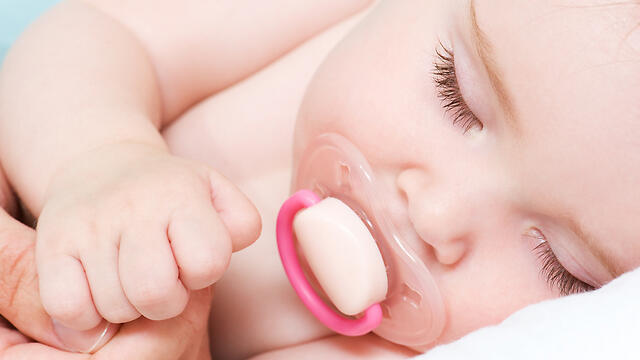
(Photo: Shutterstock)
“We, as adults, get into bed, pull up the blanket, and fall asleep. But a baby gets into bed and doesn’t know what to do,” explains Dorit Kreiser, parent coach, psychotherapist, sleep consultant (CBTI specialist), and author of Shhh... At Night We Sleep. “It’s an innate ability, but not yet established. From around three months, the biological clock develops—the baby is active during the day and sleeps at night, feeding becomes more regular, self-regulation improves, and they can begin to learn the process of falling asleep.”
It all starts with experience
According to Kreiser, “Everything begins with the experiences children have during the day, which affect their night as well.” She elaborates: “During the day, it’s important to create enriching and active experiences. For example, take a short walk in the sun—at least ten minutes a day—and offer tools like play, conversation, touch, hugs, and love. Avoid saying ‘no’ or restricting exploration. Instead, create a sense of safety. When a baby fusses, it’s a signal—they’re telling us something: hunger, tiredness, or something else.”
 Dorit Kreiser Photo: Yifat Rosenberg Sharaz
When should bedtime begin?
“As the sun sets, the body releases melatonin—the sleep hormone. At that time, I recommend dimming the lights, speaking softly, preparing dinner and a short, pleasant bath, saying goodnight to the family and toys, and then ‘good night.’ Place the baby in bed and turn off the light completely—even a small light can interfere with melatonin. Falling asleep can take 15–30 minutes.”
And if the baby cries?
“Go in and touch them, but keep them in bed. This sends two messages: ‘I’m here for you,’ and a sensory-behavioral message that helps them learn to self-soothe. I instruct parents to leave the room every minute or so, then return. This helps the baby fall asleep on their own. Within three to six days, most babies sleep 10–12 hours straight. If they wake up during the night, repeat the same routine.”
She adds that as babies grow, new milestones—like standing up or moving to a toddler bed—can disrupt sleep. “Parents need to be consistent,” Kreiser emphasizes. “Consistency is key to development and gives children confidence because they learn to predict their parent’s response. Every baby is born with the ability to fall asleep. We’ve just replaced it with external aids—like nursing or rocking.”
And what about Friday dinners or special occasions?
“It’s good to teach kids flexibility,” she says. “Let them experience that once a week, dinner time and atmosphere are different. Go out and enjoy, then return home and resume your usual bedtime pattern.”
Of course, nap time: the natural approach
Yuval Elefant, a postnatal doula and facilitator for fatherhood and parenting, rejects the term “sleep training.” The goal, he says, is “to be the most stable, nurturing, and fertile ground we can be—so that our child can grow and develop at their own pace.” The first step, he explains, is a mental one: accepting that our lives have changed and fully surrendering to parenthood.
 Yuval Elefant Photo: Sapir Kusa
“True independent sleep happens through communication and attentive presence—even when it goes against what society dictates,” he says. “To foster security and healthy sleep habits, parents must tune out the noise—advice from culture, family, friends. Many stop letting their babies nap because they’re told it will ruin nighttime sleep. That’s a mistake. Daytime naps actually improve sleep cycles and make nighttime rest easier.”
So what should parents do?
“Simply be there—whether through co-sleeping or staying in the same room. Every parent needs to find their own rhythm until the child feels ready for independence. A baby isn’t a doll you just put down and say ‘goodnight.’ The more we listen and surrender, rather than rush separation, the more naturally we’ll recognize signs of fatigue and respond intuitively. This builds a sense of safety that leads to real independence—one rooted in confidence, not survival.”
According to Elefant, parents should adapt to changes rather than fight them. “Babies go through developmental leaps—growth spurts that affect sleep. They wake at night, and we need to respond in a way that supports their natural process. If we ignore that, we’ll see more night wakings and disrupted sleep cycles.”
Parenting guidance: when the parents are the key
“The baby’s sleep process starts with the parents’ behavior,” says Merav Ben Hur Saban, an Adlerian parenting instructor and Good Night–method sleep consultant. “Some parents are actually afraid of bedtime. They feel they’re entering a twilight zone—it becomes this long, exhausting ordeal.”
 Merav Ben Hur Saban
She stresses that parents must feel calm and grounded before putting the baby to sleep. “Take a moment for yourself—drink a glass of wine, eat something, even go to the bathroom. If you’re hungry, impatient, just waiting for it to end—that’s what you project. Babies read us like X-rays. If I’m anxious, bedtime becomes a nightmare. People think sleep consulting is technical, but it’s really parent coaching. You have to approach it with positivity and belief.”
So where’s the biggest challenge?
“One major hurdle is separating feeding from sleep,” she explains. “It’s a physiological process. We gradually extend the time between bottles to help the baby disconnect food from sleep. Once parents see that it works, their confidence grows—they realize their baby can fall asleep independently. But ultimately, it’s their choice. There’s no one right answer—just awareness of what each choice costs and whether it’s worth it for them.”
What happens after the bottle stage?
“We begin with touch. Each child responds differently—some like gentle pats, others prefer a stroke on the head. The key is that the child feels physical comfort in bed. Then, gradually, we reduce our presence: first sitting beside the bed, then moving the chair farther away each night until we’re out of the room. The rule is simple—if the child cries, they get a response, a touch.”
“Be consistent,” Ben Hur Saban advises. “Lead the process. If your response changes every night—one time a bottle, another time a hug, another time mom, then dad—it confuses them.”
She adds that independent sleep fosters confidence beyond bedtime: “As kids grow, we expect them to get dressed or shower on their own. Sleep is another arena for autonomy and self-regulation.”
Her closing message to parents: “There’s no such thing as perfect. Some periods are harder, and that’s okay. Once you understand the basics, you can handle regression calmly. Sometimes babies just need more touch—they might be sick or moody. They’re not robots. What matters most is that they feel safe—even as they fall asleep.”