

A new, large-scale program to train doctors from the Haredi community is expected to launch in the coming weeks in an effort to address the country’s growing physician shortage and open the worlds of medicine and science to the ultra-Orthodox public. The ambitious goal: adding 2,000 Haredi men and women to health care and treatment professions over the next five years.
The program will be led by Prof. Yossi Mekori, former head of the Planning and Budgeting Committee of the Council for Higher Education and former dean of Tel Aviv University’s Faculty of Medicine. The initiative, led by the Kemach Foundation for Haredi professional advancement, is being carried out in cooperation with the Health Ministry, the Authority for the Socio-Economic Development of the Haredi Sector, the Jerusalem and Jewish Tradition Ministry, JDC and additional partners.
Gallery
A new program seeks to recruit thousands of Haredim into medicine
(Illustration: Shutterstock)
Until now, a more limited program had helped Haredi students integrate into the four-year medical school track, which is intended for bachelor’s degree graduates. Participants received, among other things, preparation for admissions exams, including knowledge tests and personality assessments.
The program will now be expanded, and for the first time support will also be provided to candidates seeking admission to the six-year medical school track. Among other measures, a dedicated preparatory program will be launched, joining existing preparatory programs in which studies are held separately for men and women. It will help candidates close academic gaps and prepare for their studies, including assistance in completing full matriculation exams, preparing for the psychometric exam, coaching for medical school admissions interviews and support during the studies themselves.
Medical studies at the faculties themselves are conducted without gender separation, as is customary at all Israeli universities. The program is intended for Haredi men and women with the ability and motivation to pursue academic studies in medicine and health care professions.
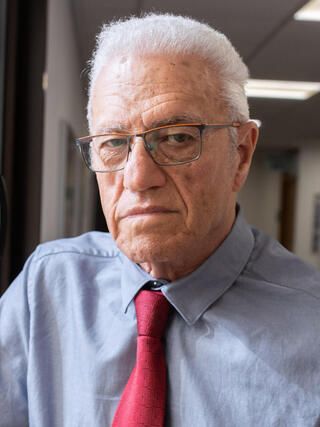 Prof. Yossi Mekori Photo: Alex Kolomoisky
“First and foremost, we want to raise awareness in the Haredi community about training in medical professions, so that already during high school they can complete full matriculation exams,” Mekori said. “There are also high schools in the Haredi community that teach toward full matriculation, and there are university preparatory programs that are considered a substitute for matriculation for those who do not have it. Matriculation is the first and fundamental stage in admission to medical schools.”
In the next stage, assistance will be provided for the psychometric exam, which is required for the six-year track, followed by preparation for personality assessments. The program will also support students after admission through financial aid in the form of scholarships, academic mentoring and assistance from senior students or a dedicated team, and exposure to what Mekori calls “the lifestyle of a doctor.”
No lowering of standards
“There is no attempt here to lower the bar,” Mekori clarified. “There will be no special conditions, only support to bring them to the required level. Getting into medical school is very difficult, and they will have to meet the accepted standard.”
“We already have a few examples of Haredi doctors who are building very successful careers in general hospitals,” he said. “I met Haredi women nearing the end of their studies — brilliant students. It made clear to me how much potential exists. They understand that they will treat whoever needs treatment. One is going to become a gynecologist, another is considering neurology or psychiatry.”
“This is the great revolution, and I see it as a historic matter,” he added. “Medical studies take place without separation, like for all medical students, based on the understanding that you do not choose your patients. In Maimonides’ physician’s oath, it is written that you treat anyone who needs your help. A crack has already opened, and it must be widened — to bring those who want it into the scientific world, with a profession more sacred than any other.”
Mekori said that only a few dozen Haredi students currently study medicine, and many drop out even before the admissions stage. The Kemach Foundation confirmed that in recent years there has been an increase in the number of Haredim beginning medical studies, but the completion rate remains relatively low, among other reasons because of academic, financial and social gaps.
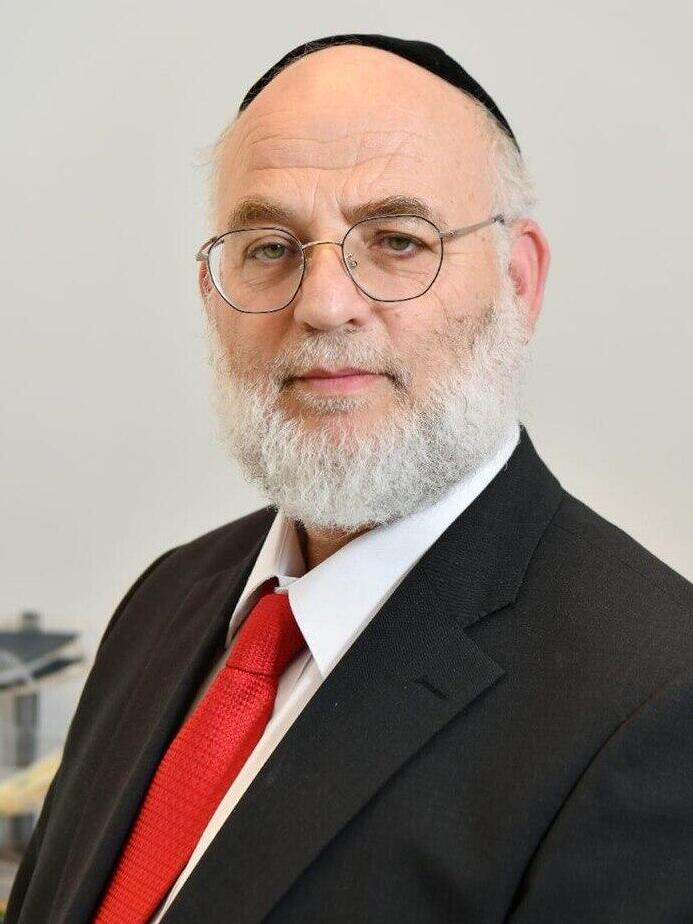 Kemach Foundation CEO Moti Felldstein Photo: Pinchas Emanuel
As a point of comparison, Mekori cited the Haredi community in the United States. “For years I trained in the U.S., and there a Haredi American studies core curriculum subjects, engages in research and medicine, and at night goes to yeshiva,” he said. “I have Haredi colleagues who are success stories at the clinical and research levels — and that is what we want to reach.”
“I have no doubt that the Haredi community is a community with abilities and potential, and those abilities must be directed and helped to be realized,” he said. “I see this as a Zionist, Israeli and social act of the utmost importance. When I hear Knesset members saying there is no need for core curriculum studies — including secular ones — it makes me extraordinarily angry. There is an opportunity here to expose the Haredi population to the scientific world and to the medical profession.”
Some of those interested in the program will also be directed to the profession of physician assistant, which is currently being advanced within Israel’s health system.
“In the U.S., this is a very sought-after profession — master’s degree training with broad authority and close work with doctors in hospitals,” Mekori said. “We will direct some of the students in that direction.”
The shortage and the Yatziv reform
The program comes against the backdrop of a chronic shortage of medical personnel. According to a report on Israel’s health system in 2023 in comparison with the OECD, the number of active physicians in Israel stands at 3.5 per 1,000 people, compared with an average of 3.9 in developed OECD countries.
'This is the great revolution, and I see it as a historic matter'
(Illustration: Shutterstock)
The gaps are also geographically pronounced. In 2021-2023, the average number of physicians per 1,000 people in the Haifa district stood at 5.5, in Tel Aviv at 5 and in the Central District at 4.2, all above the national average. The southern district, at 2.7, the northern district, at 3.2, and Jerusalem, at 3.4, were below it.
The shortage is expected to worsen as a result of the Yatziv reform, which disqualified medical schools abroad that did not meet the criteria set by the Health Ministry. The reform is expected to hit the periphery especially hard, where many doctors are graduates of institutions that were disqualified.
“Israel ranks very low compared with OECD countries in the number of students trained in medicine, and precisely because of this, we believe increased effort should be focused on Haredi human capital, some of which had previously been directed to high-tech, which has eroded in recent years,” said Moti Felldstein, CEO of the Kemach Foundation. “Our role will be to ensure that graduates of the program can preserve their Haredi identity even within such demanding studies.”