

A meteorite discovered in the Sahara Desert in 2022 formed in the Martian crust at least 4.1 billion years ago, according to a new study published this week. The reddish igneous rock could be the oldest of the 435 Martian meteorites currently known to have been found on Earth.
Researchers say the composition of the meteorite, discovered in Mali and named Teghaza 001, offers insights into conditions on Mars early in the planet's history. The findings provide new evidence of liquid water on the Red Planet and strengthen the theory that ancient Mars may have had an environment capable of supporting microbial life.
Gallery
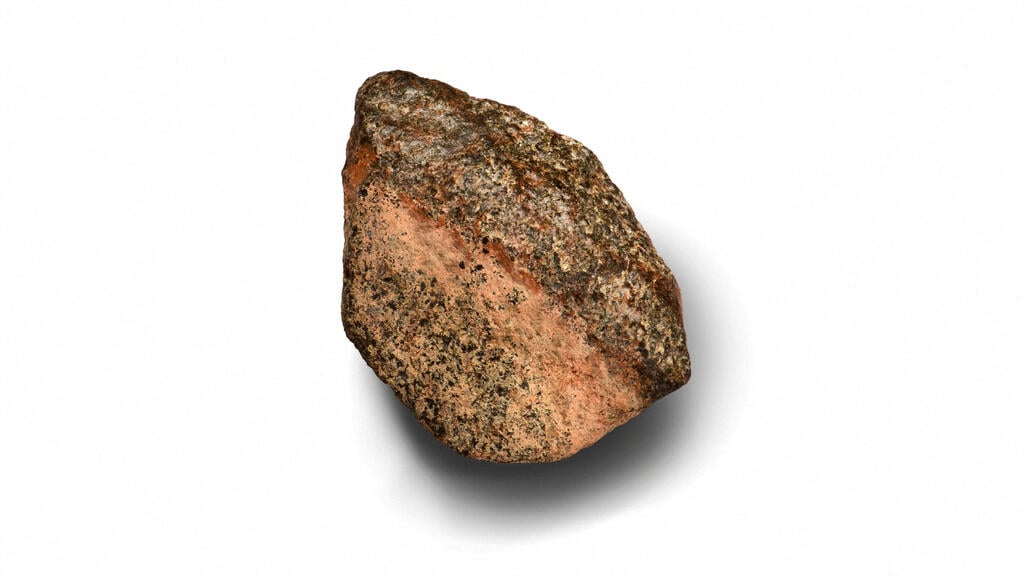
The ancient meteorite
(Photo: Darryl Pitt/Maine Mineral & Gem Museum/via NASA/Handout via REUTERS)
Planetary scientist Yang Liu of NASA's Jet Propulsion Laboratory (JPL) in California, which is managed by the California Institute of Technology (Caltech), described the meteorite as "a witness to a time when Mars was likely warmer and wetter than it has been for most of its history."
The meteorite's chemical composition, a type of coarse-grained rock known as gabbro, indicates that it came into contact with water as it slowly cooled and crystallized beneath the Martian surface. It was part of the Martian crust, the planet's outermost layer, but formed from magma originating much deeper, in the planet's mantle.
Today, Mars is a cold, dry and desolate planet. However, extensive evidence suggests that billions of years ago, water flowed across its surface in rivers and lakes, and that an ocean may even have existed in its northern hemisphere.
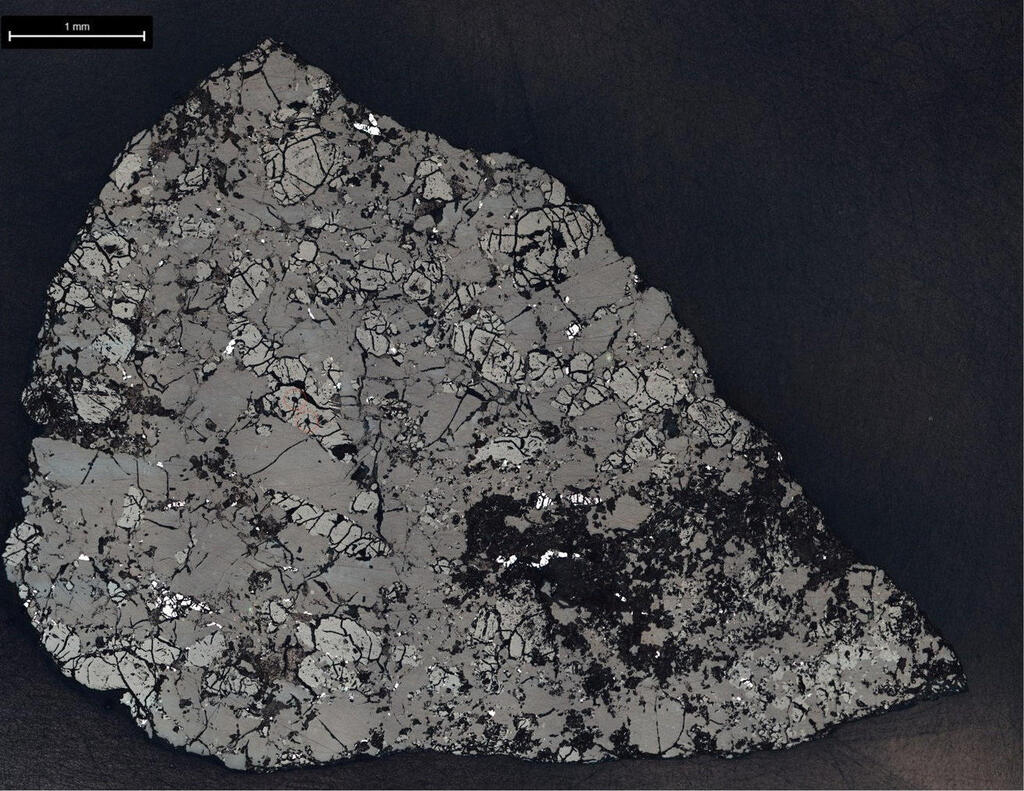
The meteorite's composition
(Photo: NASA/JPL-Caltech/Handout via REUTERS)
Teghaza 001 was discovered in eight fragments in the desert, about 34 kilometers (21 miles) from the village of Bir Chali in Mali. The largest fragment is roughly the size of a fist. Its main minerals are feldspar and pyroxene, and it contains zircon crystals bearing the element uranium. Researchers determined its age using a method based on the radioactive decay of uranium into lead over time.
"Martian meteorites are our only samples from Mars, forming our basis for understanding the formation and differentiation of early Mars and allowing us to evaluate in laboratories whether ancient Mars could have supported habitable conditions," said Liu, lead author of the study on the meteorite, published in the scientific journal Science.
"The detailed information we can extract from these meteorite samples complements and validates our exploration of Mars using satellites, landers and rovers," Liu added.
Searching for evidence of past life; an illustration of the Curiosity rover on Mars
(Illustration: NASA)


The information also offers clues to how Mars' evolution diverged from that of Earth when both planets were in their infancy and life was beginning to take hold on Earth, Liu said. Earth, Mars and the other planets in the solar system formed about 4.5 billion years ago.
Only three Martian meteorites, including Teghaza 001, date back to the planet's earliest history. One of them was discovered in Antarctica in 1984 and was initially estimated to be about 4.5 billion years old. However, later analysis determined that it was roughly the same age as Teghaza 001. According to the new study, Teghaza 001 is probably the older of the two.
Water seeped deep into the crust
Isotopes, different forms of the elements oxygen and hydrogen found in the meteorite, indicate that water seeped into the deeper layers of the Martian crust, as it does on Earth, and mixed with molten rock originating in the planet's mantle.
"Multiple lines of evidence in Teghaza 001 suggest Mars' surface had water at more than 4.1 billion years ago. This is reflected by hydrogen isotopes in phosphate and oxygen isotopes in minerals and bulk samples," Liu said.
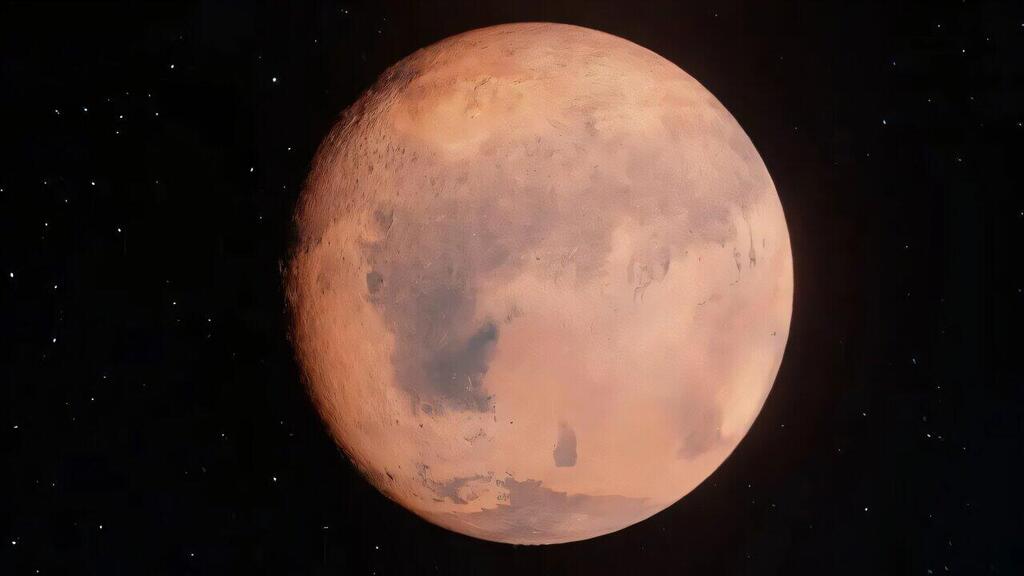
It once looked very different; the planet Mars
(Photo: NASA)
"The findings lend support to the idea that early Mars had the necessary ingredients and conditions to harbor life, but do not directly answer the question of whether there was life on Mars," said planetary scientist Lee Saper, a co-author of the study, from NASA's Ames Research Center and the BAER Institute in California.
"The rock is a snapshot in time that shows how a wetter early Mars with a thick atmosphere could have supported habitable conditions but that these conditions were waning rapidly over the first billion years or so of Mars' existence, trending towards its currently dry and inhospitable environment," Saper said.
The chemical composition of Teghaza 001 shows that it differs from other known Martian meteorites. It may have originated in the planet's southern highlands, possibly near Hellas Basin, one of the largest impact craters on Mars, Liu said.
The meteorite also has an extraordinary story of its own. "It was blasted by an impact from the surface of Mars and was flying through space until its path crossed that of Earth. It then entered the atmosphere as a meteor and survived as a meteorite by landing in the Sahara," Liu said. "We do not know when the sample landed on Earth."