


The idea sounds like science fiction: parents preventing devastating genetic diseases before a child is born by correcting a tiny error in an embryo’s DNA. But the same tool raises a more troubling question: could technology meant to save lives eventually be used to select traits such as height, eye color or cognitive ability?
A new study from Columbia University has brought that debate back to the center of medicine. A team led by developmental biologist Dieter Egli reported that it carried out precise genetic editing in human embryos at the earliest stages of development, using embryos that were not intended for implantation or pregnancy. The work was posted online as a preprint and has not yet undergone peer review.
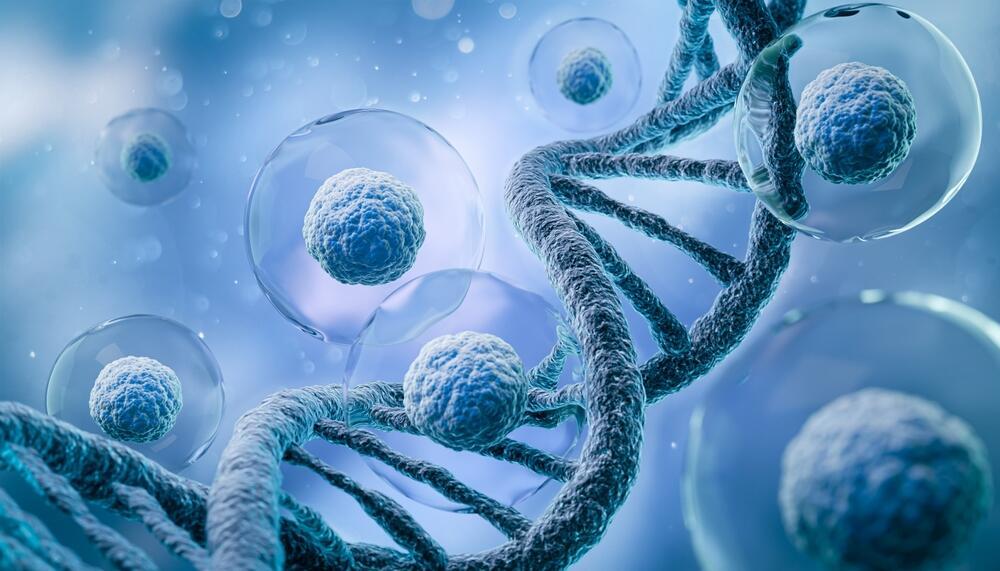
The researchers used a CRISPR-related method known as base editing, which is often described as a more precise way to alter single “letters” in the genetic code without cutting both strands of DNA. Earlier embryo-editing attempts using conventional CRISPR raised concerns about severe DNA damage, including the loss of entire genes or chromosomes.
“People have been looking for many years for a way to correct DNA changes that cause disease,” says Prof. Lina Basel-Salmon, national director for innovation and research in genomic medicine at Maccabi Healthcare Services. She explains that the major breakthrough came with CRISPR, which allowed scientists to reach a specific point in DNA, cut it and rely on the body’s natural repair mechanisms to correct the genetic error.
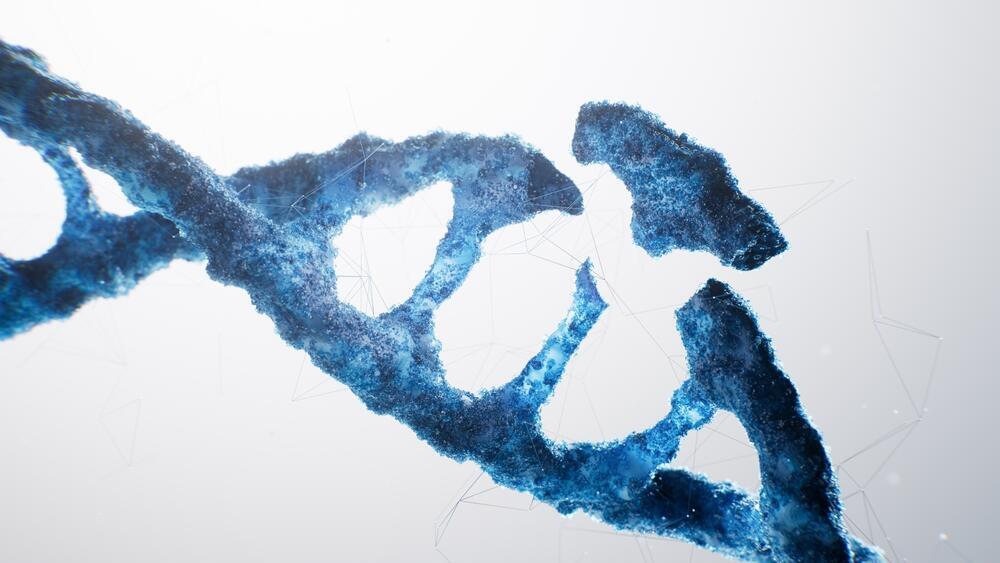
But the original CRISPR approach had a fundamental problem. DNA is built as a double helix made of two strands, and early CRISPR methods cut both of them.
“The fact that CRISPR cut in this way caused many errors,” Basel-Salmon says. “When both strands of DNA are damaged, repair takes place, but the repair is not always good, and additional errors can be introduced along the way. A double-strand break in DNA can cause chromosomes to break.”
That is where base editing comes in. Unlike classic CRISPR, base editing is more like correcting a single typo: changing one letter in the genetic code without cutting out whole sections.
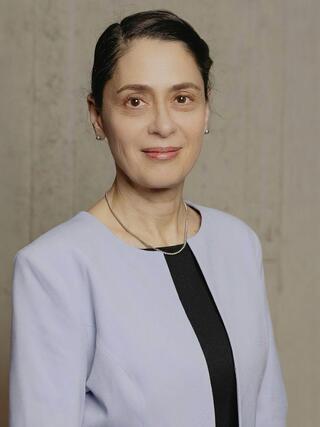 Prof. Lina Basel-SalmonPhoto: ERDERA
“When the cut is introduced in this way, only one of the two strands is cut, which does not damage the DNA as much,” Basel-Salmon says. “That is why the number of errors after the procedure drops dramatically, and the chromosomal damage is no longer seen.”
That, she says, is why the Columbia study has drawn such interest.
“This study is groundbreaking in the sense that it examined whether base editing in embryos is safer than previous methods, and whether using this method really makes it possible to reach the point of treating a genetic disease at the embryonic stage without causing as much damage as earlier methods,” she says.
The distinction is not merely technical. Existing CRISPR-based treatments are usually performed after birth and target a specific tissue. Cells may be removed from the body, edited and returned to the patient. Such changes are not inherited by future generations because they do not alter reproductive cells or every cell in the body.
Embryo editing is different. It is carried out at the earliest stage of development, meaning the change could theoretically become part of every cell.
“What is done after birth does not pass to future generations,” Basel-Salmon says. “You correct the error only at the level of a certain tissue; it is not in reproductive cells. But if you introduce a change at the embryo stage, then theoretically, if you succeed, that correction should pass from generation to generation. You are really correcting all the cells, because you started at a very early stage.”
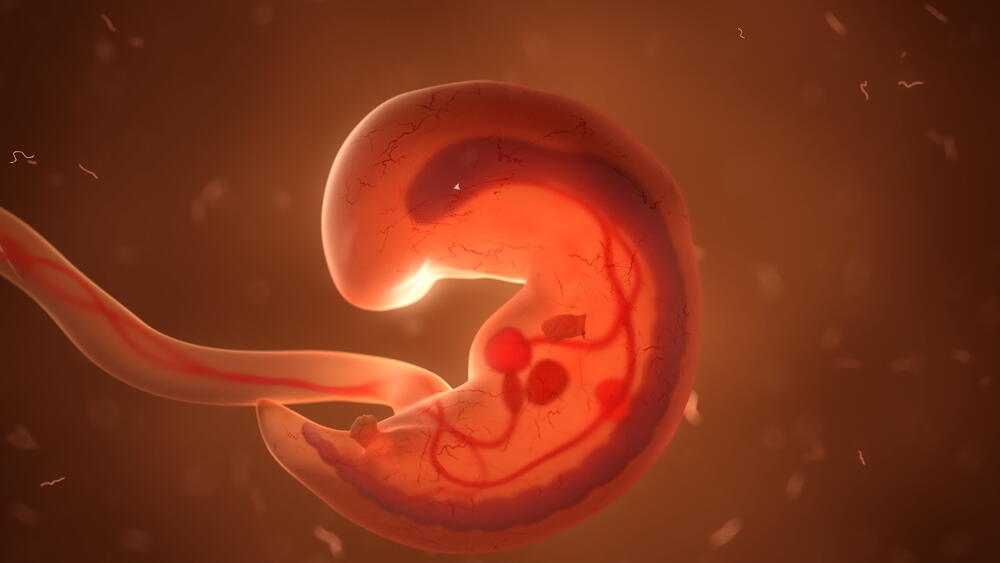
Embryo editing is different. It is carried out at the earliest stage of development, meaning the change could theoretically become part of every cell
(Photo: Shutterstock)
In the Columbia work, the researchers focused on genetic targets linked to cholesterol and heart disease risk, as well as fetal hemoglobin, which is relevant to blood disorders such as sickle cell disease. The Wall Street Journal reported that the study showed some successful edits without the kind of damage seen in earlier embryo-editing efforts, but also found a major limitation: nearly 80% of the embryos became mosaics, meaning they contained a mixture of edited and unedited cells.
One of the study’s notable findings involved how the editing system was delivered into the embryo. When the researchers introduced the base editor as a protein, the embryos continued developing to the blastocyst stage, when an embryo is several days old and made up of hundreds of cells. But when the editing system was introduced as RNA, temporary genetic instructions meant to make the embryo’s own cells produce the protein, development stopped at earlier stages.
“They found that the way you introduce this correction determines a very basic biological mechanism,” Basel-Salmon says. “When they tried to perform the correction by introducing an RNA molecule, the embryos did not develop. But when they introduced a protein, the embryos continued to develop. That is very significant biologically.”
Still, the distance between a laboratory result and clinical use remains enormous. The main unresolved problem is mosaicism, in which not all embryo cells are fully corrected. In a clinical setting, that could mean a child developing from such an embryo might still carry a disease-causing change in some cells.
“There were still problems; it was not ideal,” Basel-Salmon says. “They took many cells from different embryos, and the correction rate was not identical in all embryos. They did not reach 100% correction. But because there was less damage, this is still a very significant study.”
That is where scientific excitement meets medical caution. The ability to edit DNA in an embryo with greater precision does not mean the method is safe enough, especially when the change may be inherited by future generations. Unlike gene editing in the body cells of a sick patient, this is an intervention at the earliest stage of life, before a person is born and before that person can consent to a change that could affect both them and their descendants.
“In most countries, it is illegal to make genetic changes in embryos and then carry out implantation,” Basel-Salmon says. “There was a case in China where this was done, and the researcher was sentenced to several years and served time in prison.”
(Photo: Shutterstock)
She is referring to the 2018 case of Chinese scientist He Jiankui, who announced the birth of the world’s first gene-edited babies, triggering global condemnation and later a prison sentence. Since then, scientists have drawn a sharp distinction between research on embryos that will not be implanted and any attempt to create a pregnancy from an edited embryo. Using embryo editing to create babies remains illegal in the United States and many other countries.
In the current study, Basel-Salmon stresses, the work was a proof of capability only.
“They did it in embryos and showed through laboratory methods that they had indeed succeeded in changing what they wanted to change,” she says. “Everything was under laboratory conditions.”
The larger question is not only whether embryos can be edited, but why they should be. In IVF today, many embryos can already be tested at an early stage to identify whether they carry a disease-causing genetic change. In many cases, doctors can then select an unaffected embryo for implantation without editing its DNA.
“So why do we need to start correcting, with all the risks?” Basel-Salmon asks. If embryo editing is ever medically justified, she says, it would likely be limited to rare cases.
“In general, this kind of correction could suit couples with fertility problems or advanced age and very few embryos, for example, when the laboratory has checked all the embryos and there are no healthy embryos left,” she says. “Other situations could include cases in which both partners carry a genetic disease, and sometimes more than one disease, so the chance of finding an embryo without any disease that is suitable for transfer is very small.”
Even if clinical use remains distant, the research may matter immediately for science.
“There is no doubt that the discovery is very significant,” Basel-Salmon says. “If we want to grow embryonic cells after introducing different genetic changes and understand disease mechanisms or test the effect of new drugs, this could certainly be a leap forward in our ability.”
The darker concern is whether this kind of technology could one day allow parents to engineer children by preference. Basel-Salmon says that, for now, the answer is far from the science-fiction scenario.
“It is forbidden almost everywhere,” she says. “And if that is going to change, there is of course the legal and ethical problem for us as physicians. Even if I am talking about severe diseases, as of today, engineering children however we want is impossible, because traits such as height, IQ, eye color and hair color usually do not depend on a change in one gene. They involve a combination of genetic changes in many genes, and we do not know, and I hope we will not know, how to change all of them together in order to bring more beautiful or taller babies into the world.”
On severe disease, she is more cautious, and does not completely rule out the possibility that very exceptional cases could one day be considered.
“Right now, it is hard for me to see how laws would be changed in many countries, because there are so many ethical dangers and possible improper uses,” she says. “Perhaps there will be very specific situations in the future where introducing a genetic change into embryos will serve worthy purposes. The control mechanisms will have to be very reliable so that, first of all, we do no harm, because the physician’s oath says: above all, do no harm. That is very important to remember even as we move forward and discover very innovative things.”
For all the dramatic headlines, the new study does not mean gene-edited babies are about to be born. But it does mark another step toward a future that medicine, science and society can no longer treat as hypothetical.