

On the morning of October 7, Doron Mizrahi, 28, was attending the Nova music festival. He survived the massacre, evacuated wounded people from a roadside bomb shelter that became known as the "death shelter" and reported for reported for reserve duty with the Givati Brigade's reconnaissance unit that same evening. Since then, he has served more than 350 days in the reserves, while his alcohol and drug use steadily escalated.
"Right after October 7, my drug was the war, the adrenaline and the thrill of reserve duty," he says. "It provides a kind of shield because you're not thinking about how you're doing or how you're feeling. You're focused on surviving. But when my life wasn't in danger, I didn't know how to handle the peace and quiet because inside, I was still at war. So you shut down your emotions and try to escape as intensely as possible."
Gallery
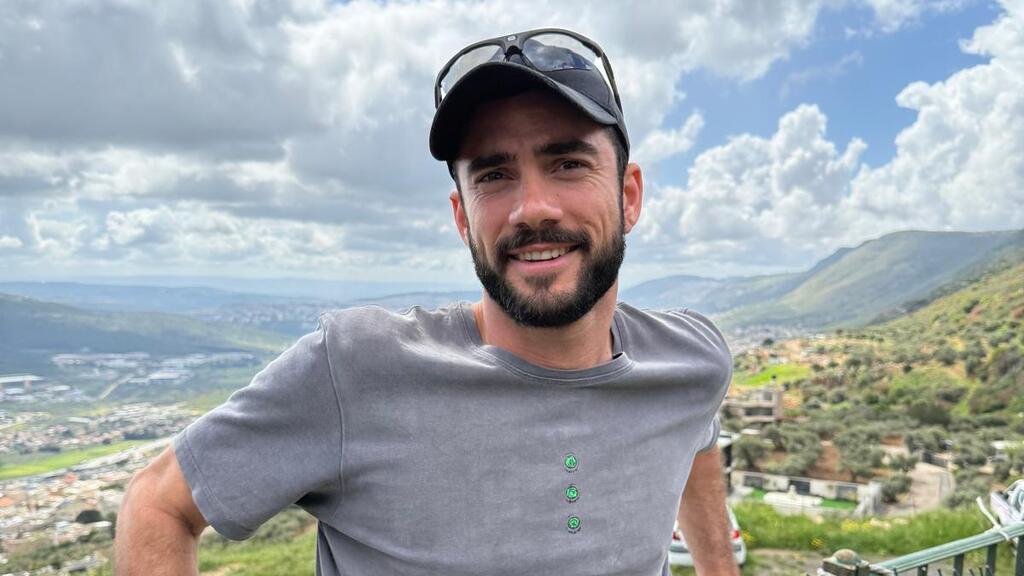
Doron Mizrahi, a Nova survivor who struggled with addiction. 'Beyond the amounts, which were destructive, it was the irresponsibility. I was using substances at work and while driving. I was a wreck'
(Photo: Courtesy of Doron Mizrahi)
The distress, he says, began the moment the music stopped and the rocket barrage started. It intensified when he came under fire, lost friends and fought in Gaza.
"In an attempt to cope with the emotional pain I was carrying inside, I just kept increasing my use. Between rounds of reserve duty, I did what I knew and what was available to me," he says. "But at a certain point, it stops working. You keep using more and find yourself at rock bottom. No matter how much I used, it didn't help me feel any more whole. I was falling apart."
Doron Mizrahi: "At a certain point, it stops working. You keep using more and find yourself at rock bottom. No matter how much I used, it didn't help me feel any more whole. I was falling apart."
His substance use seeped into every aspect of his life.
"I worked with teenagers as a youth instructor, and I would show up under the influence,” he recalls. "I felt pathetic, lecturing them during a pre-trip briefing about not drinking and driving or doing drugs when I'd just done all those things myself. Beyond the amounts, which were destructive, it was the irresponsibility. I was using substances at work, while driving and during family time. I was a wreck."
Building relationships, launching careers and serving in the reserves
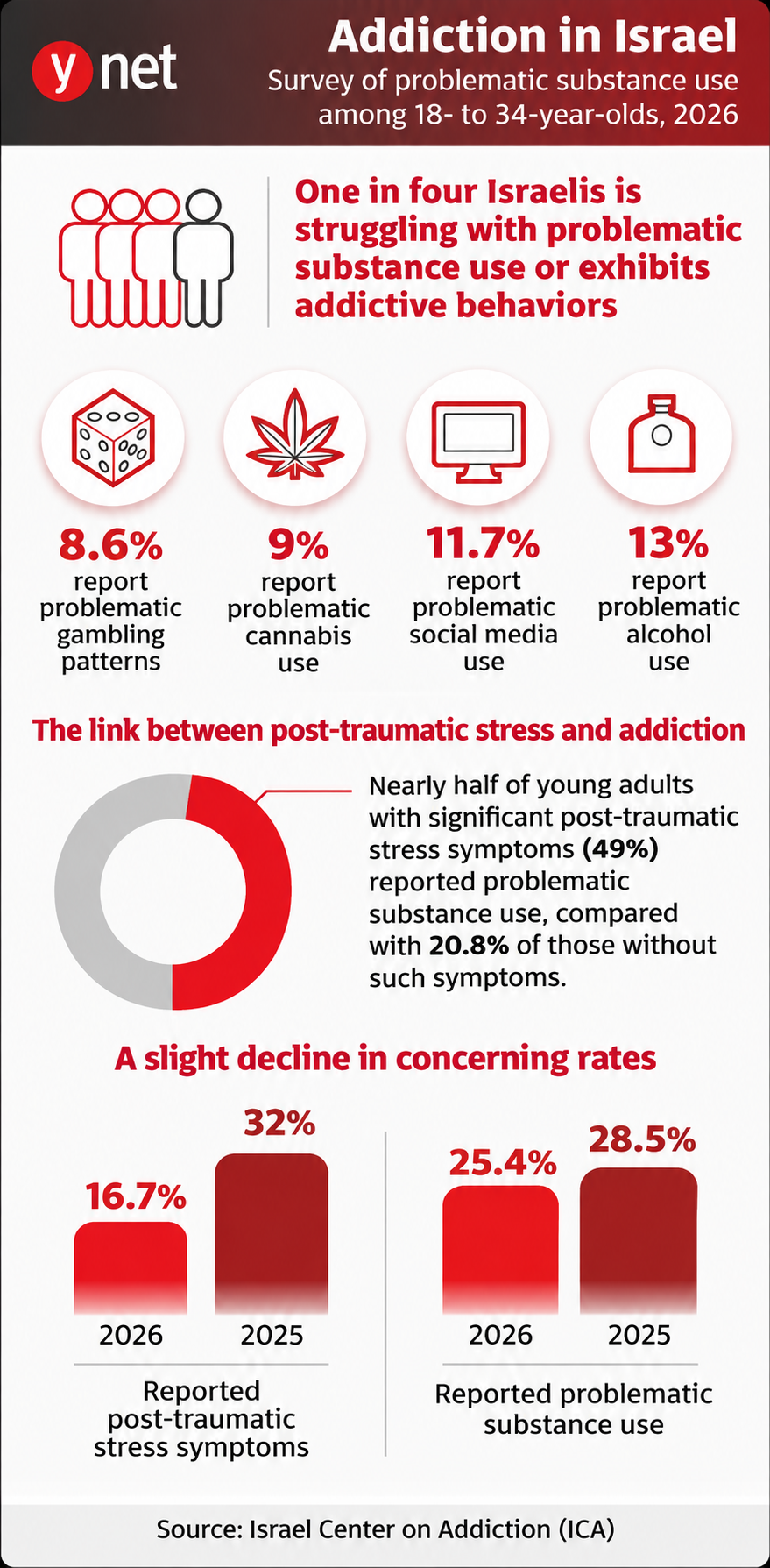
Mizrahi is far from alone. A new report by the Israel Center on Addiction (ICA) found that one in four Israelis ages 18 to 34 struggles with problematic substance use or exhibits addictive behaviors.
According to the findings, 13% of young adults reported problematic alcohol use, 11.7% reported problematic social media use, 9% reported problematic cannabis use and 8.6% reported problematic gambling patterns. The survey was conducted this year among 930 young men and women using self-reported responses to validated questionnaires.
"Problematic use begins when a person realizes that their substance use is causing harm in everyday life or affecting their functioning, health, relationships or quality of life, even if they have not yet developed a full-blown addiction," explains Inbal Dor Kerbel, the center's CEO.
"For example, it might start with drinking one or two glasses of wine at the end of the day, but gradually reach the point where I need an entire bottle every evening to fall asleep. At the far end of the spectrum is addiction, a state in which substance use is controlling your life."
One of the report's most striking findings concerns age. Adults ages 26 to 34, like Mizrahi, showed higher rates on some measures than those ages 18 to 25, even though they are at a stage of life generally associated with greater stability.
The rate of problematic cannabis use, for example, was 12% among the older group, compared with 5.3% among their younger counterparts. For alcohol, the respective rates were 14% and 12%.
"This age group is at a stage when many people are shaping their adult lives, building relationships and families and investing in the early stages of their careers. But for many of them, recent years have been marked by prolonged reserve duty, uncertainty and ongoing disruptions to their life plans," explains Prof. Shaul Lev-Ran, the center's founder and academic director.
"This reality may explain the differences we're seeing between the age groups."
When trauma fuels addiction
The report also points to a strong link between post-traumatic stress and addiction. Nearly half of young adults with significant post-traumatic stress symptoms (49%) reported problematic substance use, compared with 20.8% of those without such symptoms.
The rate of problematic gambling among those with significant symptoms was nine times higher, while rates of problematic alcohol and opioid painkiller use were 5.6 times higher.
"Wherever there is trauma, we must also be alert to the risk of developing problematic substance use and addiction," Lev-Ran says.
Nevertheless, the report offers a cautiously encouraging finding: For the first time, there was a slight decline in the rate of problematic substance use, from 28.5% in 2025 to 25.4% in 2026. The decline in the proportion of young adults reporting post-traumatic stress symptoms was even sharper, falling from 32% to 16.7%.
"At the height of security-related events, we see a sharp rise in stress and anxiety levels and in the proportion of people developing post-traumatic stress symptoms. But as the situation calms down, some people manage to recover and resume their lives, while for others, the symptoms persist and post-traumatic stress disorder develops," Dor Kerbel explains.
"Since 'Iran 2' [the second round of fighting between Israel and Iran], we've been experiencing a period of relative calm in terms of the sense of being at war, allowing those people to recover."
According to Dor Kerbel, treatment should not wait until someone develops an addiction.
"One in four is an enormous number. It means this affects nearly every household in Israel," she says.
The ICA has developed a screening questionnaire designed to help family physicians identify warning signs of problematic substance use and is working to introduce it into Israel's health maintenance organizations.
"Identifying warning signs is enough to intervene at an early stage. We do this in many areas of medicine, and there's no reason we shouldn't do the same when it comes to addiction," she adds.
The miracle he almost squandered
For Mizrahi, the turning point came only when he realized that drugs and alcohol were endangering the life he had narrowly escaped losing that morning at Nova.
"At some point, it dawned on me that I'd won the lottery by surviving Nova. It was divine providence that I made it out alive. And now I was wasting that miracle and slowly killing myself, all because I didn't know how to ask for help or seek treatment?" he says.
"I had to experience a great deal of pain before I could finally stop suffering."
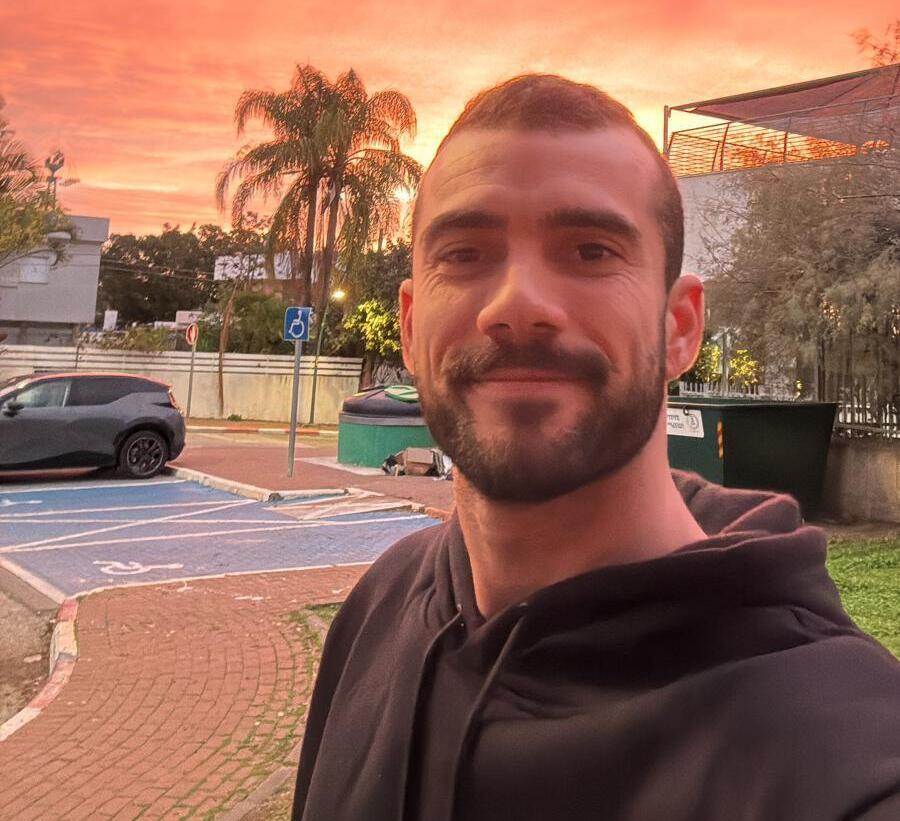
Doron Mizrahi: 'It took me a very long time to call it an addiction. It's hard to admit'
(צילום: אלבום פרטי)
His path to recovery began after he connected with the Nova Tribe Community Association nonprofit, which provides social and therapeutic support to festival survivors and bereaved families.
"When I realized there was a support system that could help me, I started using it. I went on retreats and took part in rehabilitation programs that gave me tools to cope with what I'd been through," he says.
At the same time, he began attending Narcotics Anonymous meetings, which became a significant part of his recovery.
"It took me a very long time to call it an addiction. It's hard to admit. But once you're no longer alone and you're willing to accept support from people like you, you put out the fire and begin healing the wounds," Mizrahi says.
He has now been free of drugs and alcohol for more than two years and works as a rehabilitation counselor at a residential mental health stabilization facility, where he passes on the tools that helped him recover.
"We're living through an extremely complicated time. On the one hand, the traumas keep coming. On the other, the sources of instant relief — nicotine, pornography, alcohol, drugs, endless Instagram scrolling, sugar and shopping — are becoming increasingly accessible and readily available. But I want to believe that awareness is also growing and that we're becoming wiser," he says.
He has a message for others struggling with addiction:
"It's hard, it's frightening, it's not easy, but it's possible. Life becomes much more pleasant when we're willing to face discomfort, pain and emptiness and talk about these things."