

The Technion and Rambam Health Care Campus have signed an agreement to establish a joint center aimed at accelerating the development of medical treatments and technologies by bringing physicians, scientists and engineers together under one roof.
The Andrea and Lawrence Wolfe Center for Translational Medicine and Engineering will be established in the Helmsley Health Discovery Tower at Rambam and will occupy two floors, the institutions said.
Gallery
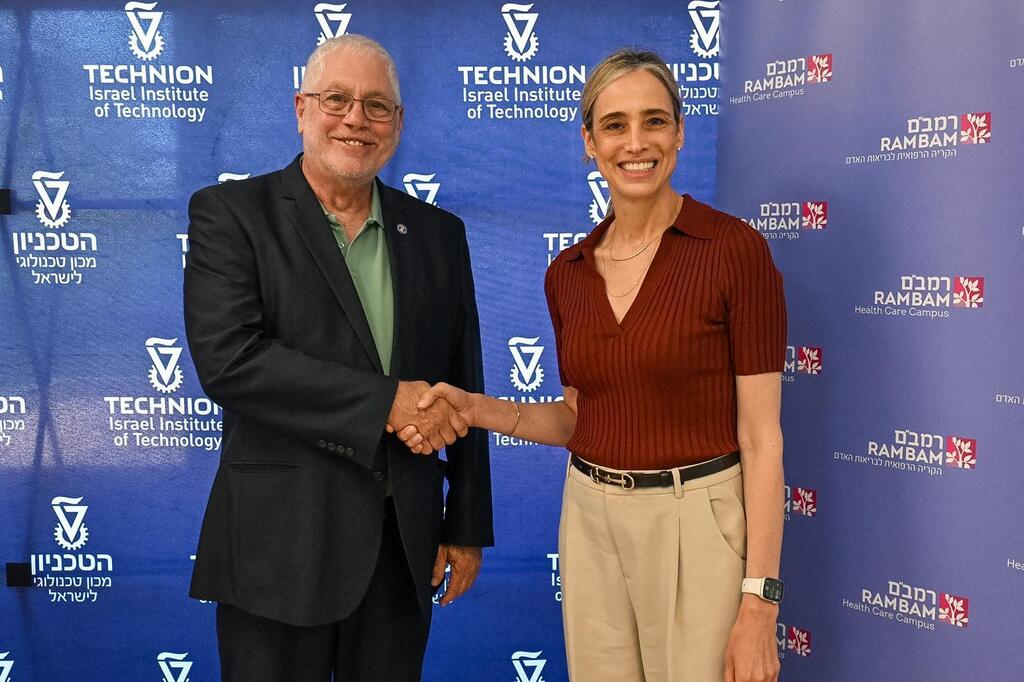
Technion President Professor Uri Sivan and Rambam Director General Dr. Michal Mekel
(Photo: Rami Shlush, Technion)
The center, funded through a donation from Andrea and Larry Wolfe, will include research laboratories focused on artificial intelligence in medicine, biochips, drug delivery and molecular therapies, medical devices, tissue engineering, regenerative medicine and health care systems.
The goal is to shorten the path between scientific and engineering research and clinical use, allowing problems identified at the patient’s bedside to become research projects and new discoveries to be translated more quickly into treatments.
Technion President Professor Uri Sivan and Rambam Director General Dr. Michal Mekel signed the agreement.
“The joint agreement we are signing today is a natural continuation of the vision of the founders of the Ruth and Bruce Rappaport Faculty of Medicine, who understood the power of combining medicine, science, engineering and technology for the benefit of humanity,” Sivan said.
“The combination of a research hospital and a technological university provides the entire value chain, from the patient’s bedside to the research and development laboratories and back to the patient’s bedside.”
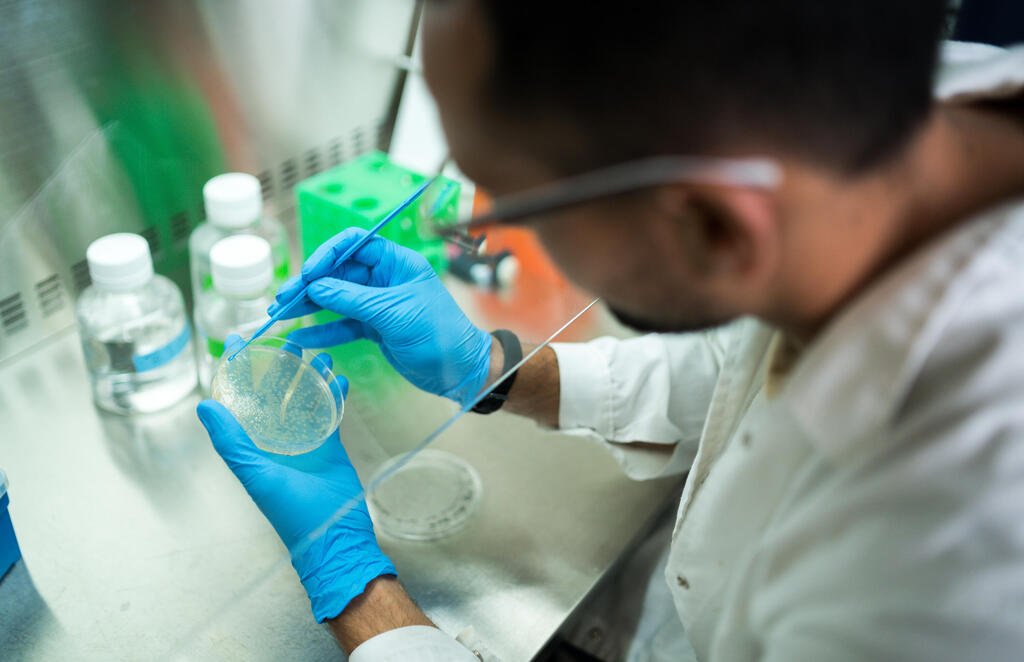
Medical research at Technion
(Photo: Courtesy of Technion)
Sivan also thanked Andrea and Larry Wolfe for supporting the project, describing them as longtime partners of both institutions.
“This is a wonderful example of the power of philanthropy to drive major initiatives that would not otherwise get underway,” he said. “Andrea and Larry have not only contributed generously but have embraced the vision at the heart of this collaboration — the aspiration to solve major problems facing humanity by combining science, medicine and engineering.”
Mekel said the center reflects the growing importance of cooperation between medicine and engineering. She cited Kurt Semm, regarded as a pioneer of modern laparoscopy, whose work combined medical expertise with engineering ingenuity.
“Today, as researchers and physicians, it is clear to us that medicine cannot exist and advance without research — not only research in the life sciences, but also in engineering,” Mekel said. “Breakthroughs emerge when different worlds meet, and in our case, when medicine meets engineering.”
She also credited former Rambam director general Professor Rafi Beyar with advancing the vision for such a center nearly two decades ago.
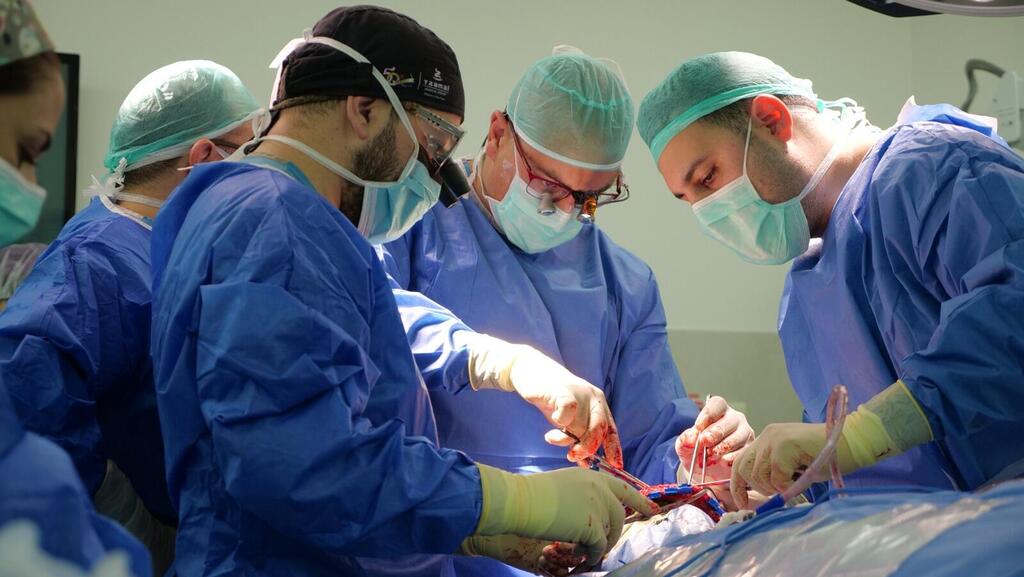
Rambam team during specialized surgery
(Photo: Rambam Health Care Campus)
Professor Noam Ziv, deputy senior executive vice president for engineering, life sciences and medicine at the Technion, said the center was being established amid a steady increase in joint projects involving Technion and Rambam researchers.
He pointed to a recent competition for a joint research grant on artificial intelligence in the “hospital of the future,” won by a team that included researchers in architecture and data sciences alongside senior Rambam medical and administrative staff. The breadth of that team, he said, demonstrated the potential scope of collaboration between the institutions.
Prof. Lior Gepstein, director of Rambam’s Research Division and a faculty member at the Technion’s Rappaport Faculty of Medicine, said the center was intended to overcome traditional disciplinary boundaries.
“The complex challenges of medicine do not stop at the boundaries of a single discipline,” Gepstein said. “To find new solutions, we must bring together medical teams with firsthand knowledge of patients’ needs, scientists who investigate the mechanisms of life and engineers who know how to transform an idea into a practical solution.”
Gepstein said the center’s location inside Rambam was intended to facilitate a direct link between clinical needs and research.
“The agreement we are signing today is not the finish line, but the starting point,” he said. “The center’s success will be measured not only by the number of studies, papers or patents it produces, but by our ability to build a shared community, transform medical needs into practical solutions and bring those solutions to patients.”
Senior officials from both the Technion and Rambam attended the signing ceremony, including administrators, researchers, medical leaders and representatives responsible for academic affairs, research, operations, finance and external relations.