

Eight scientists, including two from Israel, will receive this year’s Wolf Prize, the most prestigious prize awarded in Israel. The eight 2026 laureates in physics, chemistry, medicine and mathematics were announced Thursday evening at an event at the President’s Residence in Jerusalem.
The ceremony was attended by President Isaac Herzog and Professor Osnat Luxenburg, acting chair of the Wolf Foundation Council. The laureates will receive the prize at the Knesset in June 2027.
Wolf Prize in Mathematics
Professor David Kazhdan of the Hebrew University and Professor Joseph Bernstein of Tel Aviv University will receive the prize “for their foundational work in representation theory, automorphic forms and algebraic geometry, and for their contributions to the creation of geometric representation theory.”
Gallery
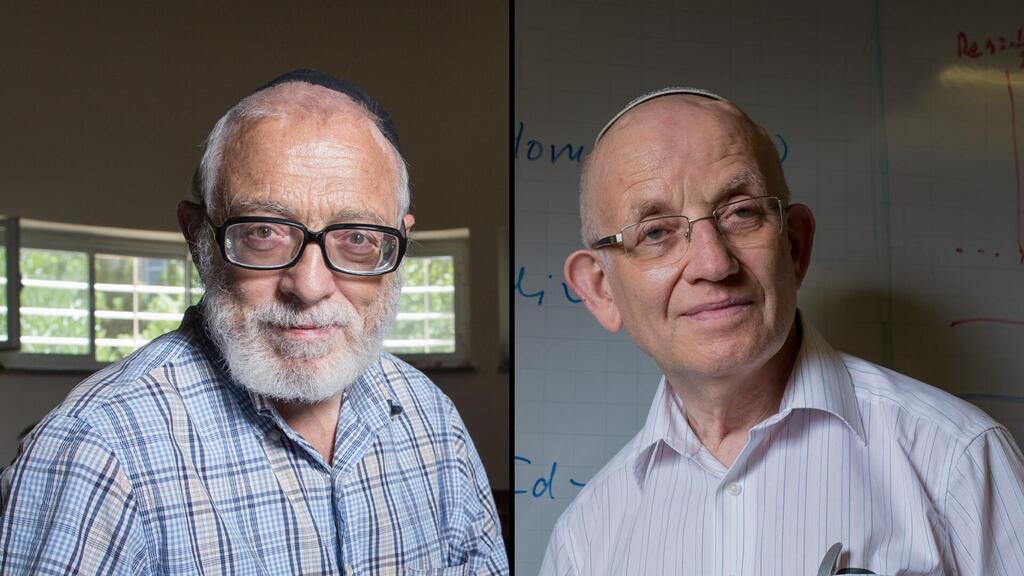
Professor David Kazhdan of the Hebrew University, left, and Professor Joseph Bernstein of Tel Aviv University
(Photo: Karen Wolf)
The prize committee said Kazhdan and Bernstein fundamentally changed the way mathematicians understand the connections between different fields of mathematics. Their groundbreaking ideas created new bridges between algebra, geometry and analysis and laid the foundations for a major field in modern mathematics — geometric representation theory.
The tools and concepts they developed have become cornerstones of mathematical research and are still used today to solve deep problems in many fields, from group theory to the Langlands program.
Kazhdan, born in Moscow in 1946, is one of the world’s leading mathematicians in representation theory. His connection to mathematics began in childhood following a “family deal” that allowed him to miss one day of school each week.
His talent stood out from an early age, and he was invited to work with the son of the renowned mathematician Israel Gelfand. That work, together with his participation in Moscow mathematical circles, shaped his view of mathematics as a culture based on conversation, collaboration and the discovery of order within complexity.
Alongside his scientific work, Kazhdan developed a deep interest in philosophy and Jewish thought and studied with Rabbi Joseph B. Soloveitchik in Boston.
While still in his 20s, Kazhdan made his name by solving two major problems formulated by Atle Selberg. Their solution led to the definition of Kazhdan’s property (T), which became a cornerstone of group theory with wide-ranging applications, from the construction of expander graphs to geometry and logic. He also made foundational contributions to the theory of symplectic manifolds.
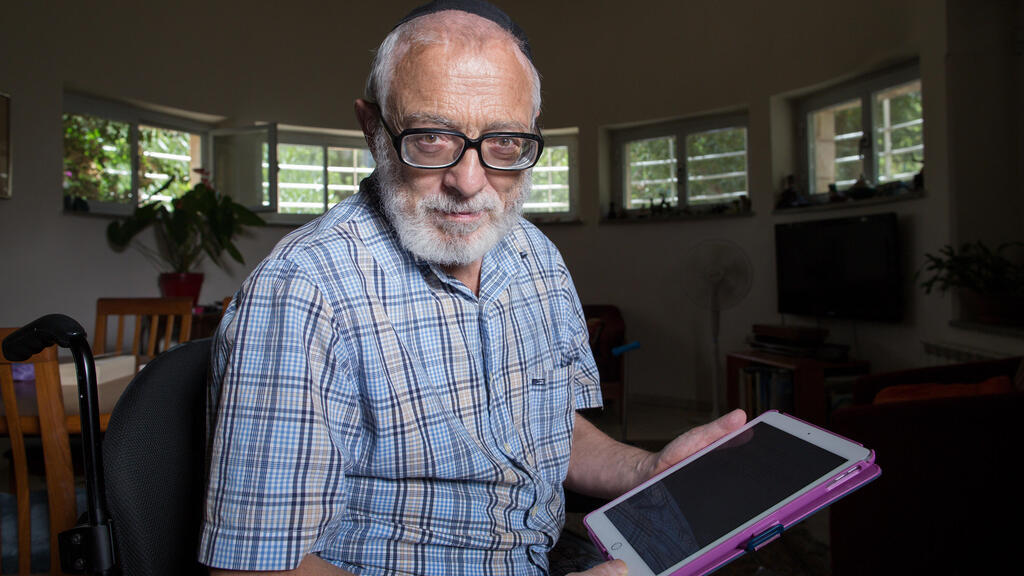
Professor David Kazhdan
(Photo: Karen Wolf)
Kazhdan is considered one of the founders of geometric representation theory. Together with George Lusztig, he developed the Kazhdan-Lusztig basis and polynomials and formulated major conjectures that were later proved, giving tremendous momentum to research in the field, the theory of automorphic forms and the Langlands program.
Kazhdan is also a recipient of the Israel Prize in mathematics and computer science for his mathematical work in group theory in 2012, the EMET Prize in 2016, the Rothschild Prize in 2010 and a MacArthur Fellowship in 1990.
In 2013, he was critically injured in a road accident in Jerusalem after being struck by a truck. Although his condition was initially described as critical, he recovered.
Professor Joseph Bernstein, born in Moscow in 1945, is a distinguished mathematician who stood out from a young age, winning a gold medal at the International Mathematical Olympiad. After studying at Moscow University and working at leading institutions including Harvard, he immigrated to Israel in 1993 and joined Tel Aviv University as a full professor.
Bernstein has brought about profound changes in representation theory and the theory of automorphic forms. In his doctoral work, at age 26, he developed an algebraic theory of differential operators with polynomial coefficients and introduced the Bernstein-Sato polynomial, which became a central tool in algebraic geometry, representation theory and logic.
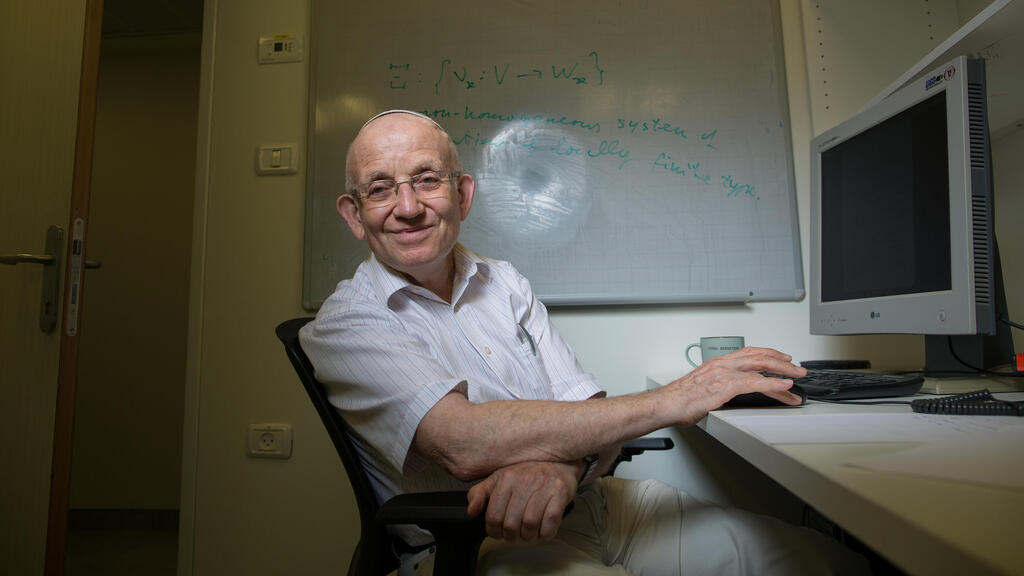
Professor Joseph Bernstein
(Photo: Karen Wolf)
His joint work with Sergei Gelfand and Israel Gelfand marked a breakthrough in representation theory. He later discovered, with Beilinson and Deligne, its topological counterpart — perverse sheaves. These studies, together with his proof of the Kazhdan-Lusztig conjecture with Beilinson, helped establish geometric representation theory.
Bernstein also laid the foundations for the representation theory of p-adic groups and introduced an innovative approach to the analytic theory of automorphic forms. Together with Harnikoff, he introduced a groundbreaking idea for bounding L-functions through the study of periods, which has stood at the center of advances in the field. His work is characterized by simplicity, complete clarity and a search for fundamental answers.
Wolf Prize in Medicine
Professor Charles Zuker will receive the prize “for revolutionizing our understanding of taste, the last of our senses whose secrets were deciphered.”
Zuker of Columbia University revolutionized the understanding of the sense of taste. His research identified the cells and receptors that allow us to detect the five basic tastes — sweet, bitter, salty, sour and umami — and showed how that information is transmitted and given meaning in the brain.
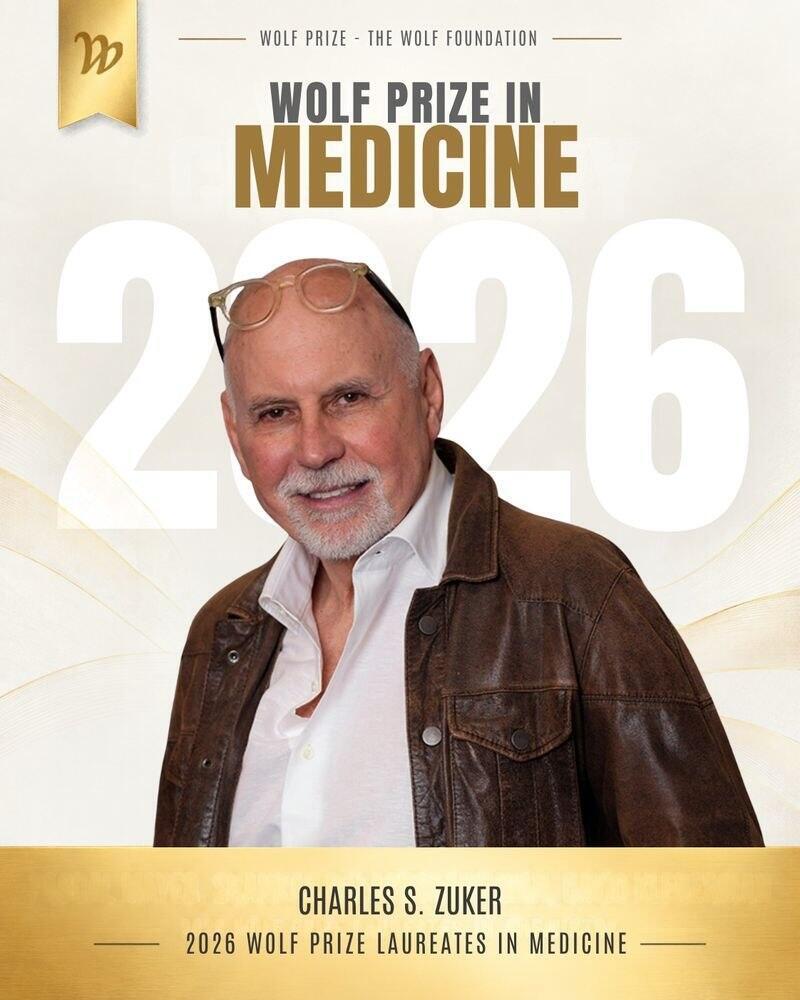
Through groundbreaking experiments, he demonstrated that taste perception is determined not only by the receptor that detects a particular substance, but primarily by the neural pathway to which the sensory cell is connected.
His work transformed taste from one of the least understood sensory systems into one whose molecular and neural mechanisms are known in great detail.
Wolf Prize in Physics
Professor Immanuel Bloch of the University of Munich and Professor Jun Ye of the U.S. National Institute of Standards and Technology will receive the prize 'for groundbreaking achievements with broad applications in the control of ultracold atomic systems.'
Bloch and Ye made breakthroughs in the ability to control atoms and study the quantum world with unprecedented precision.
Bloch turned ultracold atoms into a central platform for simulating and studying complex quantum systems, helping shape the field of quantum simulation.

Ye led the development of the world’s most precise and stable optical atomic clocks, allowing time and frequency to be measured with extraordinary accuracy and enabling researchers to test fundamental questions in physics.
Together, their work demonstrates the transition from observing the quantum world to being able to control it, measure it and harness it for research and new technologies.
Wolf Prize in Chemistry
Professor Shankar Balasubramanian of India and Professor David Klenerman of England, both researchers at the University of Cambridge, will receive the prize together with Professor Pascal Mayer of France will receive the prize “for developing methods with broad impact for large-scale, low-cost DNA sequencing, advancing genomic medicine.”
Balasubramanian and Klenerman helped develop a technology that revolutionized the way DNA is read.
Their work laid the foundations for next-generation sequencing, or NGS, which makes it possible to sequence millions of DNA fragments simultaneously, rapidly and at dramatically lower cost than before.
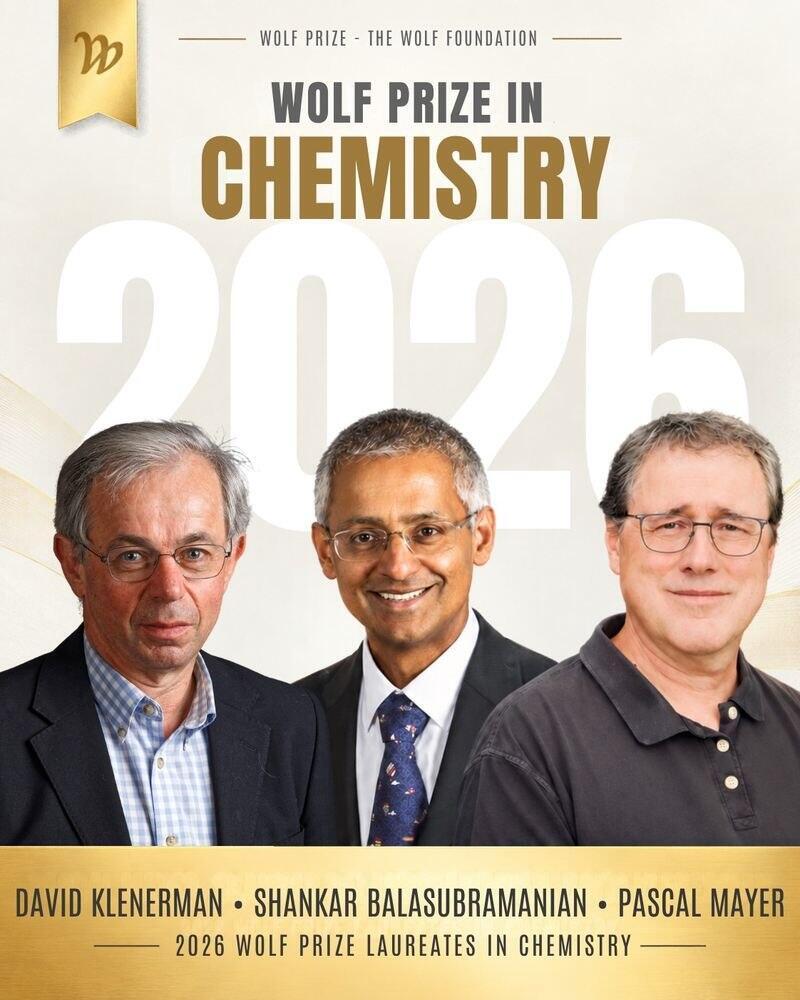
The technology transformed genome sequencing from an expensive and slow research tool into an accessible and powerful one and helped drive the genomics revolution — from research into diseases and tumors to genetic diagnosis and the development of precision medicine.
The prize that predicts the Nobel
Ricardo Wolf was born in Hanover, Germany, in 1887 and settled in Cuba before World War I. Together with his brother Siegfried, he developed an efficient method for recovering iron from foundry waste. Factories around the world used the invention, which made Wolf a very wealthy man.
Although he became rich through capitalism, Wolf was an ardent socialist and contributed significantly to Fidel Castro’s government in Cuba. In 1960, Castro appointed him Cuba’s envoy to Israel, a diplomatic position below the rank of ambassador. Wolf held the post until Cuba severed diplomatic relations with Israel following the 1973 Yom Kippur War, but he remained in Israel until his death in 1981.
In 1975, Wolf established the prize foundation that bears his name, which awards prizes to scientists and artists from around the world. The foundation also gives awards to young scientists, as well as scholarships and research grants, but it is best known for the Wolf Prize, one of the most prestigious awards in science and the arts.
The prize is awarded in physics, chemistry, medicine, mathematics and agriculture, as well as several fields of art, on a fixed rotating basis.
The Wolf Prize is also considered a “predictor of Nobel Prizes” — about a quarter of its laureates in physics, chemistry and medicine have later gone on to win a Nobel Prize.