

A stronger dose of Wegovy delivered greater weight loss than the standard version of the popular injection, according to new data presented at the European Congress on Obesity in Istanbul, adding fresh momentum to Novo Nordisk’s effort to compete in the booming weight-loss drug market.
The new findings focus on a 7.2 mg dose of semaglutide, the active ingredient in Wegovy, compared with the currently used 2.4 mg dose and placebo. In the STEP UP clinical trial, adults with obesity who did not have type 2 diabetes were followed for 72 weeks.
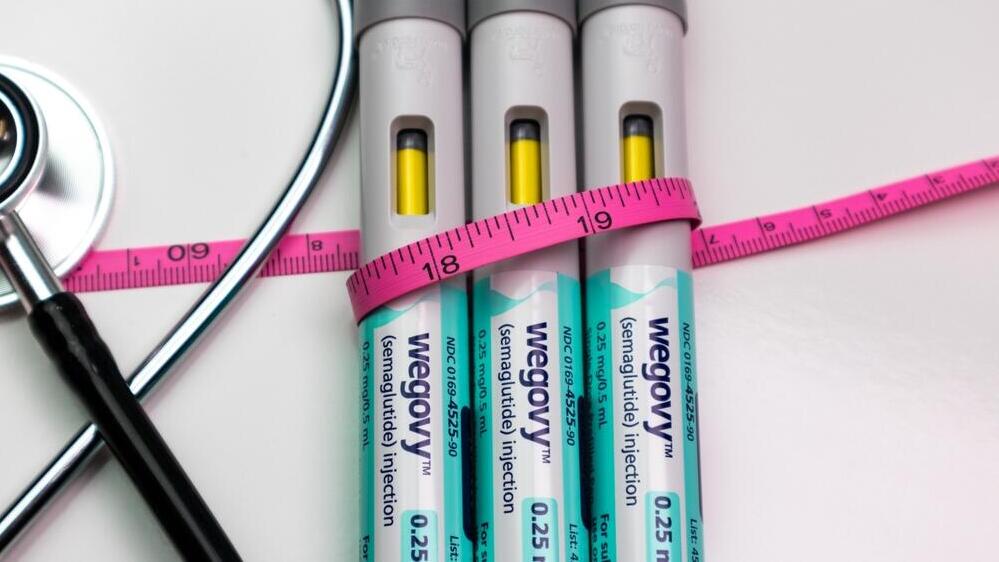
Patients who received the higher dose lost an average of about 21% of their body weight, compared with about 17.5% among those who received the standard dose and 2.4% in the placebo group. Novo Nordisk said certain early responders on the higher dose lost an average of 27.7% of their body weight after about a year and a half, while roughly 84% of the weight loss came from fat rather than lean mass, with muscle function preserved.
Semaglutide works by mimicking GLP-1, a natural hormone that helps regulate appetite and blood sugar, suppresses hunger and stimulates insulin release.
The higher 7.2 mg dose has already been approved in the U.S. and Europe, and has been submitted for registration in Israel. The data presented in Istanbul, however, comes from analyses presented at a medical conference and has not yet been published as a standalone peer-reviewed scientific paper.
‘Some patients lost nearly 28%’
One of the most striking findings involved patients described as early responders — those who lost at least 15% of their body weight during the first six months of treatment.
This group made up about one-quarter of the participants who received the higher dose. By the end of the trial, they had lost an average of 27.7% of their body weight.
By comparison, early responders who received the standard Wegovy dose lost an average of 24.8%
The finding may help doctors identify which patients are likely to achieve the greatest weight loss over time. Still, researchers stressed that people who do not respond as quickly can also experience clinically meaningful weight loss.
"Obesity as a chronic disease requires lifelong holistic treatment," said Prof. Dror Dicker, an obesity medicine specialist and director of the Internal Medicine Department D at Hasharon Hospital, part of Clalit Health Services, who participated in the research. "Early weight loss may indicate who is expected to achieve the greatest reduction — but it is important to emphasize that even those who are not ‘early responders’ experience significant and clinically valuable weight loss."
(Photo: Shutterstock)
‘Most of the loss came from fat’
Another key question addressed in the new data is one that concerns many people using GLP-1 weight-loss medications: does the body lose fat, muscle or both?
An MRI analysis of a small subgroup of 55 participants found that 84% of the weight loss came from fat, while muscle mass fell by about 10%. Muscle function was reportedly preserved.
That finding is encouraging because muscle loss is one of the common concerns surrounding weight-loss injections. But it should be interpreted carefully: the MRI analysis was based on a relatively small subgroup, and the results have not yet been published as a standalone peer-reviewed study.
‘Women saw results across menopause stages’
Novo Nordisk also presented new data focused on women with obesity, including women before, during and after menopause.
According to the company, Wegovy showed substantial and consistent weight-loss results across reproductive life stages, including premenopause, perimenopause, menopause and postmenopause. The findings were based on the STEP UP trial, the SELECT cardiovascular outcomes trial and a large real-world evidence study presented at the obesity conference. Novo Nordisk had previously said its ECO presentations would include data on Wegovy’s role in menopausal symptoms, weight gain, migraine and cardiovascular risk.
In premenopausal women with obesity, Wegovy showed average weight loss of 22.6%, according to the new Novo Nordisk data. More than 4 in 10 women in that group — 41.4% — lost at least 25% of their body weight.
The company said substantial weight loss was seen across all menopause stages, along with major reductions in waist circumference, an important marker of metabolic health and abdominal fat.
Novo Nordisk also reported that women taking Wegovy had an average 42% to 45% lower risk of migraine starting six months after treatment began, and a 25% lower risk of depression, compared with menopausal hormone therapy alone.
Those findings may be important because menopause is often associated with weight gain, changes in fat distribution, increased abdominal fat and higher cardiometabolic risk. But the migraine and depression results come from real-world evidence rather than a randomized trial designed specifically to prove those outcomes, so they should be treated as signals that require further study, not as proof that Wegovy prevents migraine or depression.
"For women with obesity, hormonal changes during menopause can drive weight gain and increase the risk of a heart attack," said Mette Thomsen, group vice president and head of Global Medical Affairs at Novo Nordisk. "New clinical and real-world data presented at ECO demonstrate that effective weight management with semaglutide around menopause addresses medical complications of obesity, such as heart disease and metabolic dysfunction. But it can also help address daily burdens such as migraine, depression and menopause-related challenges."
‘The race with Mounjaro’
The new higher-dose Wegovy results are especially relevant because of the intensifying competition between Novo Nordisk and Eli Lilly in the weight-loss drug market.
A previous head-to-head comparison published in the New England Journal of Medicine found that Eli Lilly’s Mounjaro produced average weight loss of 20.2%, compared with 13.7% on the standard Wegovy dose. That gap gave Mounjaro a clear market advantage.
The 7.2 mg Wegovy dose, however, reached average weight loss of about 20.7% to 21% in STEP UP, putting Wegovy much closer to the weight-loss results achieved by its rival.
That does not mean the drugs are identical or interchangeable. Patients may respond differently, side effects can vary, and treatment decisions should be made with a physician based on medical history, risk factors, access and long-term monitoring.
‘What this means for Israel’
Wegovy entered Israel’s health basket this year, only for adolescents aged 12 to 18
It was the first time Israel’s healthcare system funded a medication specifically intended to treat obesity, which is recognized globally as a chronic disease and, by many experts, as an epidemic.
For now, Wegovy and Mounjaro have not received broad funding in Israel’s health basket for people with obesity of all ages, despite studies showing benefits beyond weight loss, including effects on cardiovascular risk, kidney disease and inflammation.
The new data is likely to add pressure to the debate over access. On one hand, the stronger dose appears to produce greater weight loss and may help preserve muscle function. On the other, the findings presented this week include secondary analyses, subgroup analyses and real-world evidence, which require careful interpretation.
The bottom line is promising but not simple: higher-dose Wegovy may help some patients lose substantially more weight, and the new women-focused data suggests benefits across menopause stages. But obesity remains a chronic disease, not a short-term cosmetic issue, and treatment still requires medical supervision, nutrition support, physical activity, side-effect monitoring and long-term follow-up.