

In August 2023, just two months before the outbreak of the war, Dr. Roi Sar-El, 43, and Dr. Muriel Sar-El, 41, left Israel with their three children and moved to Boston. Roi, a psychiatrist who worked at Ichilov Hospital, and Muriel, a dermatologist, moved to the United States as part of a planned step — both wanted to specialize in fields that are less developed in Israel, and today they work at hospitals affiliated with Harvard University. Unlike many who have left Israel in recent years, their decision was not driven by the war or the political climate. But life has a rhythm of its own. Their stay, which was supposed to last two years, has so far stretched to four — and the situation in Israel, they say, played a part.
“We left without any connection to the national situation, but as part of long-term career planning,” Roi told ynet and Yedioth Ahronoth. “But here we are, already in our fourth year. The period was extended, and of course the complex situation in Israel played a role in that. There was a sense that we were giving the children more time to grow up in a quiet and protected environment, knowing that afterward we would return to a full life in Israel, and that this was an opportunity that might not come again.”

The Sar-Els are two of the 1,369 doctors who left Israel between 2023 and 2025, according to a study by Tel Aviv University researchers published Sunday that found physician emigration from Israel had reached extremely concerning levels. According to the findings, 419 doctors left in 2023, 530 in 2024 — the peak year — and an estimated 420 in 2025, based on a preliminary figure that has not yet been finalized. That represents a 94% increase compared with the corresponding period a decade earlier, when only 705 doctors left the country between 2013 and 2015.
'We went for advanced training, intending to return'
Shortly after they arrived in Boston, the war broke out. From the first days, Roi was active in providing remote treatment to people affected in the Gaza border communities, and later helped establish Healing in Nature, or HiN, a nonprofit that helps combat soldiers cope with traumatic combat experiences through therapy and nature.
For Muriel, one reason for extending the stay relates to the state of the education system. “Where we lived before in Israel, the situation in kindergartens and schools was not that good. In Boston, by contrast, the frameworks are very good, not to say amazing,” she says. “It is not just the routine, but also the content, the quality, the staff and the number of children in each class.”
“It is clear to us that because so many resources are being directed to security and the war — the most worthy goal there is — other fields are being hurt, including health and education,” Roi adds. “In the end you make the calculation that ‘I am still OK,’ but the children are paying a price, and that is also a consideration in the decision to stay here longer than planned.”
Roi believes that Israeli doctors going abroad is not a new phenomenon, but that the atmosphere in recent years has made the decision easier for some.
“It has become something of a social phenomenon in the medical community, given that the situation in Israel has been so difficult,” he says. Still, he does not see it as irreversible. “It saddens me greatly to think that good doctors will leave, but this is a phenomenon that can easily reverse if there is a sense that the country is moving toward repair. I know there are people around us who are sitting on the fence, who would be happy to return if the situation improves. I do not think there is no hope.”

Dr. Roi and Muriel Sar-El still pay National Insurance and say they intend to return
(Photo: Private album)
“I do not feel that ‘we left,’” Muriel stresses. “We went for advanced training, but with the intention of returning. We are still paying National Insurance and health fund fees in Israel.” The couple plan to remain in Boston through the end of their fourth year and then return to Israel. “Israelis in exile will always be torn between coming back and staying,” she adds. “That connection to the country is probably etched into our Israeli DNA.”
'Leaving in pain, not a brain drain'
The change identified in the study is not limited to overall numbers, but is reflected no less in the age and experience of those leaving. Between 2023 and 2025, veteran doctors aged 45 and older made up about 20% of all those who left — one in five. In the previous decade, they accounted for only 14%, or one in seven.
The researchers — Professor Itai Ater of the Coller School of Management, Professor Nittai Bergman, head of the Berglas School of Economics, and Doron Zamir, a doctoral student at the Coller School of Management — stressed that time abroad does not necessarily indicate permanent departure, since many physicians leave for advanced training, fellowships or research, and some return.
But the older profile itself increases the concern: At those ages, it is less likely to be a temporary departure for training, and a move that began as professional development can gradually become a decision to settle abroad.
(Photo illustration: Shutterstock)
For A., a doctor who left Israel for Britain in 2024, the decision was explicitly political. A few months ago, she sat down and tried to reconstruct who the close friends were that she had left behind, making a mental list of the families they used to meet. She reached 11. Three of them are already with her in Britain, all having left after she did, and one more is on the way.
“For me, it was a change in position that happened within a short time after the judicial overhaul,” she says. “I had not considered leaving before that. We were very satisfied with every aspect of our lives, on the verge of buying an apartment in Israel, and we saw our future there. What made us change our approach and start looking for jobs outside Israel was the judicial overhaul and our fear of living in a nondemocratic country — and what such a regime could do.”
“It is very hard to leave,” she says. “I loved my job and my team, whom I am still in touch with to this day, and I was very attached to my patients. I hoped to continue treating them for many more years. There is a moral injury both in leaving and in remaining within a system that does not align with your values.”
A. is skeptical of defining the phenomenon as a “brain drain.”
“Brain drain happens when educated, contributing people identify the possibility of higher pay or better conditions abroad, but that is not the situation here,” she says. “For most of the doctors I know who left, there is actually some decline in status, salary or conditions. There are people who left management positions in Israel and moved here into nonmanagement roles. This is not exactly a brain drain, but leaving in pain against a different backdrop.”
According to A., her family’s experience in England differs from the picture sometimes portrayed in Israel. “We have been here for two years, speaking Hebrew everywhere. I have not encountered antisemitism, nor harsh criticism of the kind Israelis sometimes imagine.”
Working outside Israel, she says, actually strengthened her appreciation for the Israeli health system. “Seeing how the system works here made me appreciate even more what we built in Israel. Doctors for whom health is their highest priority were willing to leave the health system in Israel and devote themselves to what the NHS, Britain’s National Health Service, offers, or take out private insurance that also does not cover everything — and that says something.”
(Photo illustraiton: Shutterstock)
Despite everything, A. does not rule out returning to Israel. “Anyone who leaves can also come back,” she says. “What is keeping us outside is what is happening in Gaza and the West Bank. We would be very happy to return if we felt there was a real change in direction, an arrangement with the Palestinians and hope for peace.”
'Those leaving are an elite group'
Concern over the brain drain is also troubling senior doctors and department heads.
“You can feel it on the ground. We constantly see good people looking for opportunities elsewhere because the options are becoming more limited,” says Professor Yasmin Maor, head of the Infectious Diseases Unit at Wolfson Medical Center and chair of the Israeli Society for Infectious Diseases. “It is connected to the local atmosphere that began with the judicial overhaul, which caused enormous damage to research, science and collaborations abroad, combined with the security difficulties and budget cuts.”
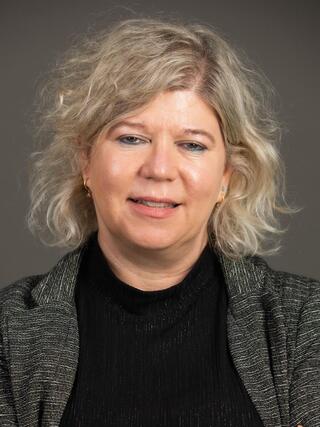 Professor Yasmin MaorPhoto: Shlomi Mizrahi
According to Maor, those leaving are an elite group — “people who are on average more successful, who have more opportunities to integrate abroad.”
Her concern goes beyond losing doctors from her own team to the broader effect on the quality of medicine. “The quality and prestige of my unit depend on the quality of the people I can retain,” she says. “But I work across the entire hospital interface and with colleagues around the country. If the best orthopedist, oncologist or internist leaves, in the end I will remain in a weaker professional environment. I am harmed not only by direct departures, but also by the departure of colleagues with whom I collaborate clinically and in research.”
Some of the consequences, she says, will take time before patients feel them. “It is already being felt, but not yet at full intensity,” she says. “When departures are small at first, the system can compensate, but over the years, when research contracts and excellence declines, it is a slow retreat. The question is what will be here in 10 years.”
She adds that, even if the trend reverses, it will be difficult to repair the damage quickly. “You can train excellent people, but if the best have left — who will train the next generation?”
“The problem is a combination of several factors,” she continues. “On one hand there is departure and the entry into the system of less skilled people, and on the other hand the population is aging and the workload is growing, without a corresponding increase in positions by the Health Ministry and the government. It began in the periphery, where the shortages are greater, but it is starting to seep into the center as well. Look at how long it takes today to get an appointment with a specialist in certain fields.”
Leaving Israel, she stresses, has never been on the table for her. “I cannot imagine leaving, only fixing things. But even ideological people have a threshold that can eventually push them over the edge. The election results will have a major impact on the choices people make — not only doctors, but also high-tech professionals, people who drive the country. Every minute that passes, we need to roll up our sleeves and deal with the problem, and I do not see that being done by the current government.”
'The gap is closed in a decade, not two years'
Professor Shahar Shelly — a faculty member at the Technion’s medical school, head of the Laboratory for Artificial Intelligence and Decision-Making and director of the Neurology Department at Rambam Medical Center — also sees the trend on the ground.
“The trend is real. Even in my immediate professional environment, two senior subspecialists have left Israel in recent years,” he says.
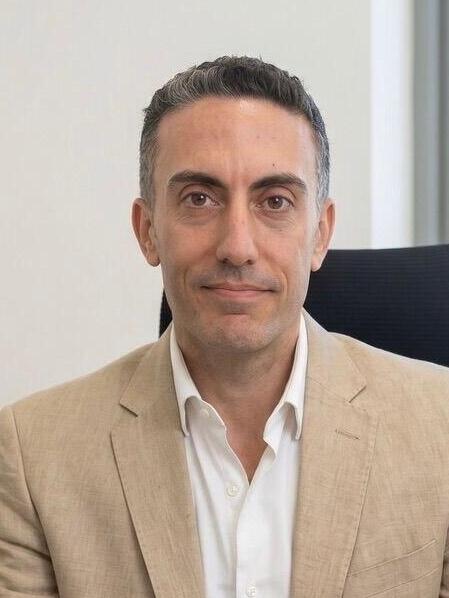 Professor Shahar ShellyPhoto: Private album
According to Shelly, some of those leaving are going abroad for medical training or academic sabbaticals, but an increase of dozens of percentage points cannot be explained entirely by that, and the breakdown by specialty is concerning in its own right.
“When about 4% of pediatricians and 6% of all surgeons are absent from the system for a year or more, the shortage is felt in appointments and on-call shifts, even if some of them return,” he says. “In subspecialty fields, the percentages actually conceal the picture: When there are only a few dozen physicians in the country working in a certain field, the departure of two or three eliminates an entire service in a geographic region.”
Equally significant, he says, is the growing share of experienced doctors among those leaving.
“The departure of a resident can be made up within a few years. The departure of a veteran specialist also takes away the ability to train the next generation, and the gap they leave is closed in a decade, not two years.”
The practical problem, he stresses, is not the departure itself.
“Going abroad for advanced training is desirable and improves medicine in Israel. The problem is that we invest about 10 years in training a doctor, send that doctor to acquire additional expertise and invest very little in the question of what is waiting for them here when they return,” he says.
“The considerations I hear from doctors thinking about staying abroad are research infrastructure, protected research time, an academic horizon and also salary. In neurology the gap is especially sharp — it is a field that is now developing rapidly, with new treatments for dementia, hereditary diseases and inflammatory diseases. A doctor who has acquired expertise in those fields finds infrastructure and conditions abroad that are difficult to offer here, and the competition for that doctor is not local but international.”