

For years, discussions about childhood obesity and a baby’s health before birth have focused almost exclusively on the mother: what she eats, her weight and what happens during pregnancy. The father, in most cases, has remained on the margins of the picture, present but not considered part of the core health narrative.
In recent years, however, this view has been increasingly challenged. A growing body of research suggests that a father’s health prior to conception may play a significant role in his child’s future wellbeing, not only through the genes he passes on but also through more subtle biological signals in sperm.
Gallery
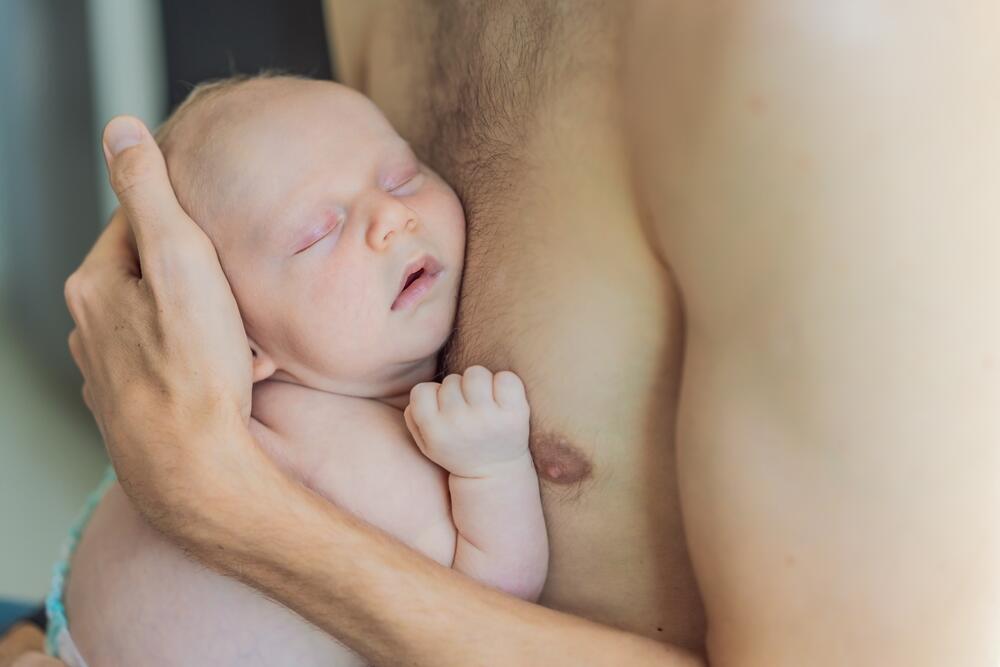
The father, in most cases, has remained on the margins of the picture
(Photo: Elizaveta Galitckaia / shutterstock)
A review published this spring in Current Obesity Reports argues that fathers should move to the center of the discussion. According to the review, a father’s weight, diet, physical activity level, overall health and even stress levels may all affect his children’s risk of obesity later in life.
In simple terms, sperm is not only a “carrier” of DNA. It may also carry additional biological information influenced by what is happening in the father’s body in the period leading up to conception.
The review was led by Matthew J Landry, a public health lecturer and clinical dietitian at the University of California, Irvine. Together with John James Parker of Northwestern University, he examined studies from the past decade to assess how fathers may influence their children’s weight and metabolic health.
Sperm carries more than DNA
The most direct pathway is, of course, genetic: fathers pass on half of their genetic material to their children. Genetic predisposition plays a significant role in obesity risk, but researchers say the story does not end there.
Beyond DNA itself, paternal obesity may leave so-called “chemical marks” on sperm cells. These do not change the DNA sequence, but they may influence how certain genes are switched on or off in the earliest stages of embryonic development. This field, known as epigenetics, has become a major area of research into how parental lifestyle before pregnancy can shape the next generation.
According to the review, men with obesity are sometimes found to have lower sperm quality, including reduced sperm count, decreased motility and more DNA damage. Large studies have also found that children of fathers with obesity face a higher risk of obesity themselves, even after accounting for maternal weight.
One of the most intriguing lines of research comes from a 2024 study published in Nature, one of the world’s most influential scientific journals. Researchers examined how a father’s diet before conception may affect offspring health.

Fathers pass on half of their genetic material to their children
(Photo: George Rudy / shutterstock)
The study combined human family data with mouse experiments. Male mice fed a high-fat diet before reproduction produced offspring with a higher tendency toward metabolic disorders. The researchers pointed to small RNA molecules in sperm as a possible mechanism through which information about the father’s metabolic state is transmitted at fertilization.
The body can change
There is also a more encouraging takeaway. Because men continuously produce new sperm throughout their lives, at least some of these biological changes may be reversible.
A study published in Cell Metabolism, a leading journal in metabolic research, found that men who underwent significant weight loss after bariatric surgery showed notable changes in sperm patterns. Some of these changes occurred in genetic regions linked to appetite regulation. This does not mean all risk disappears, but it suggests that sperm biology is not fixed and can shift following meaningful health improvements.
Everyday lifestyle changes may also matter: improved diet, increased physical activity, better sleep and reduced stress. The review identifies the three to six months before conception as a particularly important window, as this is the period in which sperm cells involved in fertilization are formed and mature.
The bottom line is not that men should panic or feel guilty. Rather, the central message emerging from the research is that paternal health is part of the picture, and that improving lifestyle before pregnancy has value for both men and women.
Life at home also matters
A father’s influence does not end at conception. According to the review, fathers play a significant role in shaping children’s lifestyle habits after birth: what is eaten at home, how often meals are cooked versus ordered in, how much physical activity takes place, how much time is spent in front of screens and what the family routine looks like.
New parents are familiar with the pattern: sleep becomes shorter, cooking takes a back seat, exercise routines drop in priority and stress increases. Long-term studies have found that many men experience increases in weight, body fat percentage and waist circumference between their partner’s pregnancy and the first year after birth.

Fathers play a significant role in shaping children’s lifestyle habits after birth
(Photo: fizkes / shutterstock)
Children, in turn, observe and learn. They watch what their father eats, how often he snacks, how much he moves, whether he cooks, whether he eats meals with them and whether physical activity is part of home life. Higher paternal involvement in childcare has been associated with healthier dietary patterns and a lower risk of childhood obesity.
Mental health and living conditions also play a role. A father’s habits do not develop in isolation: income, food security, housing environment, working hours, stress and depression all shape his health and, in turn, the family’s daily routine. Depression and obesity, for example, are bidirectionally linked, with each increasing the risk of the other. When a father struggles with mental health, it can also affect his day-to-day parenting involvement and the family’s ability to maintain healthy routines.
Researchers emphasize that this is not an attempt to replace or diminish the focus on maternal health before and during pregnancy. Rather, it is an expansion of the picture. A child’s health begins before birth and is influenced by both parents and the environment in which the family lives.
For this reason, one of the review’s main conclusions is that health systems should include men in preconception health discussions. Nutritional counseling, encouragement of physical activity, mental health support and parenting preparation should not be directed at women alone.
“Fathers have historically been overlooked in maternal and child health research and intervention efforts,” Landry said following the publication of the review. He added that involving men in the earliest stages of family planning could open a meaningful opportunity to improve family health.