

The Perseids meteor shower, one of the year’s most anticipated celestial events, has begun to appear in the night sky, with its peak expected this week. At the same time, an unusually close conjunction of Venus and Jupiter will be visible in the early morning hours, creating a rare combination for skywatchers.
The Perseids will be at their most active on Tuesday, August 12, although meteors will continue to appear in the days before and after. This year, the nearly full moon will be positioned near the meteor shower’s radiant, which will limit visibility of the fainter meteors. Nonetheless, the brighter streaks and occasional fireballs are still expected to be visible.


Perseids meteor shower
(Photo: AP)
Venus will rise around 3 a.m. on the morning of the conjunction, with Jupiter following shortly after. On Tuesday morning, the two planets will be less than two moon-widths apart, an unusually close approach. The pairing will be visible to the naked eye, and for those using telescopes, both planets will fit into the same field of view.
The Perseids are known for producing numerous bright meteors, which this year will have to compete with the glare of the full moon. The moon will be located close to the radiant point of the shower in the constellation Pisces, meaning its light will reduce the number of meteors visible to the naked eye.
Still, the Perseids are famous for generating bright meteors that can outshine moonlight, so observers should still be able to catch the more prominent ones. The best time to watch will be in the hours before dawn, when the radiant is highest in the sky.
Observers should look away from the radiant itself to see longer and more dramatic meteor trails. The shower is visible from across Israel, and viewing conditions are best far from urban light pollution. While city residents will still be able to spot the brighter meteors, those who head to darker locations will see more.
Get the Ynetnews app on your smartphone: Google Play: https://bit.ly/4eJ37pE | Apple App Store: https://bit.ly/3ZL7iNv
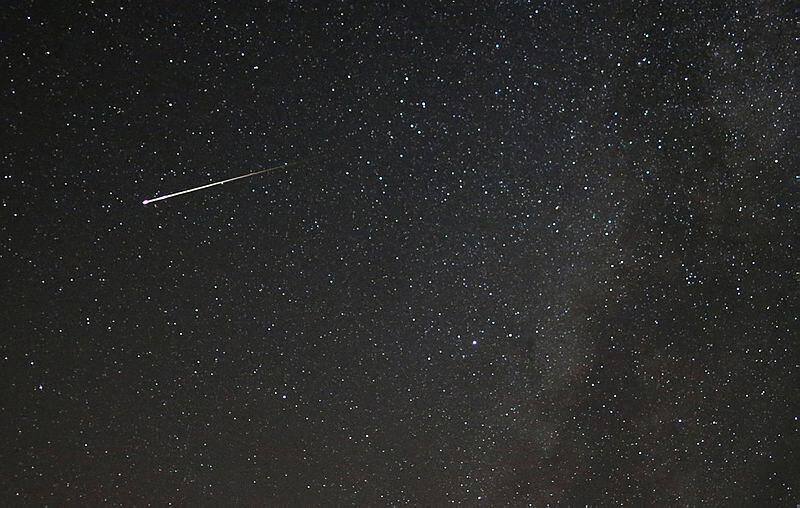
(Photo: Reuters)

(Photo: Reuters)
Rare meeting of Venus and Jupiter
While the Perseids occur every August, the close pairing of Venus and Jupiter adds a special element to this year’s display. The planets will appear exceptionally close together in the early morning sky on August 12, providing a striking visual contrast to the streaking meteors of the night.
The planets’ proximity would be visible without any optical aid, but the view through a telescope will be particularly impressive, as both will be visible in the same frame. Jupiter’s Galilean moons will be visible and Venus will be seen as a nearly full disk.
The August 11 shadow transit of Io on Jupiter will also be observable with telescopes, offering an additional highlight for astronomy enthusiasts.
The combination of the full moon and the timing of the peak means observers will need patience and persistence. The shower will continue for several nights, but the best chance to see the brighter meteors will be during the pre-dawn hours of August 12, when Earth is moving directly into the stream of meteoroids.
Even though the moon will reduce the number of visible meteors, the Perseids are still worth watching. The brighter meteors will be visible even in moonlight and the conjunction of Venus and Jupiter makes this an especially good year to go out and look.
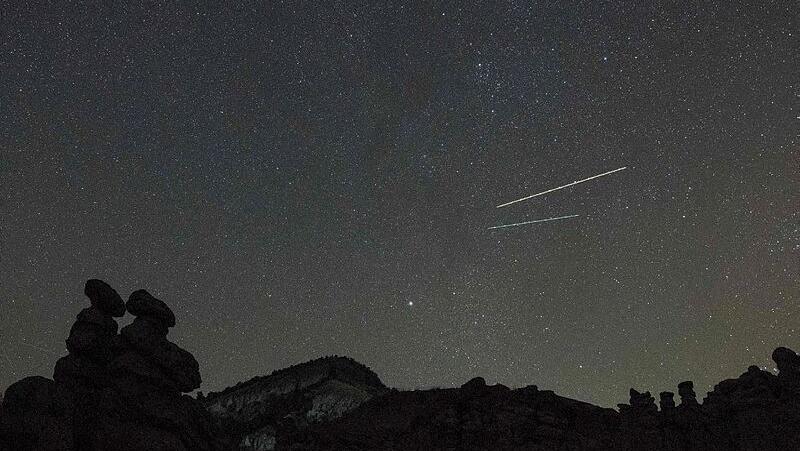
(Photo: AFP)
Looking ahead
The Perseids will remain active for several more days after the peak, and while the rate of meteors will decrease, the moon will gradually move away from the radiant point, slightly improving viewing conditions.
Still, the combination of the meteor shower’s brightest phase and the planetary conjunction will only occur on August 12, making that morning the highlight of this year’s event.
In summary, skywatchers in Israel will have the opportunity to witness two notable astronomical events at once: the peak of the Perseids meteor shower and a rare close approach between Venus and Jupiter. Despite the challenge of a full moon, the night and early morning hours of August 12 promise an impressive display for those willing to seek out a clear view of the sky.